

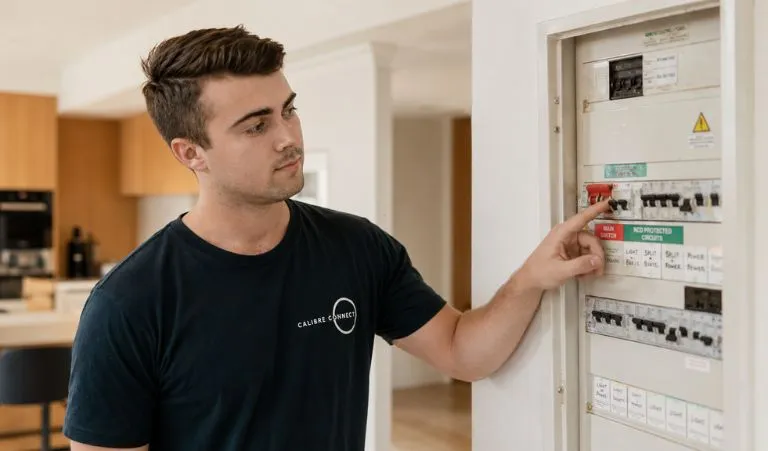
A safety switch trips to protect you from electric shock, usually due to a faulty appliance, a circuit overload, or damaged wiring. To safely identify and fix the issue, follow a systematic process of elimination at your home’s switchboard.
Faulty appliances are one of the most common reasons a safety switch trips in Australian homes. A tripping safety switch or RCD is more than just an inconvenience; it is a vital safety mechanism that protects you and your family from electric shock. Unlike a circuit breaker, which guards against overloads and short circuits in the wiring, a safety switch acts quickly to detect leakage current and disconnect power before injury can occur.
Let’s dive into the reasons behind these frequent trips and how to resolve them effectively.
What Is a Safety Switch & Why It Keeps Tripping?
A safety switch is designed to protect people from electric shock by detecting changes in the flow of electricity and shutting off power to prevent harm. It is a crucial safety device that monitors electrical current and prevents electrical hazards. If your safety switch is tripping frequently, it could indicate an issue within your electrical system that needs to be checked and fixed. Understanding why your safety switch has tripped is key to maintaining electrical safety in your home or business.
Common Reasons Your Safety Switch Keeps Tripping
A safety switch may trip for various reasons, ranging from overloaded circuits to faulty appliances or wiring issues. Identifying the root cause can help prevent further inconvenience and potential hazards. Below are the most common reasons your safety switch is tripping.
Overloaded Circuits and Power Surges
Overloading a circuit with too many appliances can cause the safety switch to trip. When multiple high-power devices, such as a washing machine or heater, operate simultaneously, they draw excessive electrical current, leading to nuisance tripping. Electrical storms can also cause power surges that trigger the safety switch to trip, cutting off power to that circuit as a protective measure.
Faulty Appliances Causing Electrical Leaks
Appliances that have damaged wiring or internal faults may leak electricity, causing the safety switch to trip. If an appliance is old, faulty, or not working correctly, it can disrupt the normal flow of electricity through the circuit. Unplug all appliances and turn your safety switch back to the on position. Then, plug your appliances back one by one to identify the faulty device. If a particular appliance trips the safety switch, you may need an electrical appliance repair technician to fix or replace it.
Wiring Issues and Electrical Faults
A damaged electrical circuit or faulty wiring can also be the culprit behind a tripping safety switch. Issues such as exposed wires, short circuits, or aging switchboards can disrupt the flow of electricity, triggering the safety switch to ‘off’ for protection. Electrical repairs from a qualified electrician are necessary to prevent ongoing electrical hazards. If the tripping occurs frequently, call a licensed electrician to inspect your electrical system.
Moisture and Environmental Factors
Moisture in power point circuits, especially from sprinkler hitting an outdoor power point or high humidity, can cause a safety switch to trip. Water conducts electricity, creating a potential risk of electric shock. If water exposure is suspected, unplug all the appliances and call a licensed electrician to install a new, weatherproof power point.
A Faulty or Worn-Out Safety Switch
Like any other electrical component, safety switches can wear out over time. If your safety switch stays in the off position despite troubleshooting, it may be faulty and need replacement. Safety switches should be tested regularly to ensure they are working correctly. A qualified electrical contractor can assess whether the safety switch is faulty and replace it if necessary.
How to Troubleshoot a Tripping Safety Switch
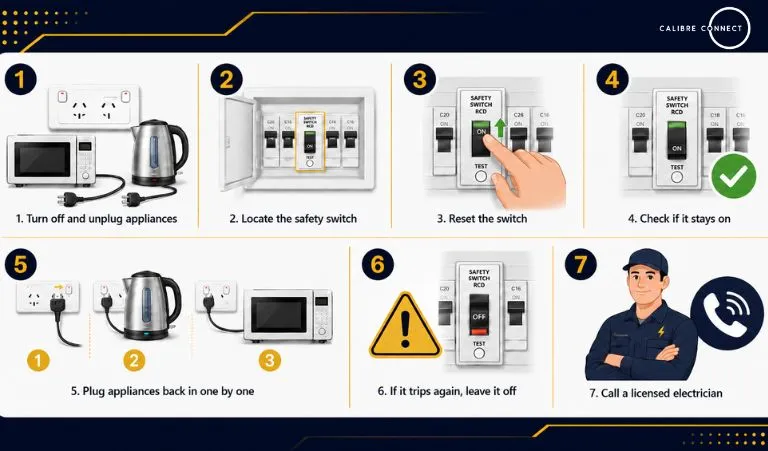
Troubleshooting a safety switch issue can help identify whether it is caused by an appliance, circuit overload, or a more serious electrical fault. Follow these steps to diagnose and possibly resolve the problem before calling a professional.
Resetting the Safety Switch Step-by-Step
If your safety switch has tripped, follow these steps to reset it:
- Step #1: Turn off all appliances – Before resetting the switch, unplug all appliances connected to the affected circuit.
- Step #2: Locate the safety switch – Find your switchboard or fuse box where the safety switch is installed.
- Step #3: Reset the switch – Try to reset the switch by flicking it back to the on position.
- Step #4: Check if it stays on – If the switch remains on, the issue may have been temporary.
- Step #5: Plug appliances back in one by one – If the switch stays on, plug appliances back in one at a time to identify a potential faulty device.
- Step #6: If it trips again, leave it off – If the safety switch trips again immediately, leave it off and do not attempt further resets.
- Step #7: Call a licensed electrician – A persistent issue may indicate a wiring problem or faulty switch requiring professional inspection and repairs.
Checking Appliances for Faults
To determine if an appliance is causing the issue, unplug all appliances and reset the safety switch. Then, plug your appliances back in one by one. If plugging in a specific device trips the safety switch, keep it unplugged and seek appliance repair.
Identifying Circuit Overloads
If your safety switch continues to trip, check whether multiple high-powered appliances are being used on the same circuit. Distribute your appliances across different circuits or call a licensed electrician to upgrade your switchboard.
When to Call an Electrician for Help
If the safety switch is reset but trips repeatedly, it indicates a deeper electrical issue. Call a qualified electrician to come and inspect your electrical system. They can diagnose problems within the fuse box, power point circuit, or electrical wiring and perform necessary switchboard repairs to ensure safety.
When to Call an Electrician for a Persistent Safety Switch Issue

If your safety switch is constantly tripping, this could indicate serious electrical hazards. A professional assessment is necessary to determine the underlying issue and prevent potential risks such as electrical fires or electric shocks. Below are key signs that it’s time to call a licensed electrician.
Preventative Measures to Avoid Frequent Safety Switch Trips
Taking proactive steps can help reduce the likelihood of your safety switch tripping frequently. Regular maintenance, proper appliance use, and timely electrical inspections are essential to keeping your electrical system safe and functional. Consider the following preventative measures to minimize safety switch disruptions.
- Regular Testing: Test your safety switch by flicking it off and on periodically to ensure it functions correctly.
- Avoid Overloading Circuits: Distribute electrical appliances across multiple circuits and avoid running too many high-powered devices simultaneously.
- Use Surge Protectors: Installing surge protectors helps prevent nuisance tripping caused by electrical storms and power fluctuations.
- Routine Electrical Inspections: A qualified electrician can inspect your electrical system to identify potential issues before they cause safety hazards.
- Timely Repairs and Upgrades: If your safety switch is sitting on ‘off’ frequently, call a licensed electrician to inspect and upgrade your electrical circuit as needed.
By following these safety measures and seeking professional electrical services when necessary, you can prevent your safety switch from tripping unnecessarily and ensure your home or workplace remains protected from electrical fires and electric shocks.
Closing Thoughts
A tripping safety switch is more than just an inconvenience; it’s a vital warning sign of potential electrical hazards. Common causes include faulty appliances, overloaded circuits, moisture issues, and damaged wiring. By understanding these reasons and taking proactive steps to address them, you can ensure your home remains safe from electrical risks like shock or fire.
For professional assistance with switchboard repairs and upgrades to prevent future tripping issues, contact Calibre Connect today. Our expert team of local electricians is ready to help safeguard your home’s electrical system effectively.