
Data Cabling Installation Sydney
Premium structured cabling for homes, strata and commercial sites across Sydney, including Cat6 and Cat6a installs, NBN integration, comms cabinets, patch panels and clean handover documentation.
EXCELLENT
★★★★★
Rated


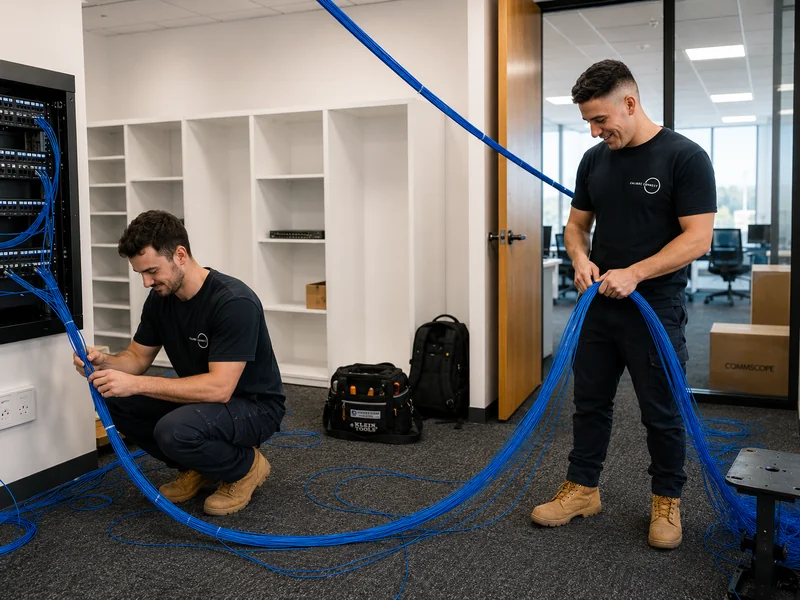
Data cabling installation in Sydney involves designing and installing customer network cabling, such as Cat6 and Cat6a, to connect rooms, Wi-Fi access points and devices back to a central point. Calibre Connect technicians are ACMA Registered Cablers and complete works in accordance with AS/CA S009:2020 and the Telecommunications Cabling Provider Rules 2014, including NBN integration within the premises.
Calibre Connect delivers premium, compliant network infrastructure for residential, strata and commercial sites, with clean pathways, labelled terminations and maintainable comms layouts. We design cabling for stable Wi-Fi access point backhaul, POE devices and CCTV IP endpoints, with structured distribution via patch panels, comms cabinets and MDF or IDF environments where required. For older Sydney buildings, including Federation homes, Paddington terraces and Art Deco blocks, we plan routes that respect finishes and overcome double brick and lath and plaster constraints.
Compliant Data Cabling in Sydney (ACMA Registered)
Customer premises cabling is regulated. For residential, strata and commercial projects, compliant workmanship starts with using ACMA Registered Cablers and installing to the correct standards and rules. Calibre Connect delivers structured cabling and network infrastructure in a controlled scope that prioritises safe pathways, maintainable terminations, and documentation that supports future changes.
Why ACMA Registered Cabling Matters
Data and telecommunications cabling must be installed by registered technicians to ensure the work is completed safely, correctly, and in line with the requirements that apply to customer cabling. Using ACMA Registered Cablers helps ensure cabling routes, terminations, support, and installation methods meet expected compliance outcomes and reduce avoidable faults that show up later as intermittent connections, poor performance, or difficult maintenance.
Standards and Rules We Work To
Calibre Connect technicians complete customer cabling works in accordance with:
These requirements inform how cabling is installed, supported, segregated, terminated, and made serviceable for ongoing use.
Electrical Coexistence Where Pathways Interface
Where data cabling pathways interface with electrical services, routes are planned to support safe coexistence and segregation in line with AS/NZS 3000:2018 (Wiring Rules) requirements, where applicable. This is particularly relevant in mixed-service ceiling voids, risers, and plant areas where the quality of separation and pathway planning affects safety and long-term reliability.
Request a quote for professional installation
Structured Cabling Installations (Cat6 and Cat6a)
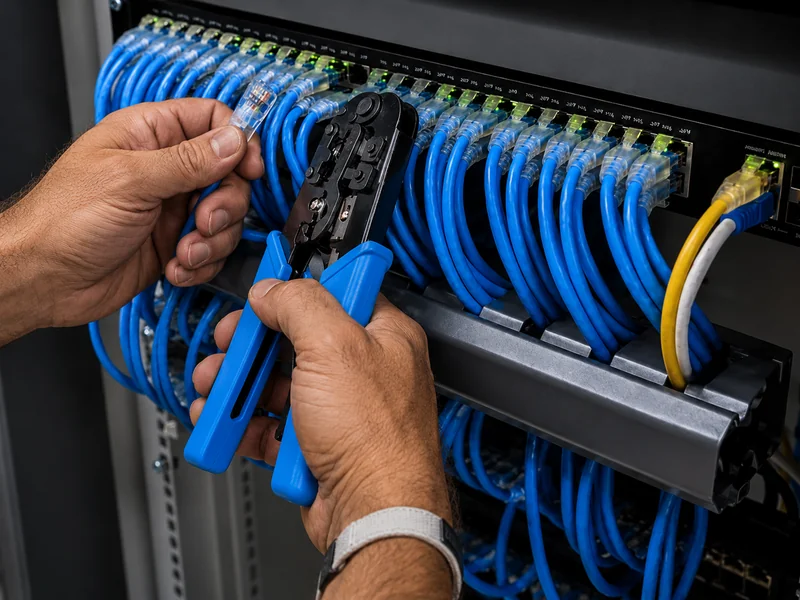
Structured cabling provides a reliable backbone for modern homes and commercial environments. Calibre Connect installs Cat6 and Cat6a cabling across Sydney with clean pathways, consistent termination standards, and maintainable distribution via patch panels and comms cabinets. This approach supports stable connectivity for office endpoints, home workspaces, Wi-Fi access points, POE devices, and CCTV IP cameras.
Typical Installation Process (6 steps)
Step 1.
Confirm device locations and performance needs (WAPs, POE devices, CCTV, office endpoints).
Step 2.
Select cable type (Cat6 or Cat6a) and plan pathways and separation requirements.
Step 3.
Run cables from each outlet back to a central comms point or patch panel location.
Step 4.
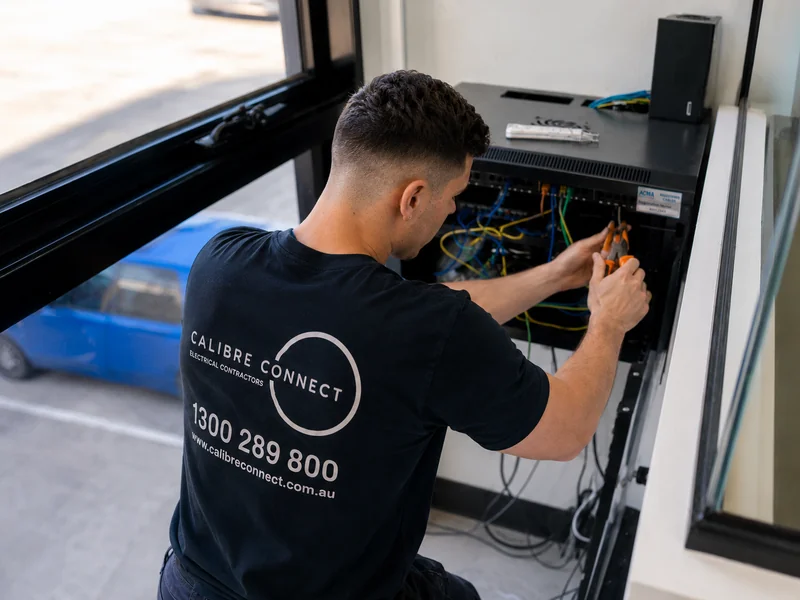
Terminate to RJ45 outlets and patch panels, label ports for maintenance.
Step 5.
Test and verify cabling performance appropriate to the scope.
Step 6.
Provide a tidy handover with patching guidance and documentation notes for future changes.
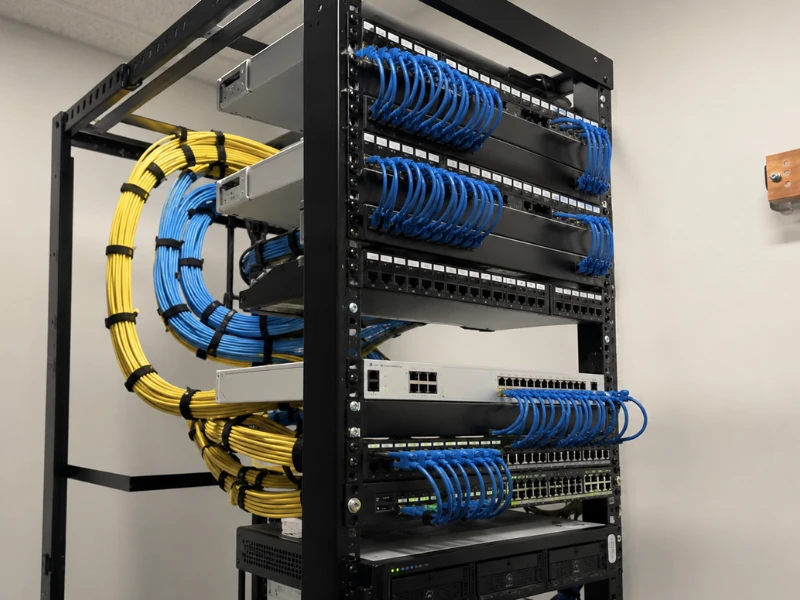
Structured Cabling Layout (What You Get)
A structured installation is designed for clarity and maintainability:
Cat6 vs Cat6a (Selection Framework)
The right cable choice depends on the site and how the network will be used:
Cat6
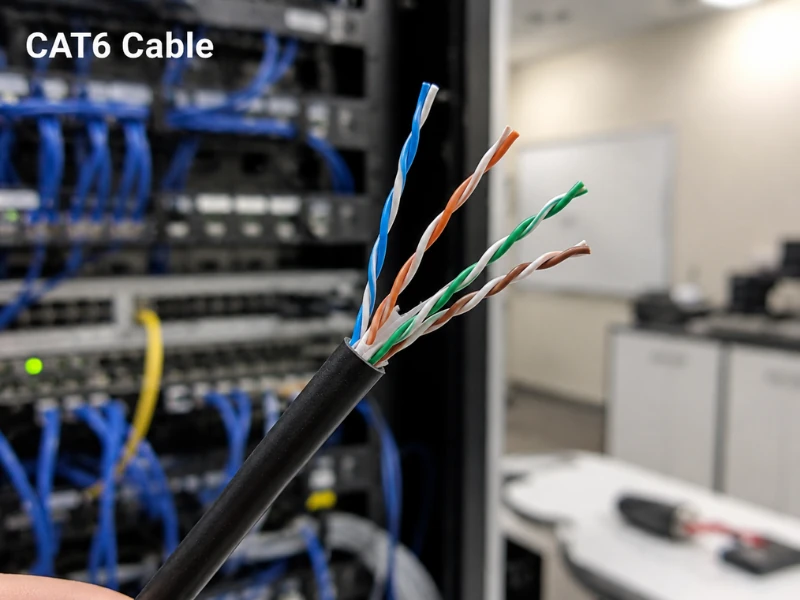
Cat6 suits many residential and light commercial applications where pathways are
Cat6a
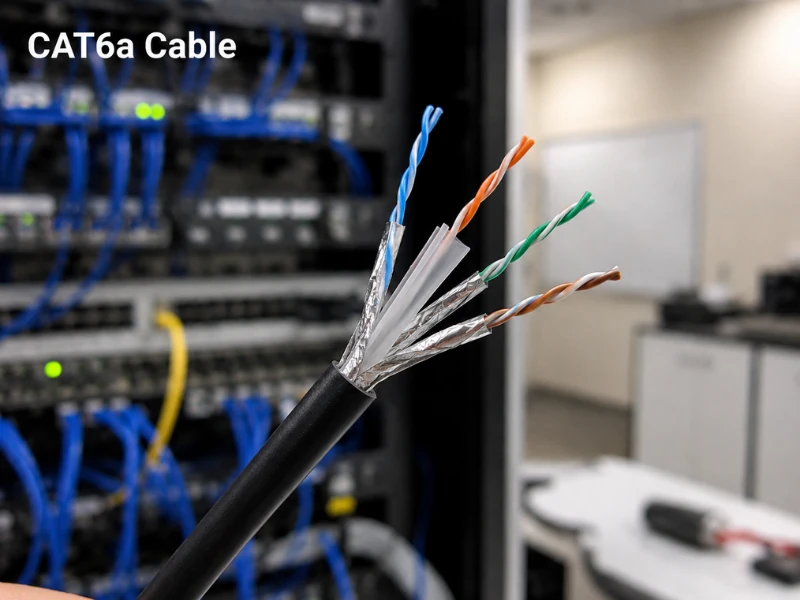
Cat6a is often selected where higher performance headroom is required, pathways run through service-dense environments, or the project includes higher POE density for WAPs, cameras, and building systems.
For both, the installation quality, routing strategy, termination consistency, and testing are what determine whether the network remains stable over time.
Cat6 vs Cat6a (Quick Comparison Table)
|
Use case |
Cat6 |
Cat6a |
Notes |
|---|---|---|---|
|
Typical residential rooms and home offices |
Common choice |
Optional |
Pathways and termination quality matter most |
|
Dense POE endpoints (WAPs, CCTV IP) |
Suitable in many cases |
Often preferred |
Consider endpoint density and pathway environment |
|
Service-dense commercial pathways |
Can be suitable |
Often preferred |
Additional headroom can help in complex environments |
|
Comms cabinet with patch panel distribution |
Suitable |
Suitable |
Both work well with clean patching and labelling |
|
Future expansion planning |
Suitable |
Suitable |
Match cable choice to realistic needs and access constraints |
Install structured cabling for consistent performance
NBN Integration and Relocations (FTTP, FTTC, HFC)
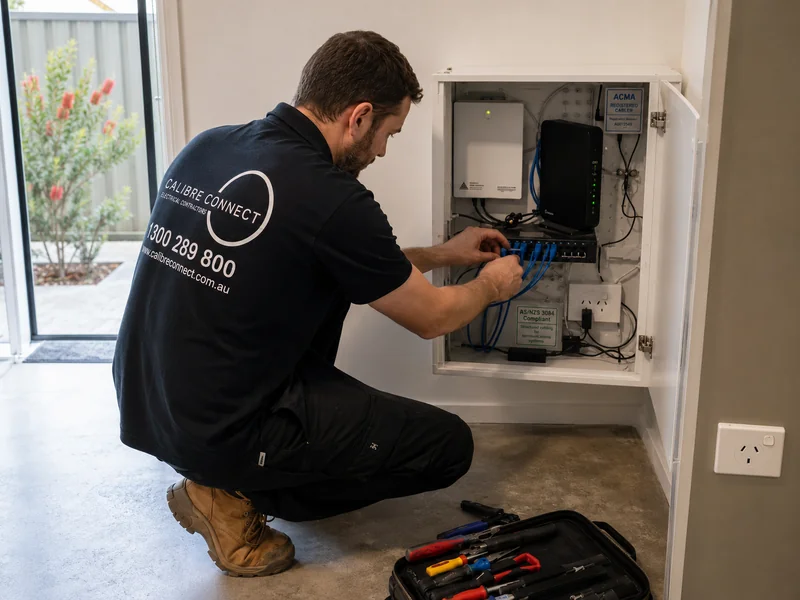
A reliable network depends on more than cable type. It depends on where NBN equipment and the router are placed, how internal cabling is distributed, and whether pathways support future changes. Calibre Connect delivers NBN integration within the premises across common access types including FTTP, FTTC and HFC, with structured internal distribution to key rooms, workspaces, and comms cabinets where required.
NBN Equipment and Router Placement (Mini Guide)
A practical NBN layout starts with correct placement and internal distribution:
Internal Cabling for NBN Layouts
We design and install internal cabling from the NBN equipment location to the router and network distribution points, then extend structured cabling to rooms and endpoints based on how the site will be used. This includes clean runs to office locations, living areas, comms cabinets, and any planned WAP backhaul points to support reliable coverage.
Upgrading Legacy Wiring for Modern Networks
In older Sydney buildings, internal cabling may include degraded coaxial and legacy telephone twisted pair runs that are no longer suitable for modern network performance expectations. In Art Deco blocks and other ageing stock, upgrading internal cabling to structured Cat6 or Cat6a provides a consistent, maintainable pathway for modern internal distribution, particularly where the site is moving to or already supports FTTP-ready internal networking.
Scope Boundary
NBN activation, external network works and connection charges are controlled by NBN and the service provider. Calibre Connect scopes and quotes internal cabling and premises integration works within the property.
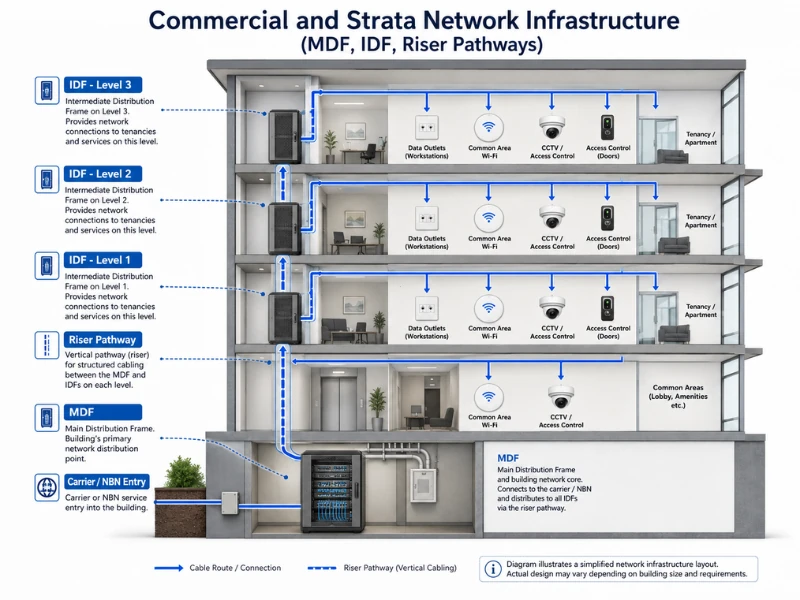
Commercial and Strata Network Infrastructure (MDF, IDF, Riser Pathways)
Strata and commercial environments require maintainable network infrastructure that can support tenancy change, building services, and long-term supportability. Calibre Connect delivers structured cabling for offices, retail, mixed-use buildings and strata towers, including controlled pathways, compliant terminations, and organised distribution through comms cabinets and patch panels.
MDF and IDF Patching, Jumpering and Cabinet Work
In commercial and strata buildings, network distribution may involve MDF and IDF environments and building pathways. We complete patching and jumpering within the building’s customer cabling environment to support tidy distribution, clear labelling, and serviceable handover conditions for property managers and building teams.
Server Racks, Comms Cabinets and Patch Panels
Where a comms cabinet or rack is required, the goal is a system that is straightforward to maintain:
Strata and Commercial Handover Pack
For strata managers, commercial property managers and builders, handover quality matters as much as install quality. A premium handover focuses on:
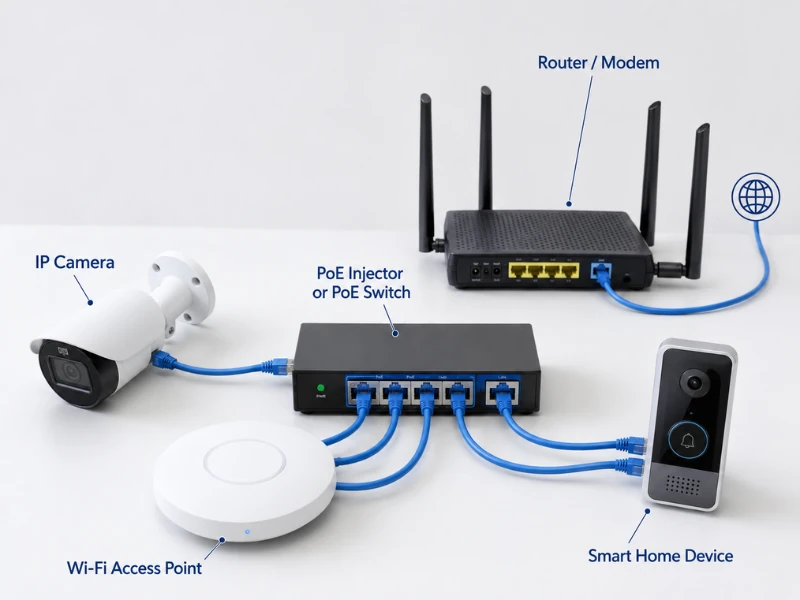
Wi-Fi Access Points, POE, CCTV and Smart Home Cabling
A well-designed network supports more than general internet access. It supports stable Wi-Fi coverage, reliable endpoint connectivity, and maintainable infrastructure for building and home systems. Calibre Connect installs data cabling that supports modern endpoints, with pathways and terminations planned for long-term serviceability.
Hardwired WAP Backhaul for Stable Coverage
Where Wi-Fi coverage matters, hardwired backhaul to wireless access points (WAPs) is a straightforward way to improve stability compared to relying on wireless-only uplinks. We install structured cabling to planned WAP locations, allowing access points to be positioned where they perform best for the space, not simply where existing cabling happens to be available.
POE for WAPs, Cameras and Building Endpoints
Power over Ethernet (POE) can simplify installation and improve maintainability for supported devices by delivering power and data over a single cable run. We design cabling pathways and endpoint locations to support POE deployments for WAPs, CCTV IP cameras, and other networked devices where required, with clean terminations back to the comms cabinet or patch panel.
CCTV IP Cabling and Network-Ready Pathways
For CCTV IP systems, cabling quality and pathway planning determine whether the system is serviceable over time. We install structured cabling to camera locations with practical routing, tidy terminations, and a clear distribution layout so maintenance and upgrades can be managed without unnecessary rework.
Smart Home Automation Wiring
For smart home systems, structured cabling supports a stable foundation for hubs, gateways, and networked endpoints. We install customer cabling that supports smart home automation wiring upgrades, with device locations and internal distribution planned for practical use and future expansion.
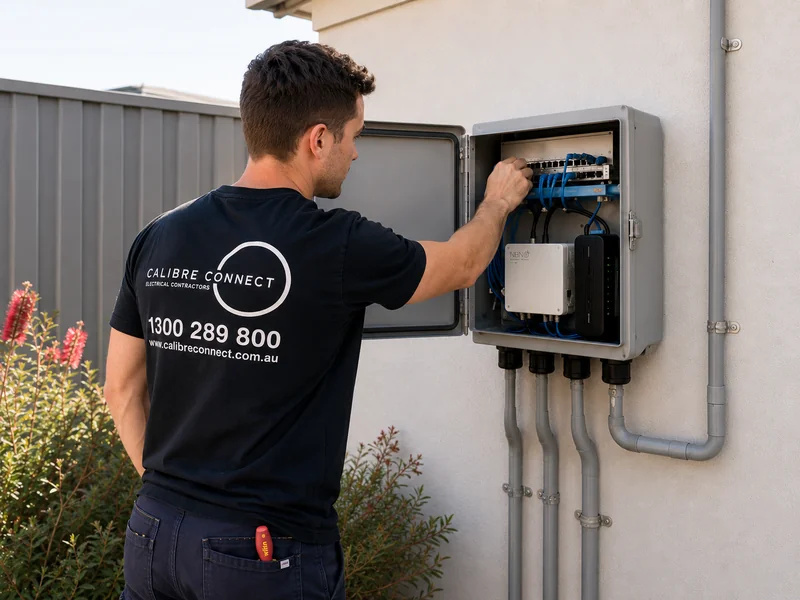
Outdoor Network Boundary Points (IP65 Enclosures and Coastal Conditions)
Outdoor boundary points and exposed network terminations require weatherproofing that is specified correctly from the start. Where customer cabling interfaces with outdoor locations, Calibre Connect installs appropriate containment and enclosures to protect terminations from moisture, dust, UV exposure and physical wear.
Weatherproof Enclosures and IP Ratings
All outdoor network enclosures are specified with an appropriate Ingress Protection (IP) rating for the installation environment. For exposed outdoor locations, IP65 enclosures are typically selected to provide weatherproof protection and reduce the risk of water ingress and premature corrosion of terminations.
Coastal Conditions in Sydney
In the Eastern Suburbs and Northern Beaches, coastal salt air corrosion can accelerate degradation of exposed fixings, enclosures and terminations. For coastal installations, we select corrosion-resistant materials and fixings to support long-term durability, particularly where boundary points and external pathways are exposed to salt-laden air and higher humidity.
Sydney Building Stock: Routing Challenges and Clean Finishes
Sydney’s housing and building stock often determines what a “clean” cabling install looks like. Calibre Connect plans routes based on building structure, access constraints and finish requirements, then selects practical pathways that deliver reliable outcomes without unnecessary surface conduit or compromised presentation.
Federation Homes and Paddington Terraces (Double Brick, Lath and Plaster)
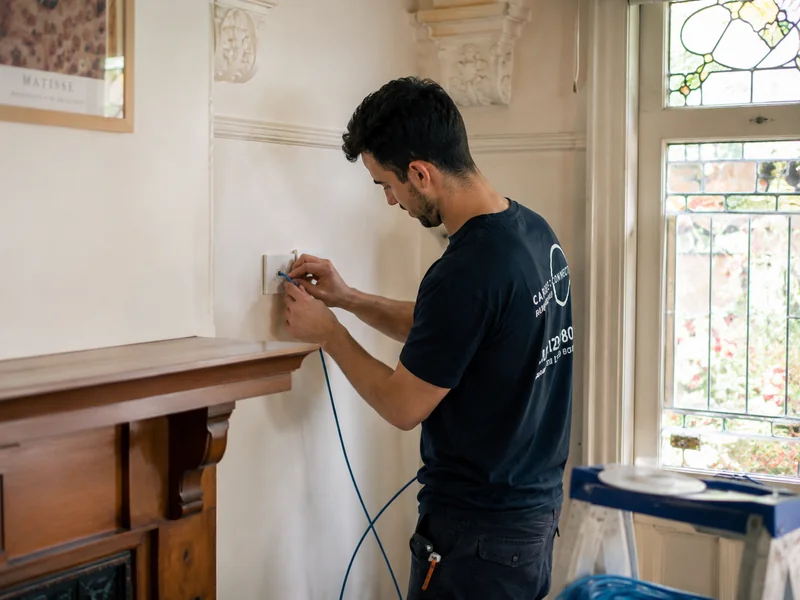
Older homes and terraces commonly involve double brick construction and lath and plaster walls and ceilings, which can limit cavity access and complicate concealed routes. In these environments, we assess practical pathways early, including ceiling void access, wall cavity feasibility, and any heritage or finish constraints that affect the best route to each outlet location. The goal is controlled routing that respects finishes while maintaining compliant installation methods and serviceable outcomes.
Art Deco Blocks: Upgrading Degraded Coaxial and Twisted Pair
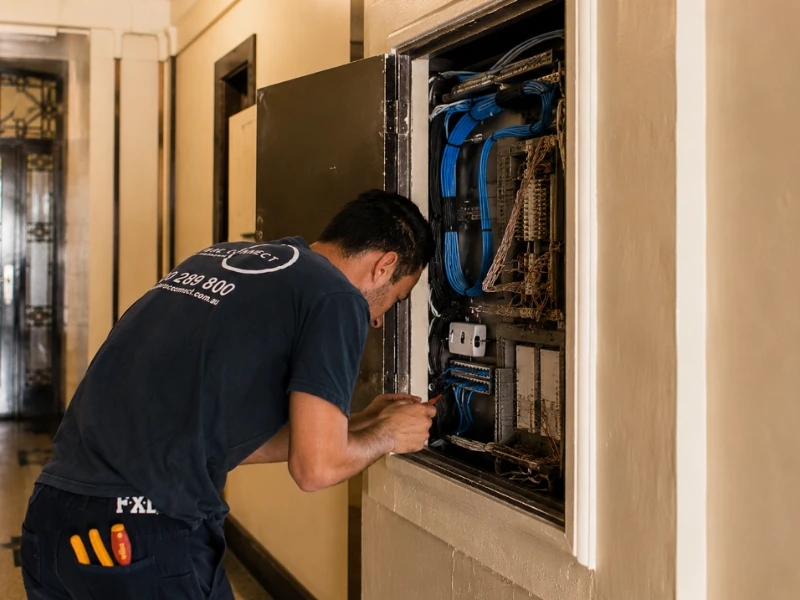
Art Deco buildings and ageing strata stock can contain a mix of degraded coaxial and legacy telephone twisted pair cabling, often installed over multiple decades and altered through piecemeal upgrades. Where internal cabling limits modern network performance or reliability, we install structured Cat6 or Cat6a runs that provide consistent internal distribution and maintainable terminations, particularly for modern NBN integration layouts within the premises.
High Density Strata Towers and Mixed-Service Pathways
In CBD towers and higher density strata buildings, routing is often constrained by slab ceilings, risers, comms cupboards and mixed-service pathways. We plan the cabling scope around approved pathways and access requirements, then deliver structured distribution that remains tidy and serviceable for future maintenance and tenancy changes.
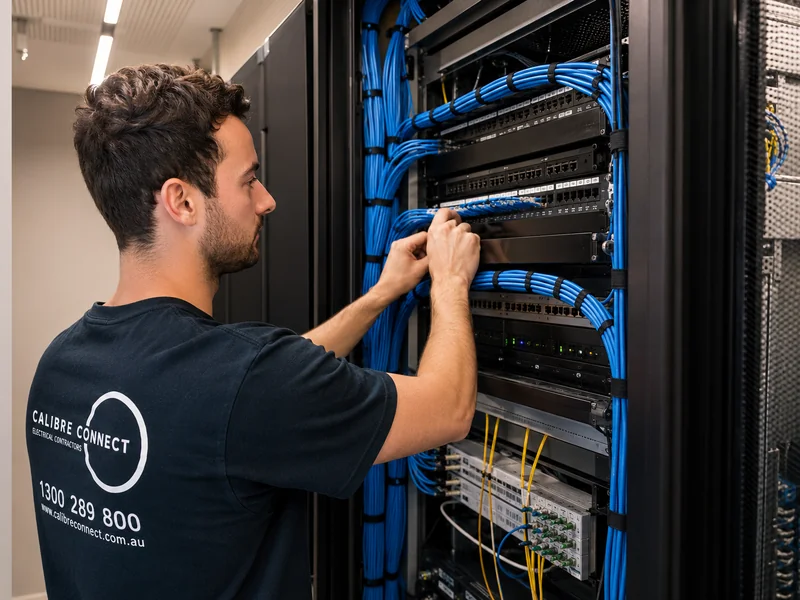
Why Choose Calibre Connect for Data Cabling Installation in Sydney
Data cabling needs to be installed properly from the start. The cable type has to suit the application, pathways need to be planned carefully, terminations need to be consistent, and the finished network should be tidy, maintainable, and compliant. Calibre Connect delivers structured data cabling across Sydney for homes, strata buildings, and commercial sites, with ACMA Registered Cablers, clean routing, and practical handover documentation.
ACMA Registered Cablers for Customer Telecommunications Cabling
Customer premises data cabling is regulated work and must be completed by appropriately registered technicians. Calibre Connect technicians are ACMA Registered Cablers, with installations completed in accordance with the Telecommunications Cabling Provider Rules 2014 and AS/CA S009:2020.
Structured Cabling Designed for Stable, Maintainable Networks
A good network depends on more than just pulling cable. We install structured cabling with dedicated runs back to a central point, consistent terminations, labelled outlets, and patching layouts that make future changes and fault finding far easier.
Cat6 and Cat6a Installations Matched to the Site
Not every project needs the same cabling specification. We install Cat6 and Cat6a based on the actual site conditions, endpoint density, pathway environment, and performance requirements, rather than applying one standard cable choice to every property.
NBN Integration Within the Premises
A practical internal network depends on where the NBN equipment, router, and distribution points are located. We design and install internal cabling that supports NBN integration within the property, including structured runs to key rooms, workspaces, Wi-Fi access points, and comms cabinets where required.
Suitable for Homes, Strata, and Commercial Sites
We complete data cabling installations across detached homes, strata lots, apartment buildings, offices, retail sites, and mixed-use properties throughout Sydney. That includes straightforward room-to-room cabling, comms cabinet fit-outs, and more structured commercial and strata network layouts.
Clean Pathways, Tidy Terminations, and Clear Handover
The quality of the finish matters in data cabling. We focus on neat pathways, labelled ports, organised patch panels, and tidy comms cabinets so the installation remains serviceable for future upgrades, tenancy changes, and maintenance.
What Our Clients Say About Calibre Connect Data Cabling Installation
Service Areas: Data Cabling Installation Matched to Sydney Building Types
The age of the building, the wall and ceiling construction, and the intended network layout all change what a clean data cabling installation looks like. A Federation home with double brick walls needs a different approach to a strata tower with riser pathways, or a commercial tenancy with comms racks and multiple POE endpoints.
Here’s how we tailor data cabling installations across Greater Sydney:
Inner West (Federation Homes, Terraces, and Difficult Concealed Routes)
In suburbs like Leichhardt, Annandale, and Drummoyne, we often work in older homes and terraces with double brick walls, lath and plaster finishes, and limited cavity access.
Typical challenge: concealed cabling routes can be restricted by older construction methods, patched walls, and fragile finishes that do not suit a standard approach.
Our approach: assess pathway feasibility early, plan the cleanest possible cable routes, and install structured cabling in a way that respects the building fabric while still delivering reliable outlet locations and maintainable terminations.
Eastern Suburbs (Coastal Homes and Exposed Outdoor Boundary Points)
For homes and properties in Bondi, Coogee, Maroubra, and Rose Bay, data cabling often needs to account for coastal conditions, outdoor runs, and external network boundary points.
Typical challenge: exposed outdoor terminations and boundary points can deteriorate faster in salt air, humidity, and weather exposure.
Our approach: specify appropriate weatherproof enclosures, use corrosion-resistant materials where needed, and install outdoor cabling pathways suited to the local exposure conditions.
North Shore (Family Homes, Garden Blocks, and Larger Internal Layouts)
In areas like Chatswood, Lane Cove, and Wahroonga, we commonly see larger homes with multiple internal zones, home offices, Wi-Fi access points, and wider cable distribution requirements.
Typical challenge: larger floorplans often need better internal distribution, cleaner central comms layouts, and more planning for wireless access point placement.
Our approach: design structured runs back to a practical central point, plan cabling for stable WAP backhaul and key endpoints, and keep the installation tidy and scalable for future changes.
Sydney CBD and Inner City (Strata Towers, Risers, and Mixed-Service Pathways)
In the CBD, Surry Hills, Zetland, and surrounding inner-city areas, data cabling projects often involve apartment buildings, mixed-use sites, comms cupboards, and tighter approved pathways.
Typical challenge: slab construction, restricted riser access, shared comms areas, and mixed-service pathways can make routing more controlled and documentation more important.
Our approach: work within the approved building pathways, plan structured distribution carefully, and deliver labelled, maintainable cabling suited to strata and higher-density environments.
Hills District (Modern Homes, Home Offices, and Smart Device Density)
For larger homes in Castle Hill, Kellyville, and Baulkham Hills, data cabling projects often relate to home offices, CCTV, WAP coverage, smart home devices, and broader internal network planning.
Typical challenge: wireless-only setups may not provide the stability or coverage needed across larger modern homes with multiple connected zones.
Our approach: install structured Cat6 or Cat6a runs to the rooms and devices that matter most, with a comms layout that supports stronger coverage, cleaner distribution, and easier upgrades later.
Commercial and Strata Sites (MDF, IDF, Cabinets, and Patch Panel Distribution)
Across offices, retail spaces, mixed-use buildings, and strata-managed properties throughout Sydney, data cabling often needs to support broader network distribution and long-term maintainability.
Typical challenge: multiple outlets, comms cabinets, patch panels, and tenancy changes require a network layout that remains organised after handover.
Our approach: install structured cabling with labelled ports, patch panels, cabinet organisation, and practical handover notes so the network is easier to manage, maintain, and expand over time.
FAQs — Data Cabling Installation Sydney
Book a Data Cabling Installation (Sydney)
If you need Cat6 or Cat6a structured cabling, NBN premises integration, comms cabinets, MDF/IDF patching, WAP backhaul cabling, POE-ready runs, or a commercial network fitout, contact Calibre Connect to arrange a site assessment and define the right scope for your building.