


RCD Safety Switch Testing Sydney

Professional RCD testing services to protect your property, people, and electrical systems across Sydney, NSW.
  • Certified testing equipment – Licensed electricians (Licence No: 316227C) use calibrated testers to measure RCD trip times in milliseconds.
  • Compliance reports provided – Each safety switch test records trip time, device condition, and compliance status.
  • Fast Sydney response – Local electricians provide same-day or next-day safety switch testing where available.
  • Full switchboard checks – Testing goes beyond the button test to identify earth leakage, faults, and worn RCDs.

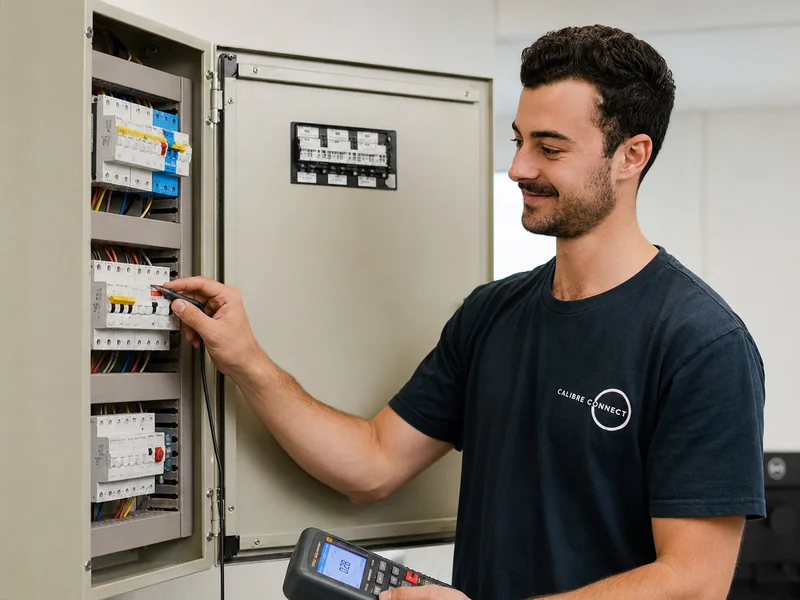
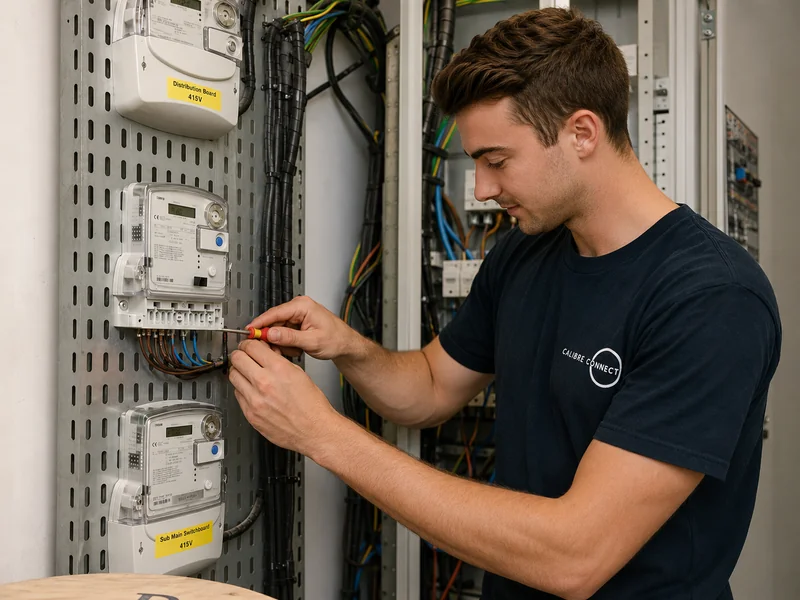
Calibre Connect electrician testing RCD safety switches at a Sydney switchboard
RCD Switch Brands we trust:
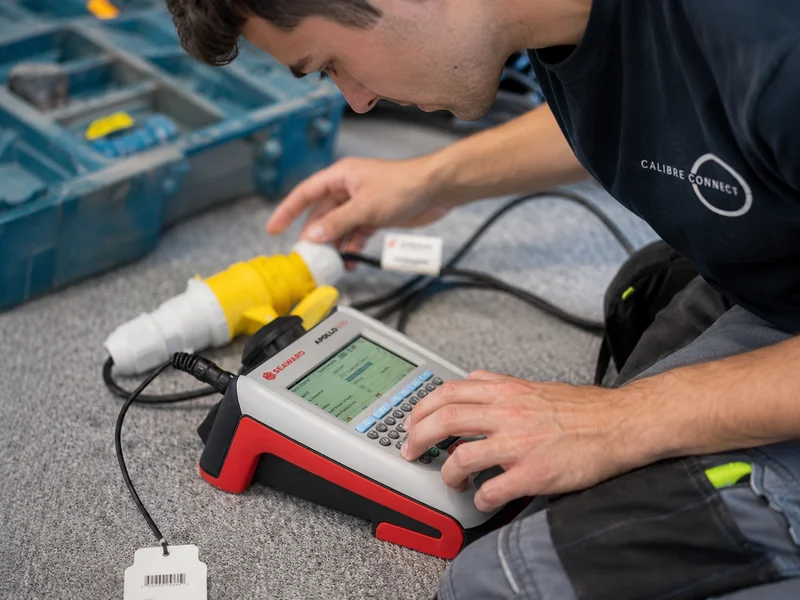
Calibre Connect electrician testing a portable RCD adapter with a Seaward trip-time tester on a Sydney job site

When to Book RCD Safety Switch Testing?

Your Safety Switch Trips Frequently

RCDs that trip repeatedly signal underlying faults in your electrical system. The device might detect genuine earth leakage from damaged wiring or faulty appliances. Frequent trips can also indicate the safety switch itself has degraded. Professional testing identifies whether the RCD responds correctly or needs replacement.

You Haven’t Tested in Over 12 Months

AS/NZS 3760 specifies testing intervals for different environments. Workplaces require RCD testing every three months for construction sites and every 12 months for general commercial properties. Residential safety switches need annual professional inspection beyond your monthly push-button check. Overdue testing creates compliance gaps and safety risks.

New Electrical Equipment Installation

Adding appliances, machinery, or circuits changes the load on your switchboard. New equipment can introduce faults that affect safety switch performance. Testing after installation confirms your RCDs still protect against electric shock with the updated electrical configuration.

Your Property Changed Use or Ownership

Purchasing a home, leasing commercial space, or converting a building’s purpose triggers fresh compliance requirements. Previous owners may have skipped maintenance. A full RCD safety switch inspection establishes baseline protection and identifies devices past their service life.

The Test Button Doesn’t Work Properly

When you press the test button on your safety switch, it should trip immediately and cut power. A delayed response, no response, or a button that feels stuck indicates internal component failure. This simple check reveals devices that won’t protect you during an actual fault. Professional testing measures exact trip times to confirm the RCD meets safety standards.

RCD Safety Switch Testing Services We Handle in Sydney
  • Workplace RCD testing for PCBUs
    Scheduled testing and recorded results for offices, retail, light industrial, and managed sites where WHS obligations and documentation matter.
  • Commercial switchboard and distribution board RCD programs
    Testing across multiple DBs, consistent device identification, and reporting that maps results to specific boards and circuits.
  • Strata common property RCD testing
    Testing in common areas and shared distribution boards, with results documented for owners corporations and strata managers.
  • Rental property safety switch testing
    Testing and reporting suited to tenancy access windows, with a clear defect pathway if a device fails or the board condition needs work.
  • Home switchboard RCD and RCBO testing
    Measured trip-time testing and coverage checks so you know which circuits are actually protected.
  • Safety switch nuisance tripping diagnostics
    Testing that separates “faulty device” from “leakage on the circuit”, including targeted isolation checks and next-step recommendations.
  • RCD replacement and RCBO changeovers (when a device fails)
    Replace failed devices and confirm operation and coverage after rectification. Where replacement is electrical installation work, CCEW is provided for that work as required. This can overlap with safety switch installation when devices are being upgraded rather than swapped like-for-like.
  • Type A upgrade pathway for modern electronic loads
    Where the site has older Type AC devices or recurring nuisance behaviour on modern loads, we scope the changeover path and record what’s installed.
  • Defect reporting and rectification scoping
    Clear defect classification, make-safe decisions where required, and a rectification pathway for failed devices or unsafe board conditions.
Calibre Connect electrician pressing the RCD test button on a switchboard during a quarterly safety switch check in Sydney

What We Check Before Handover

  • Confirm safe isolation points and circuit identification before testing starts, especially where boards have mixed labelling or staged upgrades.
  • Identify each device type and what it protects: RCDs protecting multiple circuits versus RCBOs protecting individual circuits, and note any circuits that appear unprotected.
  • Push-button integral test on each RCD or RCBO as a basic functional check, then follow with instrument testing for measured results.
  • Operating time testing with an RCD tester, recording trip times in milliseconds against each device. This is the part that separates “it trips” from “it trips fast enough under a real test”.
  • Confirm the trip current rating is appropriate for the application, with most domestic and general-purpose protection based around 30 mA devices. Where special-risk areas use different devices, we record what’s installed and what it’s protecting.
  • Verify that an RCD trip actually removes supply to the circuits it is meant to protect. On some older boards, circuits have been moved or extended and the device coverage isn’t what the labels suggest.
  • Check the switchboard condition that affects RCD reliability: enclosure integrity, cable entries, water tracking, heat signs at terminations, and corrosion on external boards in coastal areas.
  • Where nuisance tripping is reported, run targeted checks to separate device failure from circuit leakage. That can include isolating suspect circuits, checking neutral integrity, and narrowing down leakage contributors before recommending replacement.
  • Document results in a clear test record or logbook format so the site can prove testing was carried out and what the measured outcomes were.
  • If a device fails testing or will not reset, classify it as a defect and set the next step: replacement of the faulty unit, or fault finding on the connected circuit where leakage is suspected.
  • Where a safety switch is replaced or a new device is installed as part of rectification, the electrical installation work is documented and a CCEW is provided for that installation work as required.
  • Testing and installation decisions are made to suit the site and align with AS/NZS 3000:2018 where isolation access and switchboard work are part of the outcome.

Compliance Intervals, Logbooks, and
What “Testing” Actually Means on a Sydney Site

Sydney compliance work is often retrofit work. We plan around ceiling types, cable access, and the realities of older construction so the result is compliant, neat, and serviceable.

Push-button Checks Versus Instrument Testing

The built-in push button is a basic functional check. It tells you the mechanism can trip using the device’s internal test circuit. It does not confirm operating time under an external test, and it doesn’t prove the device behaves correctly under different test conditions.

Compliance-style RCD testing uses an RCD tester or PAT-style test equipment to measure trip times in milliseconds and record the result against the specific RCD or RCBO and the board it’s installed in. That record matters on workplaces and managed buildings because it’s evidence the protection device was actually tested and what the measured outcome was.
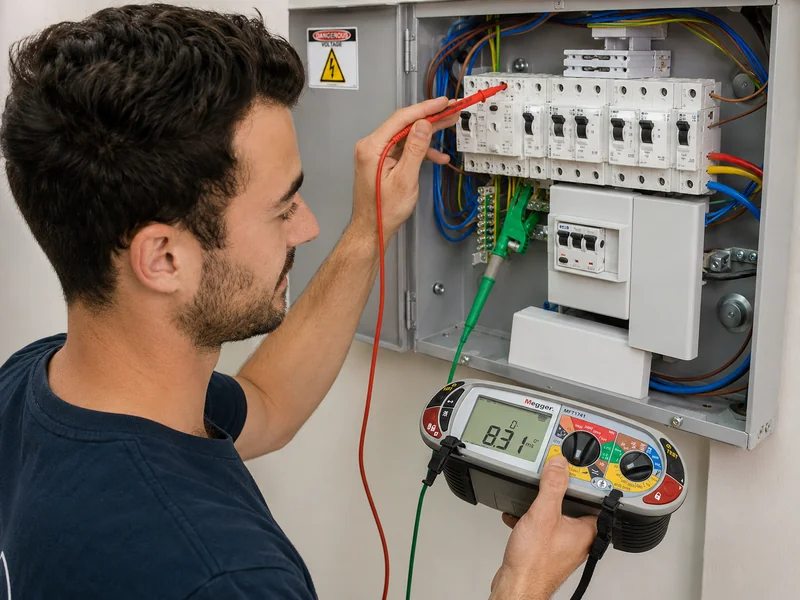
Electrician measuring RCD trip time on a consumer switchboard with a multifunction tester in Sydney
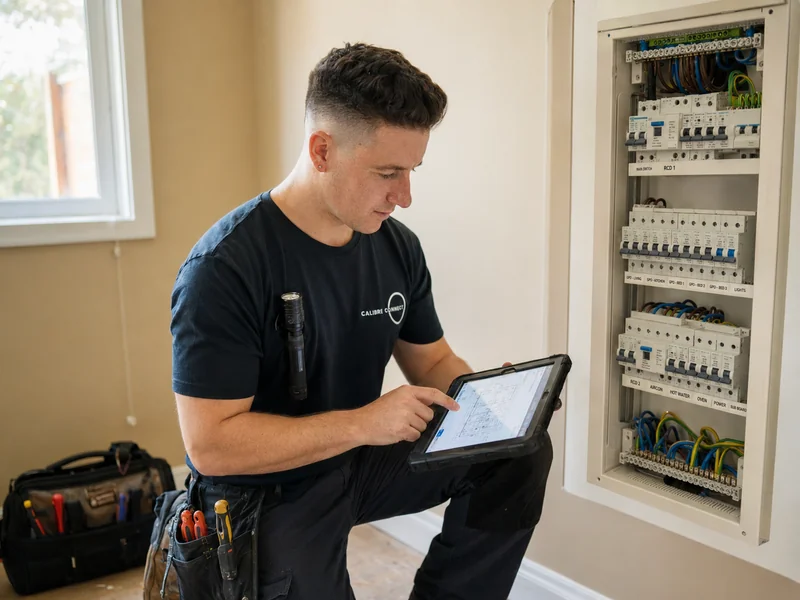
Calibre Connect electrician recording RCD test results on a tablet to issue a compliance certificate in front of a switchboard in Sydney

Testing Frequency & Why Logbooks Matter

Testing frequency isn’t just a preference. On commercial sites and managed assets, the expected testing interval is usually defined by the site’s safety framework and the standards it works under. When a site says it is aligned to AS/NZS 3760:2022 intervals, the practical requirement becomes: consistent testing, consistent records, and a logbook or asset register that links each result to the correct board and device.

For facilities managers and PCBUs, the risk isn’t only an RCD that fails. It’s a missing or inconsistent record trail that makes it hard to prove the testing was done, when it was done, what the results were, and what defects were actioned.

What a Usable RCD Testing Record Includes

A record that actually helps you manage a site typically includes:
  • Retest results after any replacement or rectification work
  • Site area and board ID (MSB or DB reference)
  • Device type (RCD or RCBO), rating, and what it protects
  • Operating time results in milliseconds from instrument testing
  • Notes on nuisance tripping symptoms or environmental risks (moisture, corrosion, damaged enclosures)
  • Defects found, priority, and what action was taken or quoted
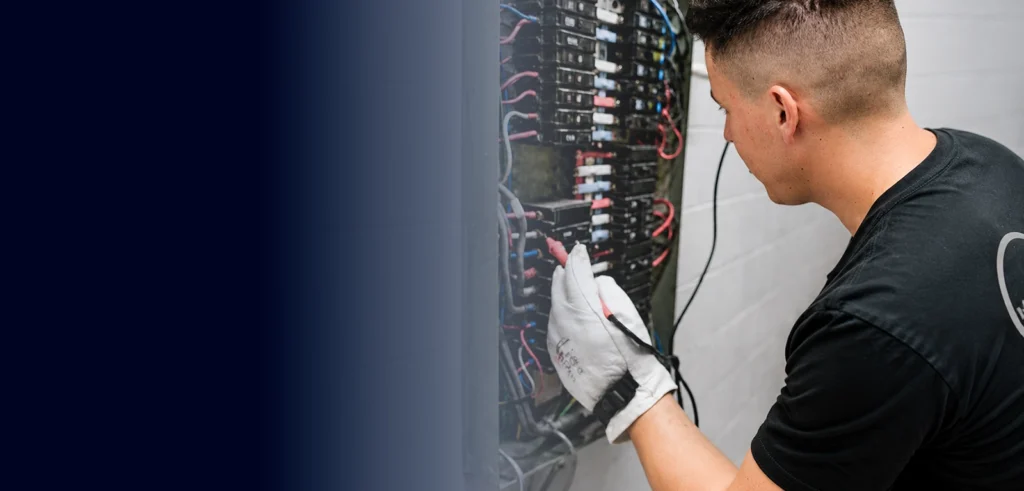
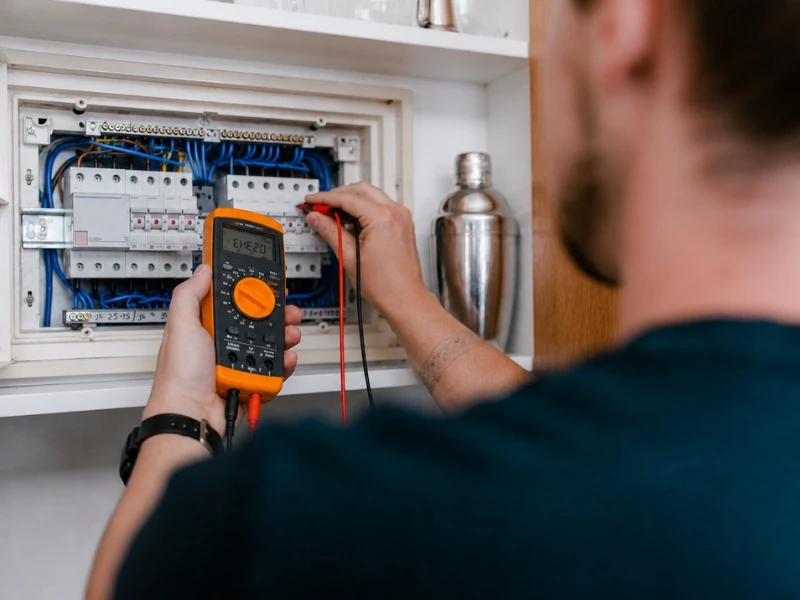
Electrician testing switchboard circuits with a multimeter for an EV charger installation in Sydney
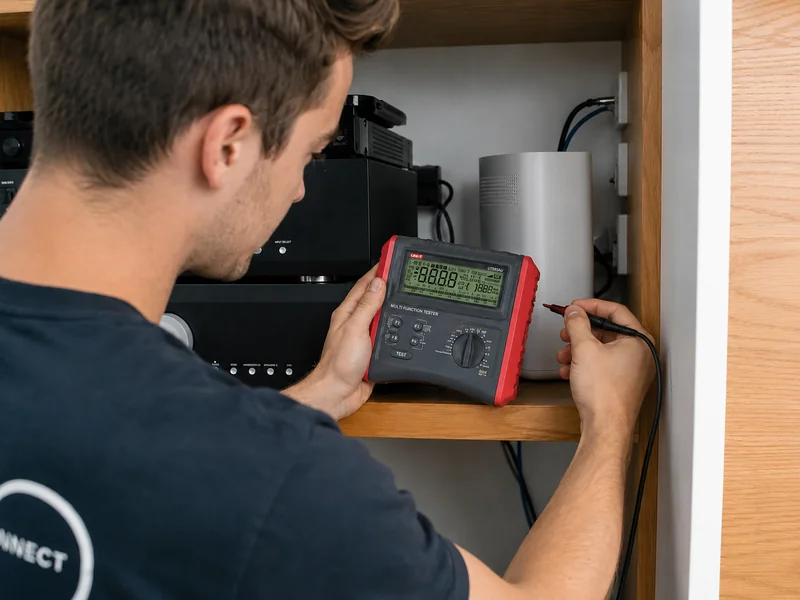
Calibre Connect electrician using a handheld RCD tester on a home appliance cabinet during a residential safety switch test in Sydney

Nuisance tripping, device types, and what changes the fix pathway

Why safety switches trip when nothing “looks wrong”

Most nuisance tripping jobs are caused by leakage or neutral issues that only show up under load or when moisture and temperature change.

Common causes on Sydney sites:

  • water ingress into outdoor circuits, signage, or garden lighting creating earth leakage
  • moisture in roof spaces or subfloors affecting older cabling or junctions
  • neutral faults or shared neutrals after staged renovations, especially in older switchboards
  • appliances with leakage under heat, like dishwashers, hot water units, and some HVAC equipment
  • high-frequency leakage and harmonics from modern loads in commercial settings

Testing doesn’t stop at “the RCD trips”. The goal is to separate:

  • a device that is out of spec and needs replacement
  • a circuit that is leaking to earth and needs fault finding
  • a wiring configuration problem, like a neutral integrity issue, that will keep causing trips until corrected

Where the symptoms point to circuit leakage or intermittent faults, it overlaps with electrical fault finding so the circuit is narrowed down before parts are swapped blindly.

RCD types in plain terms, and why Type A is often the upgrade path

Older switchboards can still have Type AC RCDs installed. On modern sites with electronics, LED drivers, and switch-mode power supplies, the fault waveforms are not always a clean AC sine wave. That’s why Type A devices are commonly the practical upgrade path, because they’re designed to respond to pulsating DC fault components that Type AC devices can miss.

We keep this part simple:

  • record what type is installed now
  • confirm whether the loads on that device include modern electronics
  • where Type AC devices are present, scope a staged changeover to Type A where it makes sense for the circuits being protected

Replacing an RCD doesn’t fix leakage on a circuit. It only changes the protective device.

RCBOs versus RCDs, and when the board strategy matters

An RCD can protect multiple circuits. An RCBO is a combined RCD and breaker protecting a single circuit. On boards with repeated nuisance trips, RCBO conversion is often the cleaner pathway because it:

  • isolates faults to one circuit instead of taking out a whole group
  • makes fault finding faster because the trip points to a specific circuit
  • reduces the chance that multiple small leakages across several circuits add up and trip a shared device

If testing shows coverage gaps, outdated devices, poor labelling, or board condition problems that prevent clean protection arrangements, the fix can move from “testing only” into a broader board strategy and electrical switchboard upgrades rather than repeated callouts for the same symptoms.

Not sure what you need?

RCD Safety Switch Testing Cost in Sydney, and What Changes the Price

At Calibre Connect, the cost of RCD (Residual Current Device) testing depends heavily on whether you are scheduling a routine commercial compliance check or requiring our licensed electricians for residential fault finding. While the actual trip-time test takes only minutes, our pricing structure accounts for travel, documentation, and the volume of circuits being tested.

Here is a breakdown of what you can expect to pay when you partner with us:

  • Per-Unit Testing Rates: For commercial and strata premises, we typically charge a fixed rate per safety switch. This generally ranges from $5.00 to $7.60 per unit, which includes the physical test, digital logging, and comprehensive compliance reporting.
  • Minimum Call-Out Fees: Because testing individual switches is fast, we apply a minimum call-out or site-visit fee. Our standard call-out fees sit between $120 and $160, which covers the initial travel and the first 10 to 15 safety switch or appliance tests.
  • Standard Hourly Rates: If you are hiring our electricians for residential testing or complex switchboard diagnostics, our standard hourly labour rates range between $90 and $140 per hour, in addition to the initial call-out fee.

What Changes the Price?

Several variables will influence your final quote with Calibre Connect:

  • Volume of Circuits: Commercial facilities, strata properties, and industrial sites with dozens of RCDs benefit from economies of scale. High-volume testing significantly reduces the average cost per switch.
  • Operating Hours: For businesses that cannot afford power interruptions during the workday, our team can perform testing after hours. Weekend or night-time call-out fees frequently range from $200 to $450.
  • Failures and Replacements: An RCD test isn’t just a tick-box exercise, if a safety switch fails to trip within the required timeframe (typically under 300 milliseconds), it is non-compliant and dangerous. Replacing a faulty safety switch during the same visit will add $150 to $280 per device for parts and professional installation by our team.
  • Bundled Compliance Services: Facilities managers often bundle our RCD testing with portable appliance testing (test & tag), emergency light testing, or switchboard thermal imaging. While this increases the upfront invoice, it eliminates the need to pay multiple call-out fees to us throughout the year.

Pricing questions

What’s included?

Device identification, push-button functional check, instrument operating time testing with recorded trip times, confirmation of what each device protects where practical, and a results record suitable for site maintenance files.

What’s outside scope?

Replacement of failed RCDs or RCBOs, repairs to switchboard defects, and extended fault diagnosis on circuits that show leakage or neutral issues.

What makes quoting inaccurate before a site visit?

Unknown device count, unknown number of boards and DBs, unclear labelling, limited access windows, and unknown reporting requirements. Nuisance tripping history can also change the scope.

When does replacement or installation work become part of the job?

When a device fails testing, will not reset, or is found to be unsuitable for the circuit arrangement, replacement becomes the practical next step. Where RCDs or RCBOs are replaced or installed as electrical installation work, that work is documented and a CCEW is provided for the installation work as required.s by swapping one component and hoping for the best.
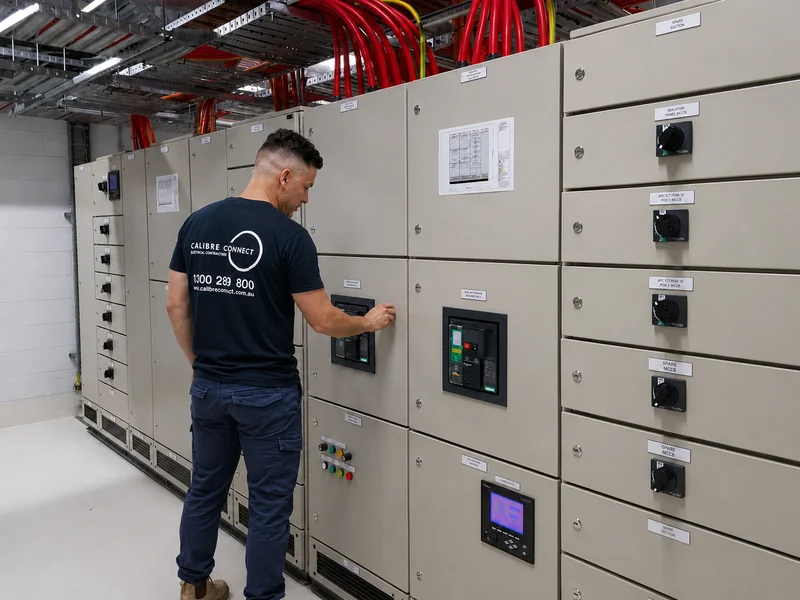
Calibre Connect electrician testing RCD protection on a commercial main switchboard with multiple breaker panels in Sydney

How Our RCD Safety Switch Testing Process Works

Step 1: Confirm scope, access, and what needs to be proven

We confirm how many switchboards and distribution boards are on site, how many RCDs and RCBOs need testing, and what reporting format you need at the end. On commercial and strata sites, we also confirm access windows and whether any critical circuits need staged isolation.

Step 2: Identify devices and map protection coverage

At each board we identify the device type and rating, note what it protects where practical, and flag obvious coverage gaps or labelling issues so results don’t get logged against the wrong device.
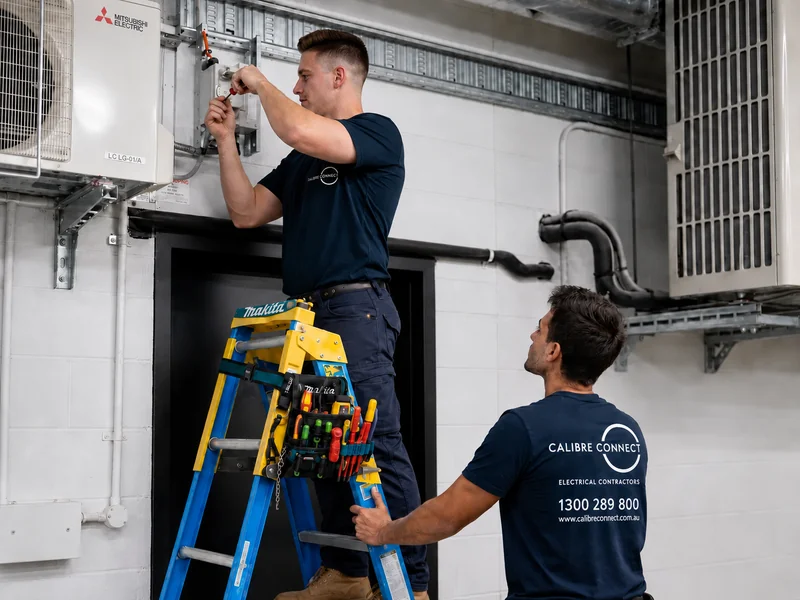
Two Calibre Connect electricians working from a ladder on equipment circuits during RCD safety switch testing in Sydney

Step 3: Run instrument tests and record measured results

We complete the push-button functional check, then run operating time tests using an RCD tester, recording trip times in milliseconds against each device. Where results are borderline or inconsistent, we retest to confirm the outcome and separate device behaviour from site conditions.

Step 4: Walkthrough, defects, and next-step pathway

You get a clear results record or logbook entry set, plus defect notes where devices fail, will not reset, or where board condition creates risk. If a device replacement or new installation is required, we scope that rectification work and provide the required documentation for the installation work, including CCEW where applicable.


Why Choose Calibre Connect for RCD Safety Switch Testing

Trip-time testing is measured and recorded

Operating time is measured in milliseconds and recorded against the actual device and board.

We separate device failure from circuit leakage

Testing is structured so the next step is clear: replacement, circuit diagnostics, or correction of wiring configuration issues.

Coverage and labelling are checked against reality

Where labels don’t match circuits, the report reflects what’s actually protected.

Reporting is built for workplaces and managed assets

Results are documented in a format that supports maintenance files, audits, and defect tracking.

We call out board condition that drives risk

Water tracking, corrosion, heat signs at terminations, and damaged enclosures are documented as defects where they affect reliability.

Clear rectification pathway when something fails

If a device fails testing or will not reset, the next step is set out clearly. Where replacement or installation work is performed, the installation work is documented and CCEW is provided for that work as required.

What Our Clients Say About Calibre Connect Electrical

  • We needed RCD testing across our commercial site for our WHS records, the previous arrangement was basically someone pressing the test buttons once a year, which we knew wasn’t enough. Calibre Connect ran proper instrument testing on every device across all our distribution boards, recorded the trip times in milliseconds, and gave us a logbook that maps each result back to the right board ID. Marc coordinated the testing around our access windows so there was no disruption.
    Marcus D
    Hurstville, NSW
  • Our safety switch kept tripping for no obvious reason and it was driving us mad. Calibre Connect didn’t just replace the device and hope, they tested it properly and traced the actual cause to leakage on an outdoor circuit after rain had gotten into a garden light. They separated the faulty wiring from the device itself, fixed the real problem, and re-tested to confirm it was stable.
    Emily W
    Cronulla, NSW
  • As a strata manager I arranged RCD testing across the common property boards for the owner’s corporation. Calibre Connect identified which circuits were actually protected versus what the old labels claimed, a few didn’t match reality after years of staged changes. They documented everything clearly with priority levels, flagged a couple of older Type AC devices for upgrade, and provided proper records I could pass straight to the committee. Professional and easy to deal with throughout.
    Thomas H
    Sydney (CBD), NSW

Service Areas: RCD Safety Switch Testing Matched to Sydney’s Building Stock

Building age, construction type, and exposure change what a sensible RCD testing program looks like. A single residential switchboard is a different job to a high-rise with shared distribution boards, and coastal exposure changes how often enclosure and termination issues show up alongside protection failures.

Here’s how we tailor RCD safety switch testing across Greater Sydney:

Sydney CBD and Inner City (Commercial offices and high-rise strata)

High-density buildings often have multiple distribution boards and strict access windows.

  • Typical challenge: testing across multiple DBs with results needing clean board and device mapping.
  • Our approach: identify boards and devices by location, record measured trip times per device, and format results so facilities teams can track compliance and defects consistently.

Eastern Suburbs (Coastal properties and external switchboards)

Salt air and moisture increase corrosion risk at external enclosures and terminations.

  • Typical challenge: water ingress and corrosion raising contact resistance and creating intermittent issues.
  • Our approach: document enclosure and entry condition alongside RCD results and flag defects that change reliability, not just whether a device tripped.

Inner West (Heritage terraces and staged upgrades)

Older homes often have mixed protection coverage after partial renovations.

  • Typical challenge: labels that don’t match circuits and protection gaps left behind on older board layouts.
  • Our approach: verify what each device protects, record results clearly, and flag where RCBO conversion or board work is the cleaner path than repeat trips.

North Shore (Federation homes and older supply arrangements)

Supply mains and switchboard layouts can vary widely across older stock, often requiring specialized Level 2 capabilities.

  • Typical challenge: inconsistent board condition and circuit alterations over decades.
  • Our approach: test and document device performance, then highlight defects and protection coverage gaps that affect life safety.

Hills District (Large homes and higher circuit counts)

More circuits and more appliances increase the number of devices and the complexity of fault isolation.

  • Typical challenge: nuisance tripping that’s harder to trace when multiple circuits sit behind shared protection.
  • Our approach: record device results clearly and recommend a protection strategy that isolates faults to the right circuits where repeated trips are happening.

Northern Beaches and Sutherland Shire (Coastal exposure and damp conditions)

Humidity and coastal exposure increase moisture-related leakage risk, especially on outdoor circuits.

  • Typical challenge: intermittent trips linked to wet weather and exposed circuits.
  • Our approach: pair RCD test results with targeted notes on likely leakage contributors so fault finding is directed, not random.

Frequently Asked Questions

It depends on the site type and the compliance framework you’re working under. For workplaces and managed assets, the testing interval is commonly set to align with AS/NZS 3760:2022 requirements, and the key is that results are recorded in a logbook or asset register so you can prove the schedule is being followed.

Common causes include leakage on a circuit, moisture ingress, neutral integrity problems after renovations, or an appliance fault. Testing should separate a device that’s failing from a circuit that’s leaking.

No. The push-button test is a basic functional check only. It doesn’t confirm operating time in milliseconds under an external test, and it doesn’t produce a recorded result that stands up as compliance evidence for managed sites.

Yes. Access and correct board and device mapping are the practical issues. Clear device mapping and a logbook format matter as much as the trip-time result.

An RCD can protect multiple circuits. An RCBO is a combined breaker and RCD protecting a single circuit. RCBOs make fault isolation clearer because one circuit trips instead of a group dropping out together.

Yes. Where replacement or installation work is carried out, the installation work is documented and CCEW is provided for that work as required.

The device needs to trip within the required time under test conditions, and we record the measured operating time in milliseconds. We record the actual result and flag any device that’s out of spec or inconsistent across retests.

Type AC devices can still be found on older boards. With modern electronic loads, Type A devices are often the practical upgrade path. We record what’s installed and scope an upgrade pathway based on the circuits and loads being protected.

Ready to book RCD safety switch testing in Sydney?

If you need documented RCD test results for a workplace, strata building, rental, or home, we can scope the device count and reporting requirements, test trip times with instrument results, and give you a clear defect and rectification pathway where anything fails.

Call today and we’ll lock in a time that suits you.