


Signs You Need Electric Underfloor Heating Installation
Cold tile floors create discomfort in Sydney bathrooms and kitchens during winter. Electric underfloor heating warms tiled floors where daily comfort matters most.
Inefficient ducted heating creates uneven room temperatures. Radiant floor heating distributes warmth across the full floor surface and reduces cold spots.
Poor insulation increases heating costs in older Sydney homes. Underfloor heating warms people and surfaces directly through radiant heat transfer.
Allergies and respiratory sensitivities can worsen when forced air heating circulates dust and allergens through the home. Electric floor heating creates warmth without moving air or stirring up particles.
Renovation and new build projects provide the best time for underfloor heating installation. Heating mats sit beneath the floor covering and stay hidden from view.
Limited wall space restricts radiator and heater placement in modern open plan homes. Underfloor heating removes wall mounted units and gives more freedom for furniture placement.
Where Electric Underfloor Heating Works Best
Electric underfloor heating is usually most useful in rooms where the floor feels cold underfoot and the heated area can be planned before the finished surface is installed. It is often used as comfort heating rather than the only heat source for the whole property, especially in smaller tiled rooms.
Bathrooms
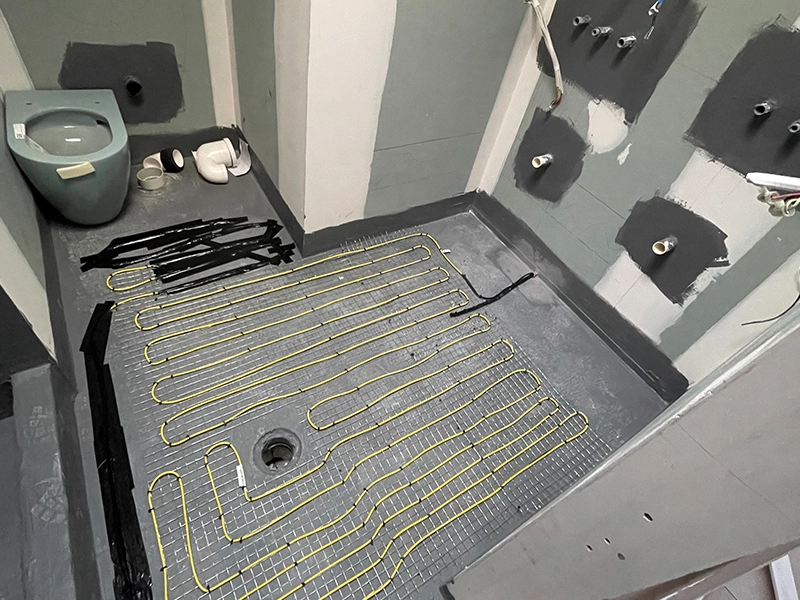
Bathrooms are one of the most common areas for electric underfloor heating because tiles can feel cold, especially in the morning. We plan the heating around the vanity, toilet, shower area where suitable, floor waste, doorway, and walkable zones.
Ensuites
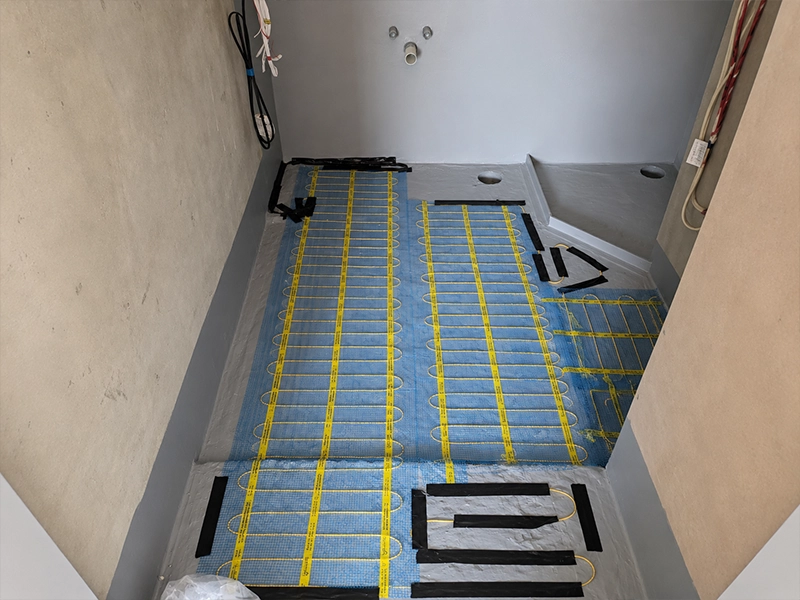
Ensuites often have compact floor areas, so the heating layout needs to be accurate. We check where the heating mat or cable can actually be placed, rather than assuming the whole floor area can be heated.
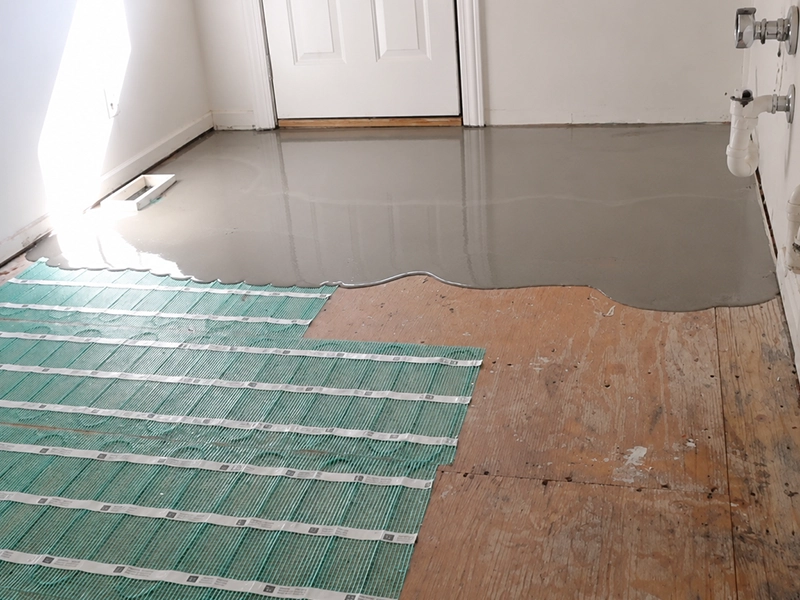
Laundries
Laundry floors can feel cold and damp, but they also include cabinetry, appliances, floor wastes, and wet-area requirements. We plan the heating so it avoids fixed fixtures and works with the finished floor layout.
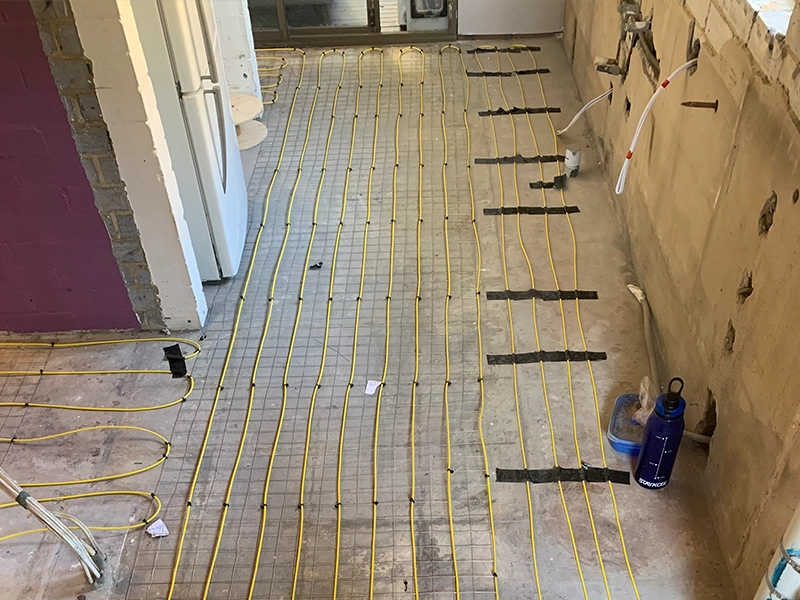
Kitchens
Kitchen heating needs to be planned around cabinetry, islands, appliance spaces, and standing zones. Heating should usually be focused on walkable floor areas, not hidden under fixed joinery or heavy appliances.
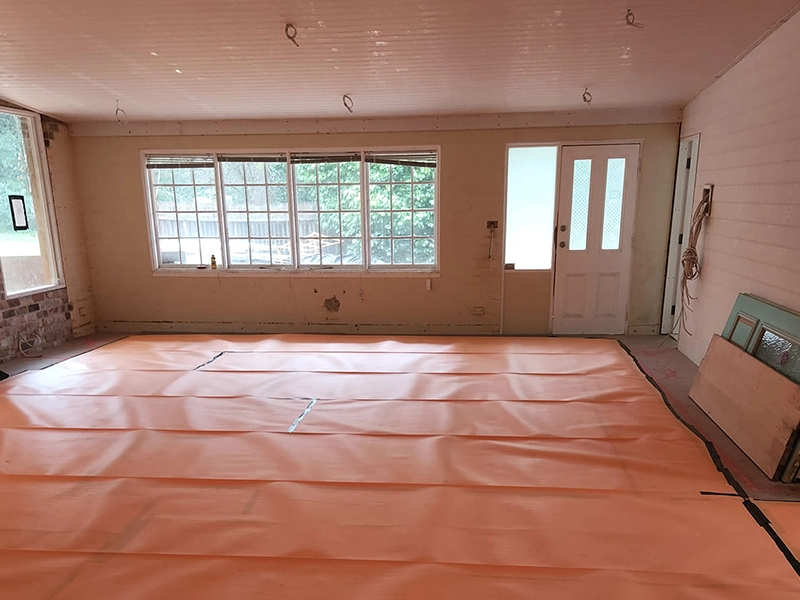
Tiled Living Areas
Large tiled living areas may need more detailed load planning, thermostat zoning, and circuit checks. Calibre Connect checks the heated area, floor build-up, switchboard capacity, and control method before wiring larger zones.
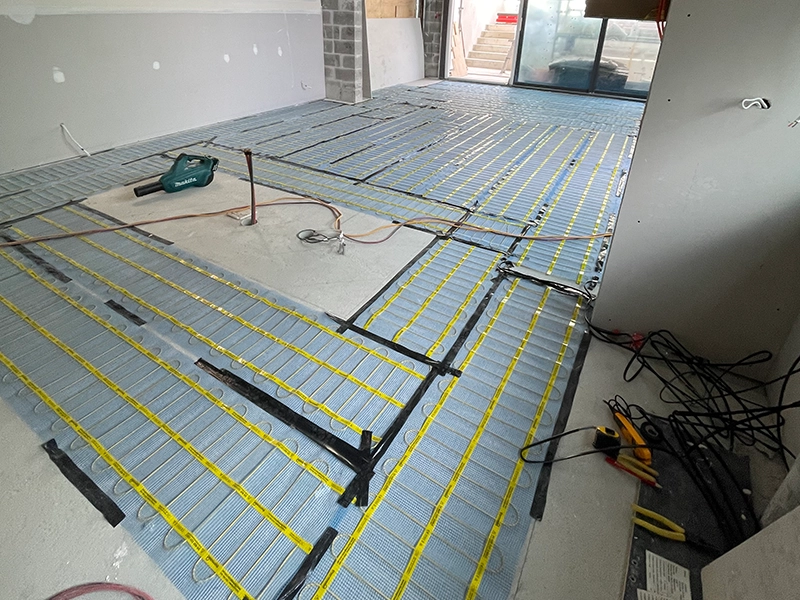
Apartment Floors
Apartments can involve concrete slabs, strata rules, acoustic build-ups, waterproofing details, and limited cable routes. We check the approved floor system and access pathway before committing to the heating layout.
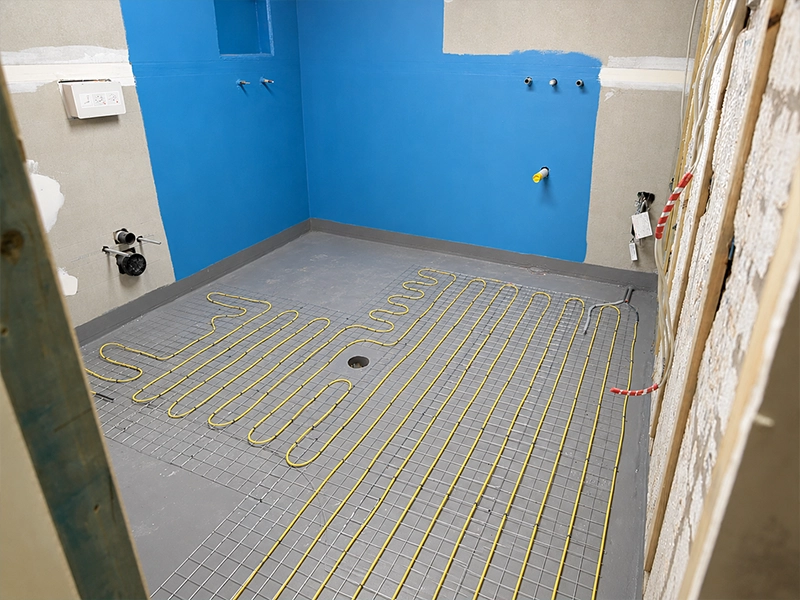
Renovations
Renovations are the best time to add electric underfloor heating because the floor is already being opened or replaced. We coordinate the rough-in, heating layout, sensor pathway, testing, and final connection around the builder, waterproofer, and tiler.
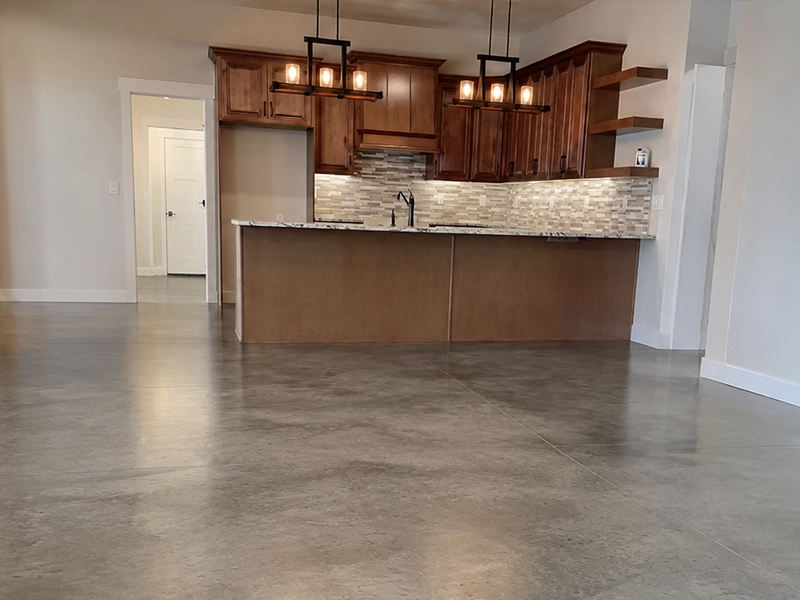
Cold Slab Areas
Concrete slabs and tiled ground-floor areas can feel cold for long periods. We check the floor build-up, insulation where relevant, heated area, and expected warm-up behaviour before recommending the system.
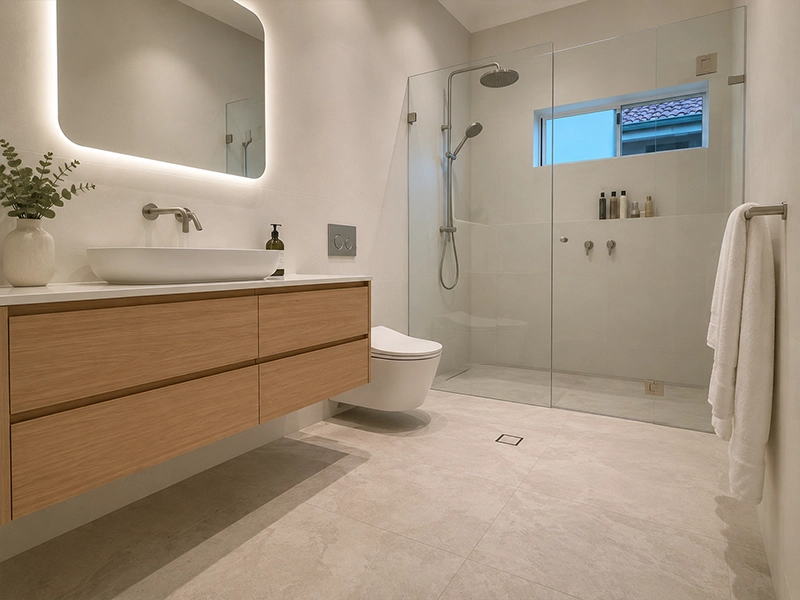
Small Comfort Zones
Small areas such as bathrooms, ensuites, powder rooms, and selected walkways can be good candidates for electric floor heating because the heating area is controlled, practical, and easier to manage with a dedicated thermostat.
Heating Mat, Heating Cable, In-Screed, and Under-Tile Systems
The right electric underfloor heating system depends on the room size, floor build-up, finished surface, installation stage, and how much flexibility is needed around fixtures. A small bathroom may suit a heating mat, while a larger or more irregular area may need loose-lay cable or a different build-up.
|
Heating option |
Best suited for |
What we check first |
Limitation to understand |
|---|---|---|---|
|
Under-tile heating mat |
Bathrooms, ensuites, laundries, and regular-shaped tiled rooms |
Mat size, floor area, tile set-out, cold tail route, thermostat location, and sensor pathway |
Mats cannot simply be cut to fit every shape, so layout planning matters |
|
Loose-lay heating cable |
Irregular rooms, tighter layouts, and areas with fixtures or floor wastes |
Cable spacing, turn points, fixed fixtures, floor waste location, and walkable zones |
Cable must not be cut, crossed, or spaced incorrectly |
|
In-screed heating cable |
Renovations where the heating is installed within a screed or levelling layer |
Screed depth, cable protection, curing sequence, sensor location, and testing stages |
Needs close coordination with the builder, waterproofer, and tiler |
|
In-slab heating |
New builds or major works where heating is planned before the slab is poured |
Slab design, insulation, control zones, circuit load, and construction sequence |
Not usually practical for finished homes or small retrofit jobs |
|
Foil heating system |
Some floating floor systems where compatible with the floor finish |
Floor covering, underlay, heat limits, load, and manufacturer instructions |
Not the usual choice for wet tiled bathrooms |
|
Small bathroom zone |
Compact bathrooms, ensuites, and powder rooms |
Usable heated area, vanity, toilet, shower position, doorway, and floor waste |
The heated area may be smaller than the total room size |
|
Multi-room zone |
Larger renovations, tiled living areas, or multiple bathrooms |
Separate thermostats, load calculation, switchboard capacity, and control layout |
Multiple rooms may need separate circuits or controls |
The system is chosen around the floor build-up and installation sequence, not just the size of the room. Calibre Connect checks the heating product, cable route, sensor location, thermostat load, and testing access before the heating layer is covered.
Layout Planning Before the Floor Is Covered
Electric underfloor heating layout has to be settled before the system is buried under tiles, screed, levelling compound, or another floor layer. Once the floor is covered, a poor layout can leave cold patches, trapped heat, inaccessible sensors, or damaged heating cable that is difficult to repair.
Heating cable must not be cut
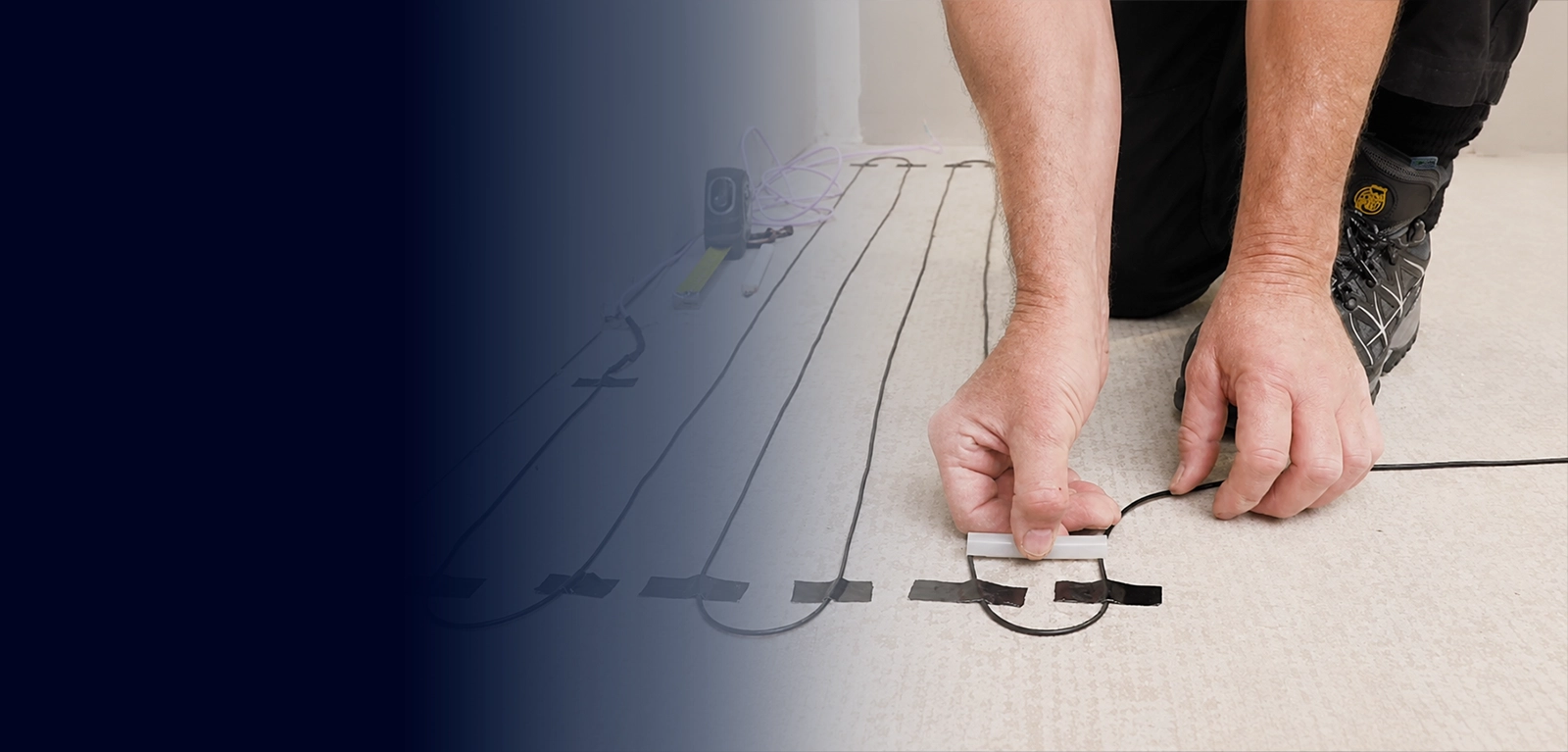
Heating cable is manufactured to a set resistance and output. It should not be shortened to make it fit the room. We plan the heated area around the supplied mat or cable length so the system fits the usable floor space without cutting, crossing, or crowding the cable.
Cable spacing and heated coverage
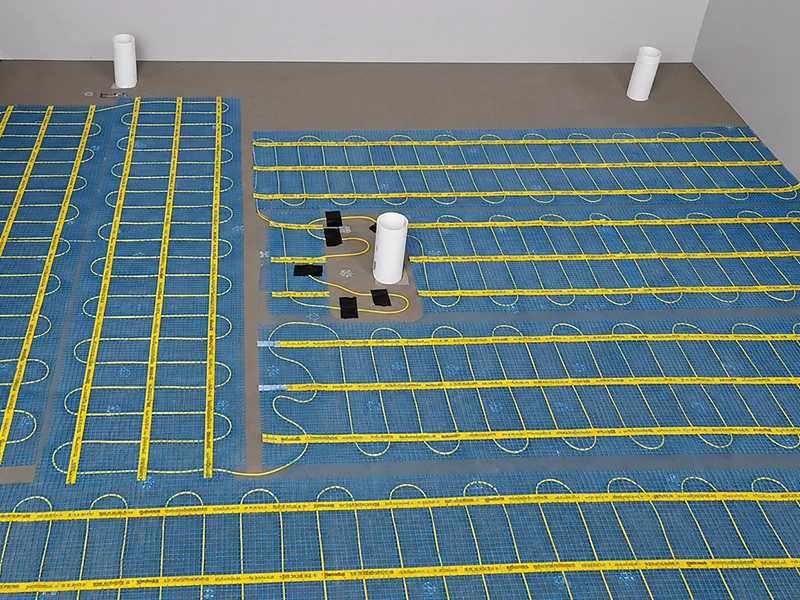
Correct spacing helps the floor warm evenly. If the cable spacing is too wide, the floor may develop cold strips. If it is too close, the floor may overheat or fail to match the product requirements. We check the manufacturer layout, room shape, and walkable floor zones before the system is covered.
Cold tails and thermostat route
The cold tail needs a planned route back to the thermostat or connection point. We check how the cold tail will travel without crossing heating cable, sitting in a high-risk area, or being damaged by tiling, waterproofing, or cabinetry work.
Fixed fixtures and furniture
Heating should usually avoid fixed vanities, toilets, baths, cabinetry, islands, and heavy appliances. These areas can trap heat, waste output, or make future repairs more difficult. We plan the layout around the finished room, not just the empty floor.
Doorways and walk paths
The most useful heated areas are usually where people stand and walk. In bathrooms, laundries, kitchens, and tiled living spaces, we plan heating around doorways, vanity standing zones, kitchen benches, and common walking paths so comfort is placed where it is actually felt.
Floor wastes, drains, and wet-area details
Wet areas need more careful planning around floor wastes, drains, shower set-downs, waterproofing, and tile falls. Heating must be positioned so it does not interfere with drainage details or create difficult cable paths around wet-area fixtures.
Expansion joints and movement areas
Heating cables should not be placed across movement joints or areas where the floor build-up may shift. We check the floor structure, tile set-out, screed details, and manufacturer instructions before approving the layout.
Testing access before covering
The heating system should be tested while it is still visible and again after floor layers are installed. Calibre Connect checks resistance, sensor continuity, and insulation condition where required before the heating is hidden under the finished surface.
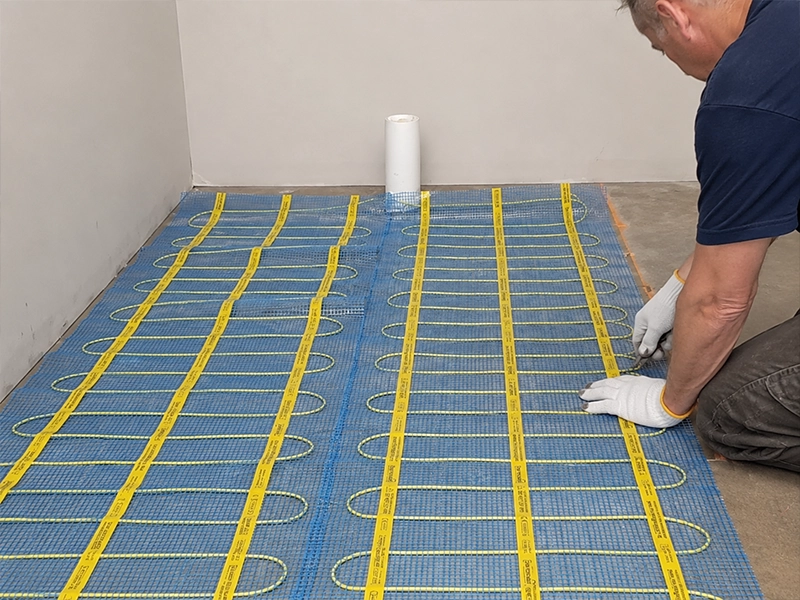
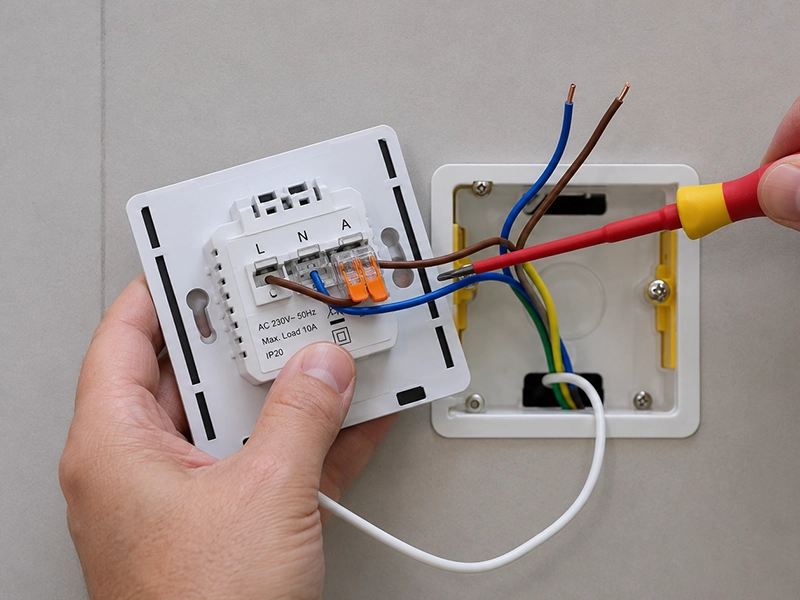
Thermostat, Floor Sensor, Conduit, and Control Location
The thermostat and floor sensor decide how the underfloor heating behaves after the floor is finished. If the thermostat is hard to reach, the sensor is in the wrong position, or the sensor cannot be replaced later, the system may still turn on but perform poorly or become difficult to service.
Thermostat position
The thermostat should be easy to access and placed where it makes sense for the room. We check wall space, switch locations, door swings, vanity positions, cabinetry, and the route from the heated floor back to the control point before wiring starts.
Floor sensor placement
The floor sensor should be positioned between heating cable runs so it reads the floor temperature accurately. If it sits too close to a cable, too far from the heated area, or in the wrong zone, the thermostat may cut out early or allow the floor to run hotter than intended.
Sensor conduit
Where the system allows it, the floor sensor should be installed in conduit so it can be replaced later without lifting the floor. The conduit route needs to be smooth, protected, and positioned before waterproofing, tiling, or floor covering work continues.
Separate heating zones
Bathrooms, ensuites, kitchens, tiled living areas, and multi-room projects may need separate thermostat control. Separate zones help avoid one area overheating while another is still cold, especially where room size, tile type, sunlight exposure, and floor build-up differ.
Timers and schedules
Underfloor heating often works best when it is scheduled before the room is used. We set up thermostat timers, schedules, or manual controls so the floor can warm at the right time without running longer than needed.
Floor temperature limits
Some floor finishes and heating systems need a floor temperature limit. We check the heating product, finished surface, thermostat settings, and sensor reading so the system is controlled within the intended range.
Manual override
A good control setup should still be simple to use. We check that the thermostat can be manually adjusted, switched off, or overridden without the owner needing to understand complex settings every time the room feels cold.
Electrical Load, RCD Protection, and Switchboard Checks
Electric underfloor heating adds a fixed load to the property, so the electrical side needs to be checked before the heating is connected. The thermostat, circuit, protective device, cable route, and switchboard capacity all need to suit the size of the heated area and the way the system will be controlled.
Heating load calculation
We calculate the heating load based on the product rating and heated floor area. A small ensuite may only add a modest load, while a larger bathroom, tiled living area, or multi-room system may need more detailed circuit planning.
Thermostat load rating
Thermostats have a maximum load they can control directly. If the underfloor heating load exceeds the thermostat rating, the installation may need a contactor or relay arrangement so the thermostat controls the system safely without being overloaded.
Dedicated circuit where required
Some smaller systems may be connected within an appropriate existing arrangement, but larger heating zones may need a dedicated circuit. Calibre Connect checks the existing circuit, switchboard space, protection, and load before deciding the correct pathway.
RCD or RCBO protection
Underfloor heating needs suitable protection as part of the electrical installation. We check whether RCD or RCBO protection is already in place and whether the heating circuit should be separated for cleaner fault isolation.
Switchboard capacity
If the switchboard is full, outdated, or already supporting high-load appliances, the heating system may need switchboard work before connection. This is especially important where electric heating is being added with other renovation loads such as towel rails, heat lamps, ovens, induction cooktops, or air conditioning.
Insulation resistance testing
The heating cable should be tested before it is covered and again before commissioning. Insulation resistance testing helps identify damage, moisture issues, or installation faults before the finished floor makes access difficult.
CCEW documentation
Where electrical installation work is completed, Calibre Connect issues a Certificate of Compliance Electrical Work, CCEW, for that electrical work. This confirms the completed electrical work has been tested and documented for the installation scope.
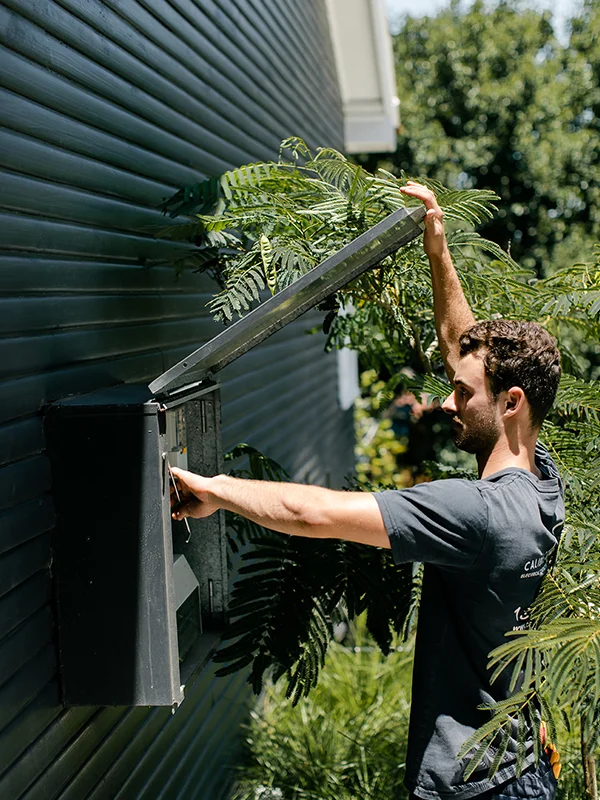
Book the electrical work before waterproofing, tiling, screeding, or floor covering locks the heating system in place. Send us the room layout, heating product details, thermostat location if chosen, and the renovation schedule so we can check the rough-in timing, sensor conduit, cold tail route, circuit load, and testing stages before the floor is covered.
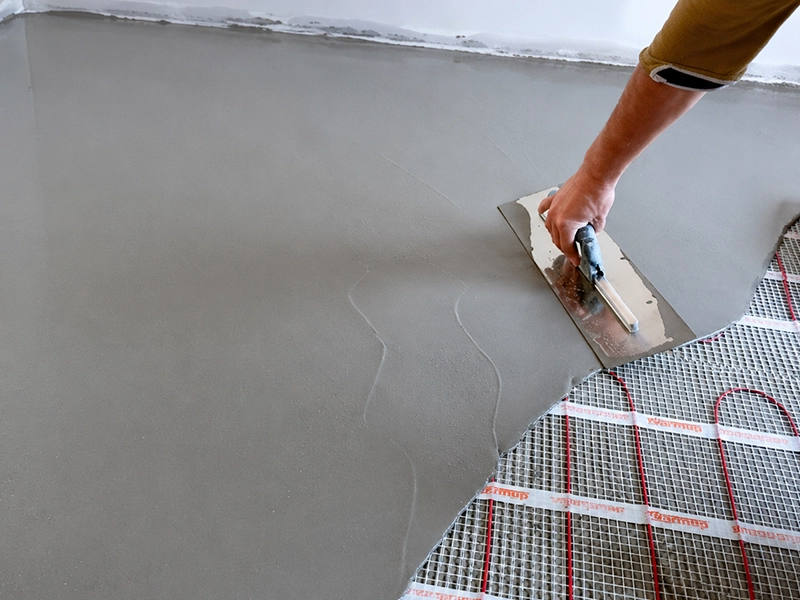
Waterproofing, Tiling, and Trade Coordination
Electric underfloor heating sits inside the renovation sequence, so timing matters. The electrician, builder, waterproofer, tiler, and flooring supplier need to work from the same layout so the heating cable, cold tail, thermostat wiring, floor sensor, waterproofing layer, and finished tiles all line up correctly.
Before waterproofing
The heating layout, thermostat position, cold tail route, and sensor conduit need to be planned before waterproofing continues. In wet areas, the heating system must not interfere with floor wastes, drainage falls, shower set-downs, or waterproofing details.
Before tiling
The heating mat or cable should be tested before it is covered by adhesive, screed, levelling compound, or tile. This gives the installer a chance to find damage while the system is still accessible.
During tiling
Tiling tools, sharp edges, kneeling boards, and movement across the floor can damage heating cable if the system is not protected. We make sure the layout and test readings are clear so the tiler knows where the heating layer sits.
After tiling
The system is tested again before final connection and commissioning. This helps confirm the heating cable and floor sensor have not been damaged during the floor covering stage.
Why staged testing matters
If no test readings are taken before the floor is covered, it becomes much harder to prove when or where damage happened. Staged testing gives the project a clearer record and helps avoid disputes between trades if the system fails after the floor is finished.
Common Electric Underfloor Heating Problems We Prevent or Fix
Electric underfloor heating problems are usually harder to fix after the floor is finished because the heating cable, sensor, cold tail, and floor build-up are already buried. That is why layout planning and staged testing matter before waterproofing, screeding, tiling, or floor covering continues.
Before replacing thermostats or guessing at faults, our Sydney electricians check the heating circuit, sensor readings, insulation condition, switchboard protection, and installation history. The goal is to find the cause instead of disturbing a finished bathroom, laundry, kitchen, or tiled area unnecessarily.
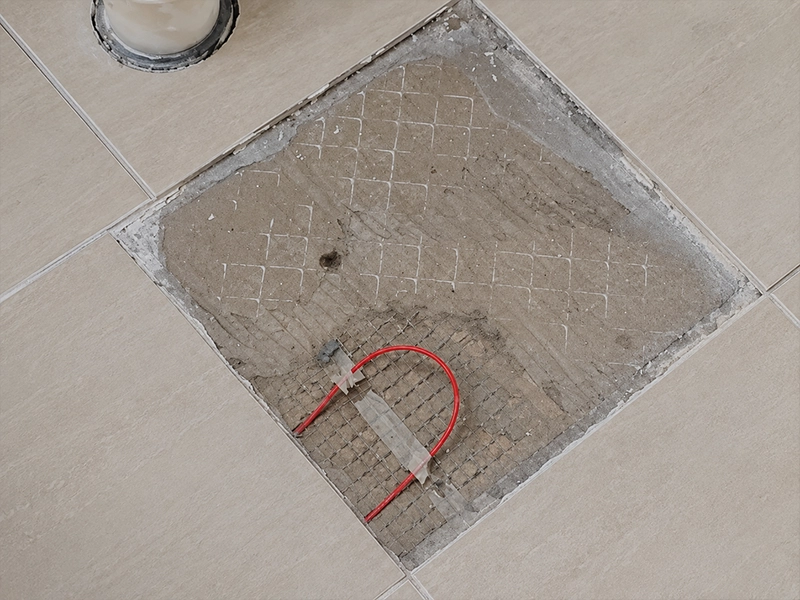
Cold patches across the floor
Cold patches usually happen when the heating mat or cable layout misses the walking area, cable spacing is uneven, or the system was planned around the room instead of how the space is used. We check the layout before installation so warmth sits where needed.
Safety switch tripping
If underfloor heating trips the safety switch, the cause may be damaged heating cable, moisture, insulation breakdown, a faulty thermostat, poor termination, or a circuit fault. The heating system needs proper testing before it is reconnected or recommissioned.
Damaged heating cable
Heating cable can be damaged by tiling tools, fixing screws, sharp edges, floor preparation work, or movement during installation. We test the cable before and after the floor covering stage so damage is identified before the room is handed over.
Failed floor sensor
A failed floor sensor can cause incorrect thermostat readings, early cut-outs, overheating, or a system that refuses to run properly. Where the system allows it, we plan the sensor in conduit so it can be replaced later without lifting the floor.
Thermostat fault
A thermostat fault can make the heating stay off, run too long, read the floor incorrectly, or ignore scheduled settings. We check thermostat wiring, sensor readings, load rating, and control settings before replacing the controller.
No sensor conduit
If the floor sensor is buried directly under tiles with no replacement pathway, future repair can become difficult and disruptive. Sensor conduit should be planned before waterproofing, screeding, or tiling continues.
Heating under fixed fixtures
Heating should usually avoid vanities, toilets, baths, fixed cabinetry, islands, and heavy appliances. These areas can trap heat, waste output, reduce efficiency, cause uneven floor temperatures, or make repairs much harder if the system fails later.
Wrong system for the floor build-up
A heating mat, loose cable, in-screed cable, or foil system needs to suit the floor build-up and finished surface. The wrong system can create poor heat transfer, slow warm-up, or installation conflicts with waterproofing and tiling.
No test readings before tiling
If resistance and insulation readings are not taken before the floor is covered, it becomes harder to confirm whether damage happened before, during, or after tiling. We document testing stages where required so the installation has a clear record.
Electric Underfloor Heating Installation Cost in Sydney, and What Changes the Price
The cost of a new electric underfloor heating installation in Sydney ranges from $40 to $60 per square metre for under tile or in-screed heating.For a standard Sydney bathroom renovation (roughly 5 square metres), a complete supply and installation package generally ranges between $1,600 and $2,200. Integrating a fully programmable digital thermostat will add approximately $200 to $250 to the project.
Key Factors That Influence Your Installation Quote
While the per-square-metre rate provides a reliable baseline, the final cost of your electric floor heating project will depend on several site-specific variables:
|
Cost factor |
Why it changes the quote |
|---|---|
|
Heating System and Floor Build-Up |
The application method heavily dictates the price. Under-tile heating mats are highly cost-effective and straightforward to roll out during a bathroom renovation. Conversely, in-screed heating cables require a bit more labor as they must be carefully embedded within a thin concrete layer before tiling. |
|
Room Size and Layout Complexity |
Larger areas benefit from economies of scale, meaning the cost per square metre often decreases as the footprint increases. However, rooms with complex layouts, multiple plumbing penetrations, or irregular angles require intricate cable routing, which slightly increases labor time. |
|
Thermostats and Smart Controls |
Your choice of temperature management impacts the upfront cost. Upgrading from a standard manual controller to a WiFi-enabled, floor-sensing smart thermostat requires a higher initial investment but unlocks zoned heating and significant long-term energy savings. |
|
Thermal Insulation |
Installing high-density insulation boards beneath the heating elements adds to the initial material cost, but we highly recommend it. Proper insulation prevents heat from escaping downward into the subfloor, cutting warm-up times and reducing your ongoing electricity usage by up to 50%. |
|
Electrical Infrastructure Needs |
Small zones, like a single bathroom, can often be added to an existing electrical circuit. However, heating larger living spaces may require our electricians to run a dedicated circuit or upgrade your switchboard to safely handle the new electrical load. |
Pricing questions we clarify before quoting

How We Install and Commission Electric Underfloor Heating
1. We confirm the heating product and room layout
We start by checking the heating mat, cable, or system type against the room layout, floor build-up, finished surface, fixture positions, and renovation schedule. This helps confirm where the heating can go and where it should be avoided.
2. We plan the thermostat, sensor, and cold tail route
Before the floor is covered, Calibre Connect plans the thermostat position, sensor conduit, floor sensor location, cold tail route, and connection pathway. This is where we make sure the sensor can read the heated floor properly and the cold tail can return to the control point without crossing or damaging the heating cable.
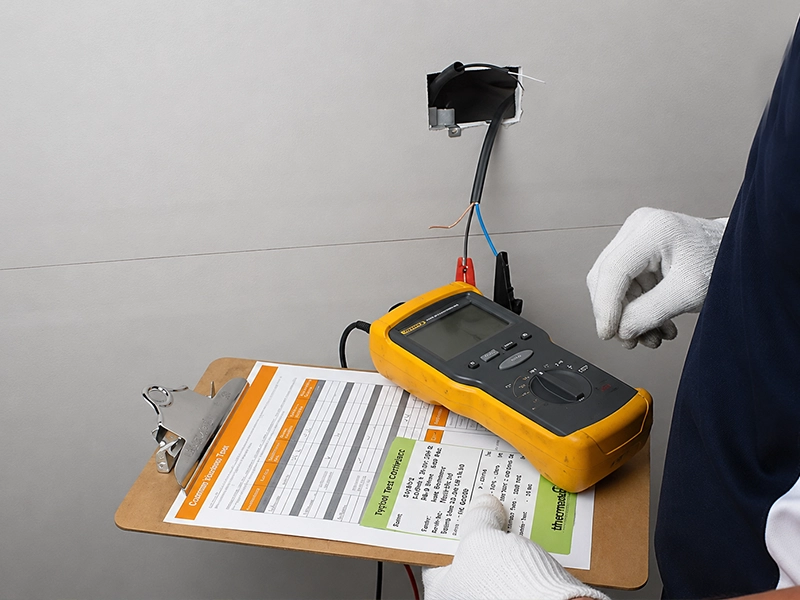
3. We check the circuit and complete the wiring
We calculate the heating load, check thermostat capacity, confirm RCD or RCBO protection, and install the wiring needed for the underfloor heating system. Larger heated areas may need a dedicated circuit, contactor, relay, or switchboard work before final connection.
4. We test before covering and again at commissioning
The heating cable, sensor, insulation condition, and circuit are tested before the floor is covered, after the floor covering stage where required, and again at final commissioning. We then set up the thermostat, confirm operation, explain the controls, and issue a CCEW for the electrical installation work completed.
What We Check Before Handover
Before we leave, we check the electric underfloor heating as a complete floor heating system, not just a thermostat on the wall. The handover confirms that the heating cable, floor sensor, thermostat, circuit protection, test readings, and operating settings have been checked for the work completed.
Why Choose Us for Electric Underfloor Heating
We plan the heating before the floor is covered
Electric underfloor heating is difficult to repair once it is buried under tiles, screed, levelling compound, or floor covering. We check the layout, cold tail route, sensor pathway, thermostat position, and test stages before the next trade covers the system.
We coordinate with the renovation sequence
Underfloor heating sits between electrical work, waterproofing, screeding, tiling, and floor finishing. Calibre Connect helps plan the electrical timing so the heating system is installed, tested, protected, and commissioned in the right order.
We treat the floor sensor as part of the installation, not an afterthought
The floor sensor controls how the thermostat reads and limits floor temperature. We position the sensor correctly between heating runs and use conduit where the system allows future replacement.
We check the electrical load before connection
A heating mat or cable adds a fixed load to the property. We check the thermostat rating, circuit capacity, RCD or RCBO protection, switchboard condition, and whether a dedicated circuit or contactor arrangement is needed.
We test before and after the floor covering stage
Testing before the floor is covered helps catch damage while the heating cable is still accessible. Testing again before commissioning helps confirm the heating system has not been damaged during waterproofing, screeding, tiling, or floor finishing.
We document the electrical work clearly
After the system is connected and commissioned, we explain thermostat operation, floor warm-up expectations, sensor behaviour, timer settings, and any limits or defects found. Where electrical installation work is completed, a CCEW is issued for that electrical work.
What Our Clients Say About Calibre Connect Electrical Underfloor Heating Installation
Service Areas: Electric Underfloor Heating Matched to Sydney’s Building Stock
Electric underfloor heating installation changes across Sydney because floor construction, renovation timing, wet-area requirements, apartment rules, subfloor conditions, and tile layouts vary from one property to another.
A compact ensuite heating mat is a different job to a larger tiled living area, concrete apartment floor, or bathroom renovation with waterproofing and tiling already scheduled.
Here’s how we plan electric underfloor heating across Greater Sydney:
Eastern Suburbs
Eastern Suburbs apartments and homes often include bathroom renovations, concrete slabs, strata rules, acoustic build-ups, and limited cable routes.
Inner West
Inner West terraces and older homes often have uneven subfloors, older wiring routes, small bathrooms, and staged renovations.
North Shore
North Shore homes often include tiled renovations, larger bathrooms, ensuites, laundries, and open-plan living areas.
Hills District
Hills District homes often include family bathrooms, large ensuites, tiled living areas, laundry renovations, and multi-room heating projects.
Sydney CBD
CBD apartments and compact homes often involve concrete floors, strata approval, limited access, and tight renovation schedules.
Northern Beaches
Northern Beaches homes often include bathroom renovations, coastal moisture, tiled living areas, and wet-area upgrades.
Sutherland Shire
Sutherland Shire homes often include family renovations, ensuite upgrades, laundries, kitchens, and staged tiled floor projects.
Frequently Asked Questions
Ready to Book Electric Underfloor Heating Installation in Sydney?
Send us the room layout, heating product details, floor covering type, thermostat location if chosen, and the timing for waterproofing, screeding, tiling, or floor finishing. We’ll check the heating layout, cold tail route, sensor conduit, circuit load, switchboard protection, and testing stages before the system is covered.
Request a quote for electric underfloor heating installation in Sydney