
Signs Your Home Needs an Electrical Safety Inspection
Electrical safety inspection becomes necessary when your property shows warning signs of system deterioration. Here are five situations that require immediate professional attention.
Flickering or dimming lights throughout your home – Lights that flicker indicate loose connections, overloaded circuits, or faulty wiring within your walls. These issues create fire risks and suggest your electrical system needs a full inspection to locate the source.
Burning smells near outlets or switchboards – A burning odour signals overheating wires or melting insulation. This dangerous condition requires urgent assessment from a licensed electrician before electrical fires occur. Never ignore this warning sign.
Frequent circuit breaker trips – When breakers trip repeatedly, your circuits are overloaded or experiencing faults. An electrical safety inspection will identify whether you need switchboard upgrades, circuit repairs, or load redistribution across your system.
Properties older than 25 years without recent inspection —-Older homes in Sydney often contain outdated wiring that doesn’t meet current safety standards. Aluminium wiring, degraded insulation, and absent safety switches create serious electrocution hazards that inspections reveal.
Visible damage to power points or switches – Cracked outlets, discoloured switch plates, or sparking when plugging in appliances indicate internal damage. These visible signs often point to more extensive problems behind your walls that only thorough inspection can uncover.
Buying a home or investment property – Pre-purchase electrical inspections protect you from inheriting costly repairs and dangerous conditions. Our inspectors provide detailed reports that help you negotiate fair prices or avoid problematic properties entirely.
Electrical Safety Inspection Services We Handle in Sydney
Components We Inspect, and What Usually Fails
On most Sydney inspections, the defects that matter show up around a predictable set of components. We document what’s installed, how it’s terminated and protected, and whether the test results support leaving it in service.
If any of these items fail testing or present an immediate safety risk, the outcome can’t be a vague “monitor it”. It needs a rectification quote pathway, and in some cases a make-safe action on the day.
What We Check Before Handover
Legacy Wiring in Sydney Homes, What IR Testing Actually Tells You
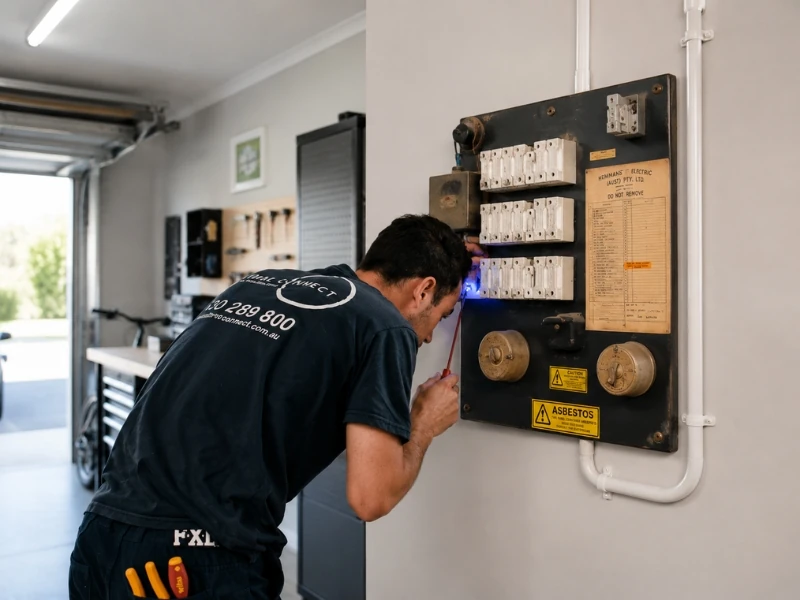
A lot of “electrical safety inspection” pages talk about old wiring like it is a single category. In Sydney it is not. Inner West terraces and North Shore Federation homes regularly turn up VIR and TRS circuits that have been heat-cycled for decades, patched through renovations, and dragged through roof voids that run hot in summer.
The cable can look intact where you can see it, but the insulation can be brittle or cracked inside the sheath. That’s why insulation resistance (IR) testing is the decision point, not a quick glance.
Where VIR and TRS wiring shows up on real jobs
What IR testing tells you, in plain terms
IR testing checks whether the insulation on a circuit is still doing its job, keeping current where it belongs. When results are poor, it usually points to one of four practical problems:
On legacy wiring, a failed IR result changes the outcome of the visit. At that point the inspection is no longer just “here’s what we found”. It becomes a rectification pathway because you cannot treat degraded insulation as a monitor item if the readings show the circuit is not stable. In a worst case, the circuit may need to be made safe on the day with emergency electrical work, then quoted properly for repair or replacement to bring it back to a safe condition.
What changes the time and complexity on older Sydney stock
If the inspection uncovers asbestos-backed boards, degraded VIR/TRS wiring, or non-compliant earthing, the next step is a rectification quote because those items are not “nice to have fixes”. They’re the kinds of defects that decide whether the installation can be treated as safe.
We can scope the inspection around the building type, access limits, and what you need documented.
RCD Coverage, Switchboards, and Why “Test Button” Checks Are Not Enough
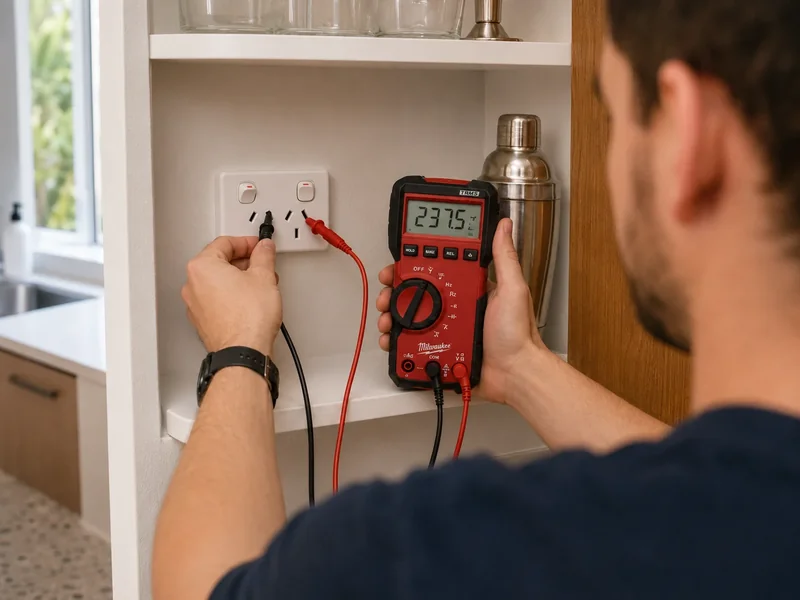
Most Sydney homes have at least one RCD, but that doesn’t mean the installation is properly protected. The test button only tells you the device can trip under its own internal test circuit. During an inspection, the practical questions are: which circuits are actually on RCD protection, and does the device trip within the required time when tested with an instrument.
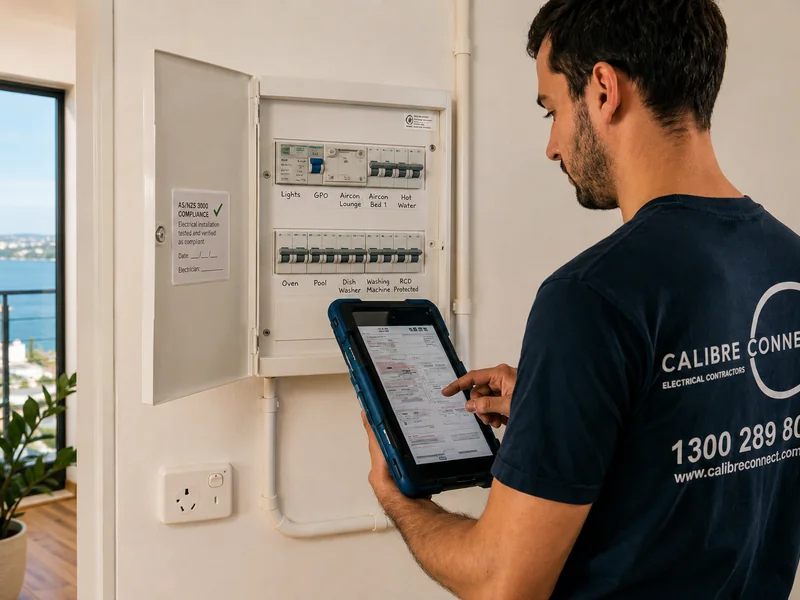
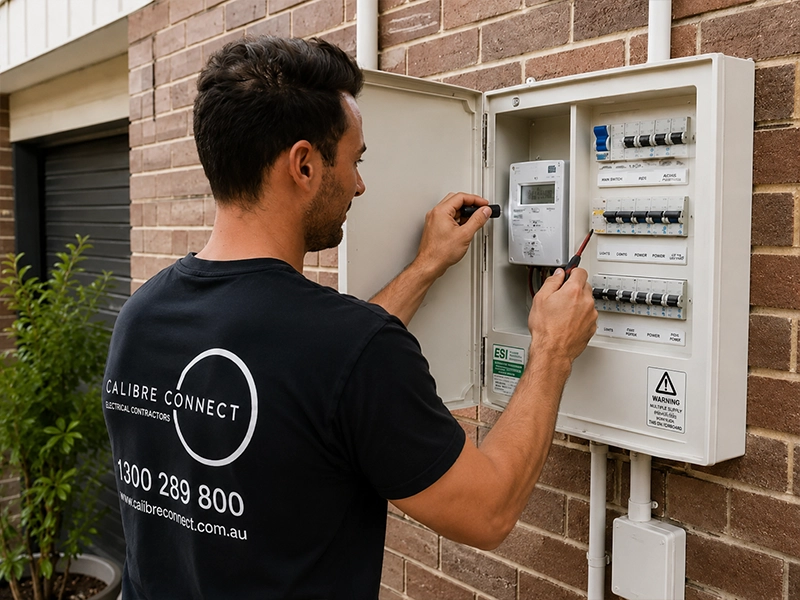
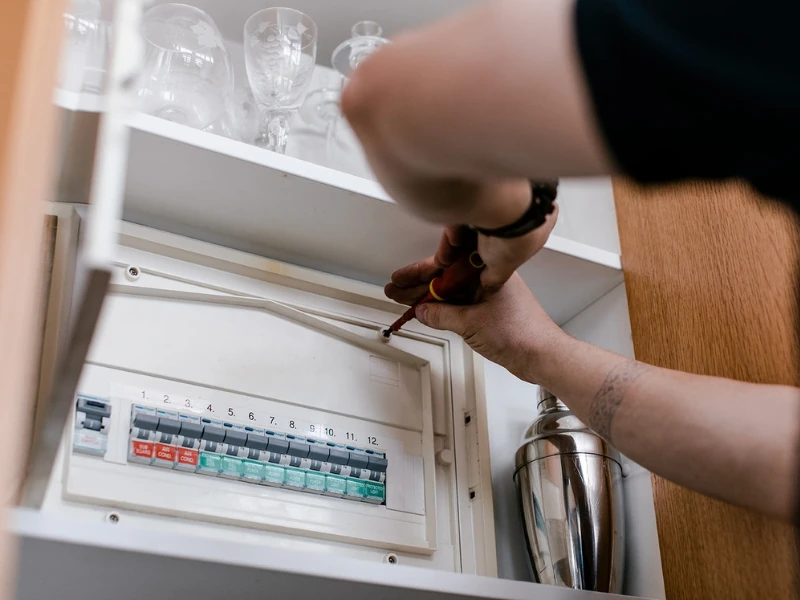
On the board itself, we’re looking at the parts that fail first: RCBOs or RCDs and MCBs, neutral bar and earth bar terminations, main switch condition, cable entries and mechanical protection, and whether there’s any surge protection device (SPD) fitted or missing for the site profile. If terminations are running warm, it’s usually a high resistance joint, a stressed lug, or corrosion, and that’s where the inspection moves from theory into practical rectification decisions.
What we see commonly in Sydney switchboards
How RCD testing is verified properly
Where the board condition or protection coverage is not acceptable, the inspection findings commonly point towards switchboard upgrades rather than piecemeal fixes. That’s because you can’t solve missing RCD coverage, poor labelling, stressed terminations, or outdated devices by swapping one component and hoping for the best.
Electrical Safety Inspection Cost in Sydney, and What Changes the Price
Electrical safety inspection costs in Sydney usually range from $150 to $400, depending on the property type, access, circuit count, switchboard condition, wiring age, and the level of documentation required.
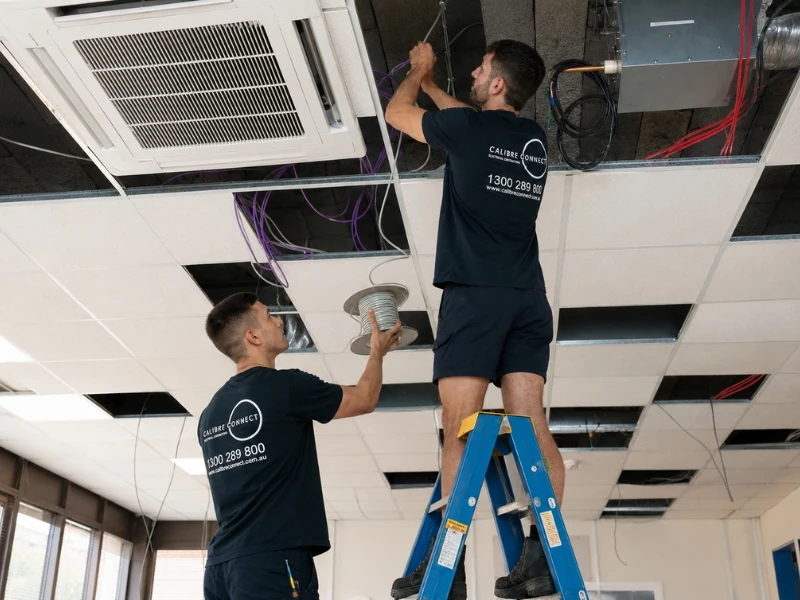
Calibre Connect does not quote inspection pricing from a single-line description because the inspection scope is defined by what the electrician needs to access, test, verify, and document. Some Sydney homes only require a straightforward visual inspection and instrument test run. Other sites, especially strata apartments, older houses, commercial premises, and properties with mixed wiring, may require more circuit tracing, switchboard verification, insulation resistance testing, and detailed compliance reporting.
Common cost drivers include:
For a standard three to four-bedroom Sydney home, the price is usually at the lower to middle end of the range when access is clear, the switchboard is labelled, and no major defects are found. More complex properties are quoted after the inspection requirements are understood.
Pricing questions
How Our Electrical Safety Inspection Process Works
Step 1: Scope and access check
We confirm what’s accessible, what circuits are present, and what needs to be proven by test results when wiring can’t be visually inspected.
Step 2: Safe isolation and instrument testin
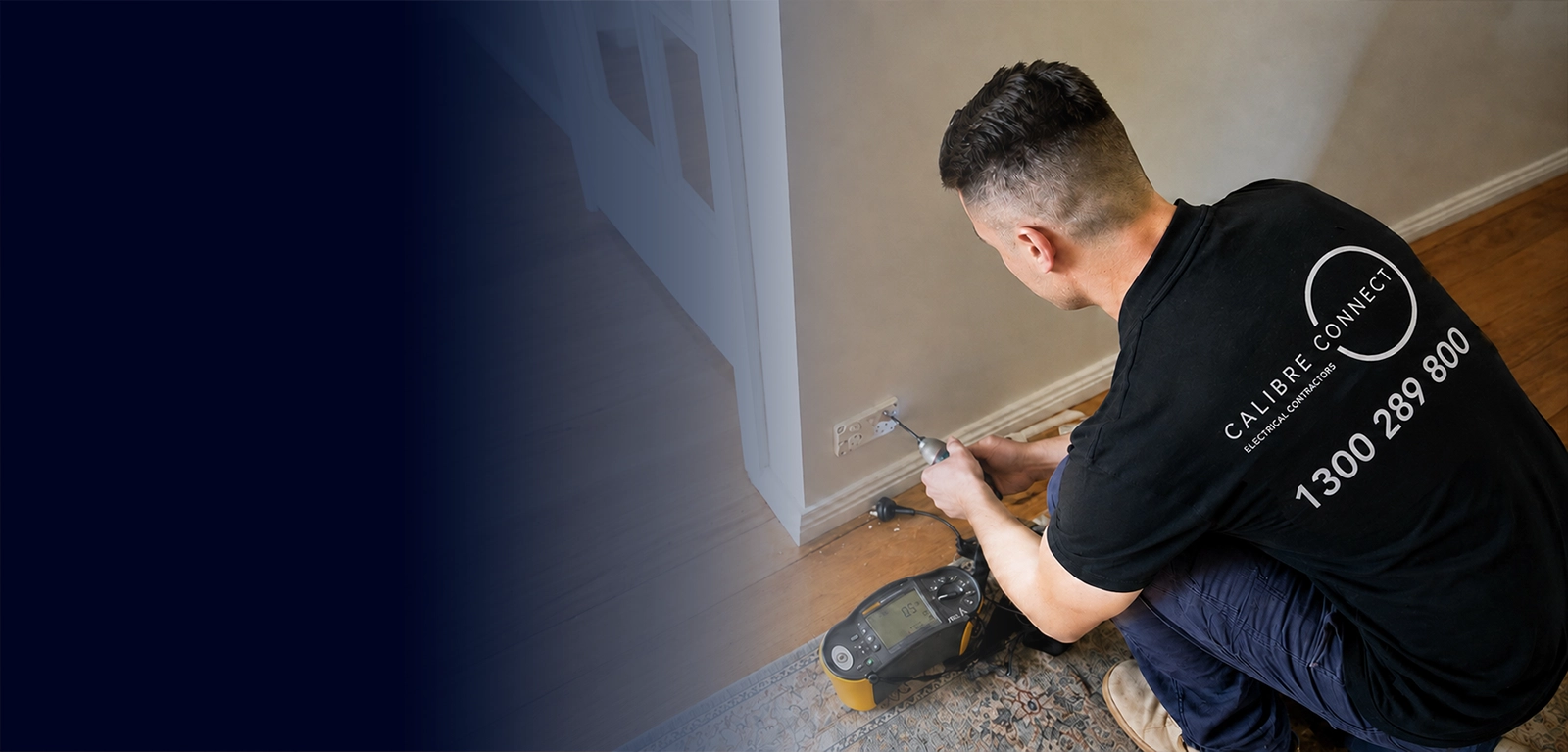
We test relevant circuits for insulation resistance, loop impedance, polarity, continuity, and RCD trip performance, with results used to confirm protection integrity.
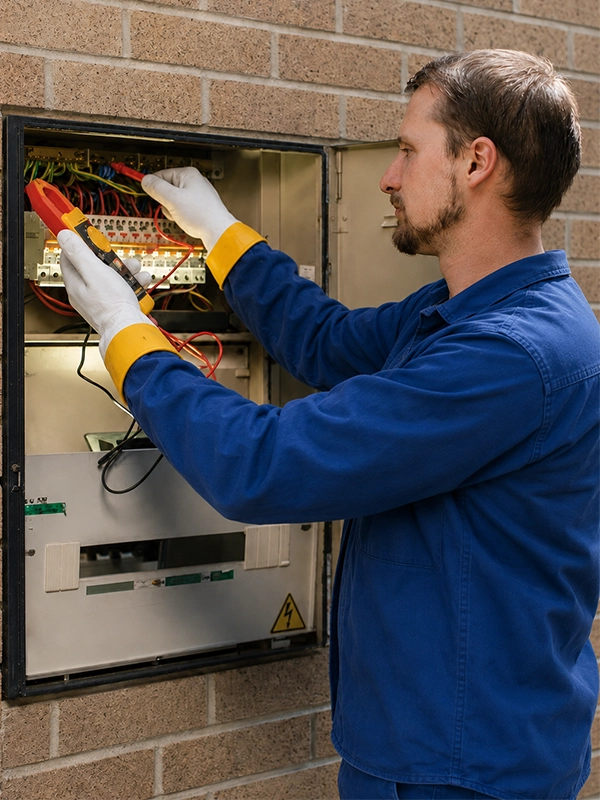
Step 3: Switchboard and risk checks, thermal imaging where it changes outcomes
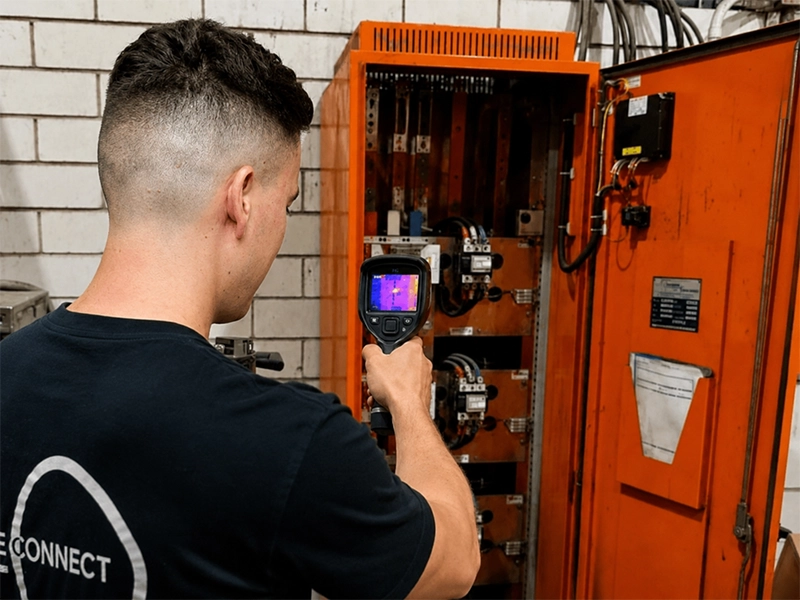
We check protection devices, labels, cable entries and terminations, and use thermal imaging when site type or heat signs suggest high resistance joints or load stress.
Step 4: Findings walkthrough and next steps
You get a prioritised defect list and an explanation of what needs immediate make-safe action versus scheduled rectification. If the inspection identifies asbestos-backed boards, degraded VIR/TRS wiring, or earthing non-compliance, we provide a rectification quote pathway because those issues can’t be treated as optional.
Why Choose Calibre Connect for Electrical Safety Inspection
Instrument-Based Inspections
Calibre Connect tests insulation condition, polarity, fault paths, earthing continuity, and RCD trip performance. Inspection findings are based on measured electrical results, not assumptions.
Circuit-by-Circuit RCD Testing
Our electricians confirm which circuits are protected by safety switches and verify RCD trip times in milliseconds. This helps identify unprotected circuits, incorrect labels, and mismatched switchboard schedules.
Switchboard Risk Assessment
The switchboard controls the property’s electrical safety. We inspect enclosure condition, cable entries, terminations, labelling, heat signs, breakers, and safety switch coverage.
Legacy Wiring Checks
Older Sydney homes may contain VIR, TRS, or mixed legacy wiring. Where these risks appear, Calibre Connect prioritises insulation resistance testing and documents what each result means.
Targeted Thermal Imaging
For strata boards, commercial switchboards, and sites with heat signs, thermal imaging helps identify high-resistance joints, overloaded circuits, and hotspots before they become electrical faults.
Clear Defect Prioritisation
If we find asbestos-backed boards, degraded VIR or TRS wiring, failed RCD protection, poor earthing, or non-compliant bonding, we provide a practical rectification pathway.
What Our Clients Say About Calibre Connect Electrical
Service Areas: Electrical Safety Inspection Matched to Sydney’s Building Stock
Building age, construction type, and exposure change what a good inspection looks like. A roof-void terrace with mixed legacy circuits is a different job to a concrete slab apartment, and coastal suburbs add corrosion and moisture risks that show up at terminations and outdoor fittings.
Here’s how we tailor electrical safety inspection across Greater Sydney:
Sydney CBD and Inner City (Heritage and high density)
Older stock and mixed-use buildings often have altered circuits and restricted access.
- Typical challenge: limited visual access to cabling runs and shared risers.
- Our approach: rely on instrument results for circuit integrity, document access limits clearly, and focus on board condition, protection coverage, and defect prioritisation.
Inner West (Victorian terraces)
Renovations are common, and you often find mixed cabling and older lighting and power circuits.
- Typical challenge: VIR or TRS sections hiding inside altered runs and roof void junctions.
- Our approach: treat insulation resistance results as the decision point, trace ambiguous circuits where labelling is poor, and document what needs rectification versus what can be staged. Many of these jobs overlap with an electrician in Newtown.
North Shore (Federation homes)
Large roof voids and decades of incremental changes can leave circuits stressed or poorly documented.
- Typical challenge: legacy wiring, older board layouts, and circuits that no longer match labels.
- Our approach: verify protection coverage and RCD performance by test, then confirm earthing and bonding integrity before recommending any staged upgrades.
Eastern Suburbs (Coastal exposure)
Salt air and moisture accelerate corrosion at exposed components and outdoor equipment.
- Typical challenge: corrosion and moisture tracking that increases contact resistance and heat at terminations.
- Our approach: pay close attention to external enclosures, exposed terminations, and any heat signs, then recommend maintenance or replacement where corrosion is active. This is common work for an electrician in Bondi and an electrician in Woollahra.
Hills District (Large residential loads)
Larger homes often have more circuits, more appliances, and higher sustained loads.
- Typical challenge: load stress on boards and terminations, and circuit additions that have not been balanced well.
- Our approach: check protection selection and signs of heat stress, confirm circuit identification, and flag capacity or distribution issues that affect reliability and safety.
South Sydney (Industrial and mixed-use)
Warehouses and workshops can have heavy loads, modified fit-outs, and long cable runs.
- Typical challenge: hotspots from high resistance joints and phase loading issues in boards.
- Our approach: prioritise switchboard health checks and thermal imaging where warranted, confirm protective device operation conditions, and document defects in a way that supports planned rectification without unnecessary downtime.
Northern Beaches and Sutherland Shire (Coastal and long runs)
Coastal exposure combines with longer cable runs on some properties.
- Typical challenge: corrosion risk plus voltage drop concerns on long subcircuits, especially to detached structures.
- Our approach: inspect exposed infrastructure carefully, use testing results to confirm circuit health, and flag where cable condition or run length changes what “safe and compliant” looks like.
Frequently Asked Questions
Ready to book electrical safety inspection in Sydney?
If you need a safety inspection for a home, rental, strata site, or commercial tenancy, we can scope it around access limits, circuit count, and the type of documentation you need. Where defects are identified, you’ll get a clear rectification pathway so the property can be brought back to a safe standard.