
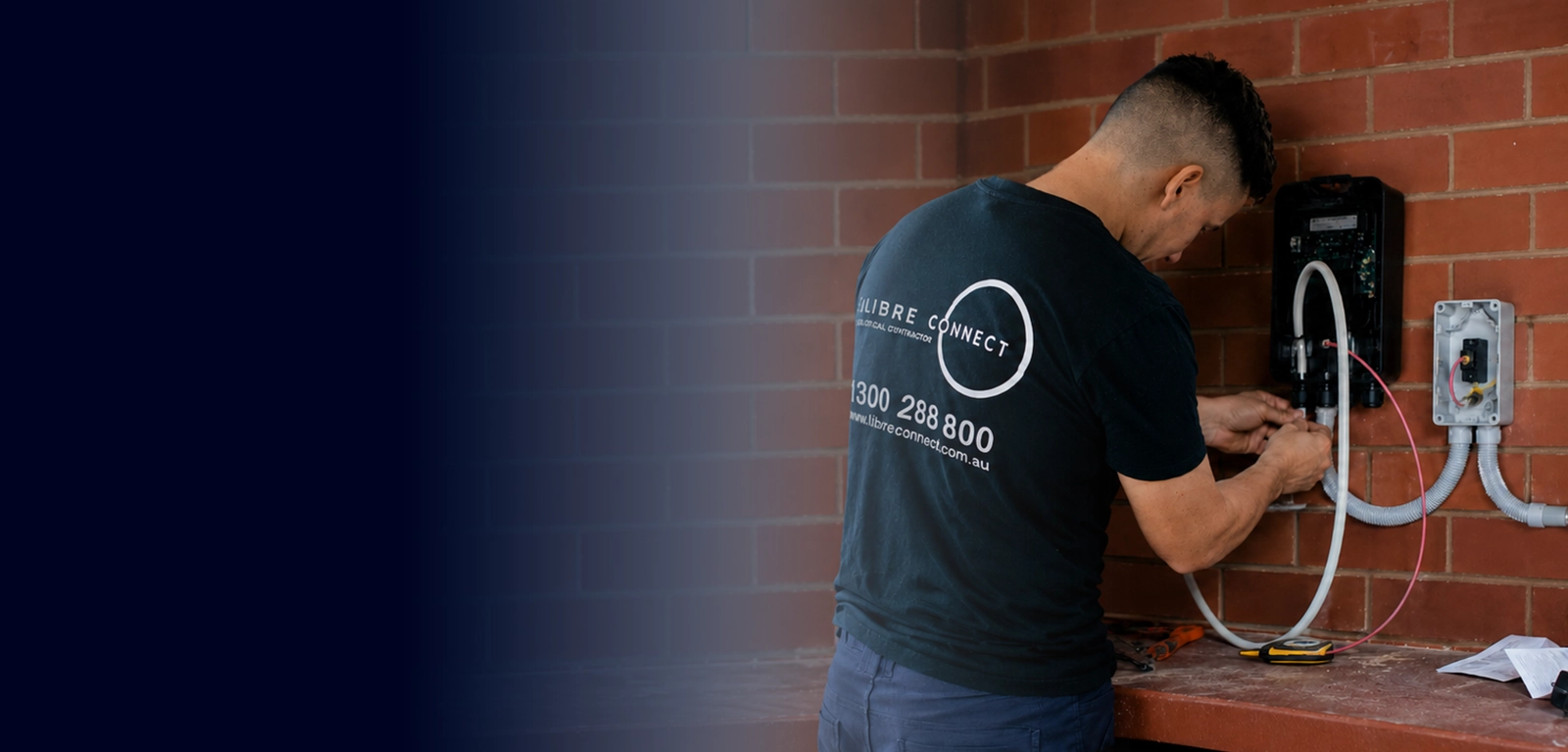


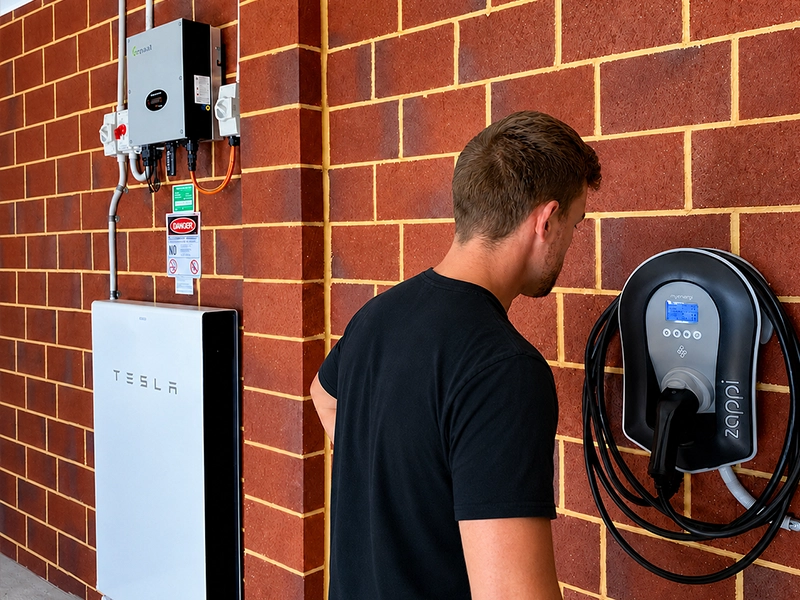
Reasons to Install an EV Charger
You’ve Purchased an Electric Vehicle: Standard household power points deliver only 2.3kW, requiring 20+ hours for a full charge. A dedicated Level 2 charger provides 7kW to 22kW, reducing charge time to 3-8 hours. Your new EV deserves proper charging infrastructure.
Your Charging Cable Runs Through Windows or Doors: This setup creates safety hazards and exposes cables to damage. Weather exposure degrades charging equipment and presents electrical risks. A professionally installed wall mounted unit with appropriate IP rating solves these problems permanently.
You’re Experiencing Circuit Breaker Trips: Plugging your EV into existing circuits often overloads older electrical systems. Frequent trips indicate your current setup cannot handle the load. Our electricians assess your switchboard capacity and install dedicated circuits with appropriate protection.
Your Business Needs Fleet Charging: Commercial operations with electric vehicles require robust charging solutions. Multiple vehicles charging simultaneously demands careful load management and potentially three phase power upgrades. We design systems that keep your fleet operational without straining your building’s electrical infrastructure.
You’re Building or Renovating: New construction and renovation projects present ideal opportunities for EV charger installation. Running cables during the build phase costs significantly less than retrofitting later. We coordinate with builders to install conduit and cabling before walls close up.
Your Strata Complex Lacks Charging Facilities: Apartment residents increasingly need EV charging access. We work with strata committees to design shared charging solutions that meet building regulations and fairly distribute costs among residents.
Before You Book an Installation
EV charging is a continuous electrical load. The installation needs a dedicated circuit, correct protection, and verification that the existing supply can handle the additional demand.
Before installing electric vehicle supply equipment (EVSE), we check switchboard condition and available capacity, confirm the cable route, and assess whether any consumer mains electrical work is required. Where relevant, we also consider local distribution network requirements, including Ausgrid or Endeavour Energy, depending on your area.
Compliant EV charger installation in Sydney (AS/NZS 3000:2018 plus DNSP requirements)
EV chargers are continuous, high-load electrical equipment. The circuit design, protective devices, cabling, and commissioning all need to meet the requirements of AS/NZS 3000:2018 Wiring Rules, along with any relevant local distribution network service and installation requirements that apply to the site.
Calibre Connect installs EVSE with a compliance-first approach. That means we design the installation around the actual conditions at your property, including supply capacity, switchboard condition, cable routes, and the installation environment. Where the scope touches supply or network-facing work, we account for the local DNSP requirements for Sydney, including Ausgrid or Endeavour Energy depending on the suburb.
On completion, you receive a Certificate of Compliance for Electrical Work (CCEW) as required in NSW.
What is included in an EV charger installation
A typical compliant installation includes the items below. The exact scope depends on the site, the charger model, and whether upgrades are required.
If the property requires switchboard modernisation or consumer mains work to safely support a dedicated EV circuit, we identify that early and provide clear options before proceeding.
Charger Types And Charging Power
Most Sydney EV charger installations fall into two practical categories. The right option depends on your supply (single-phase or three-phase), available capacity, and how quickly you want to charge at home or at the site.
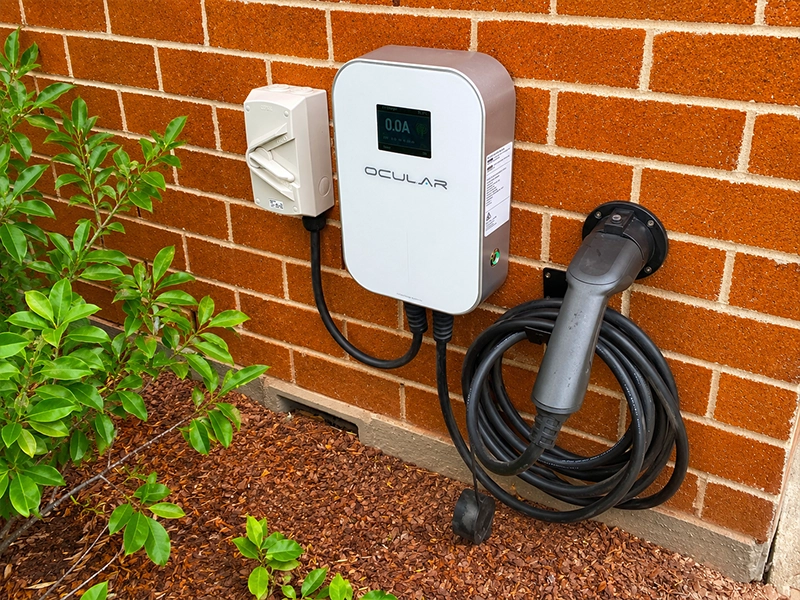
Single-phase Charger
Single-phase installations are common for residential homes and can suit many daily driving patterns.
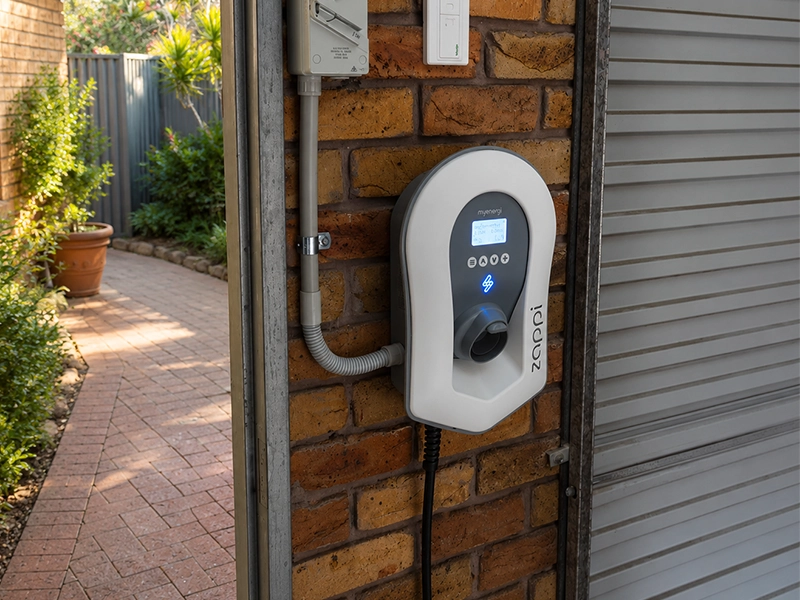
Three-phase Charger
Three-phase installations can support higher output chargers where three-phase supply is available and the site electrical capacity supports it.
The charger itself is only part of the decision. The switchboard condition, maximum demand, and cable route often
determine what is practical and compliant.
Quick Comparison
|
Option |
Typical Power |
Best Suited To |
Site Requirements |
Notes |
|---|---|---|---|---|
|
Single-phase home charger |
Up to 7.4kW |
Most residential homes with single-phase supply |
Adequate spare capacity, dedicated circuit, correct protection |
Often the most practical upgrade for Sydney homes |
|
Three-phase charger |
Up to 22kW |
Homes and businesses with three-phase supply, higher daily kilometres, some fleet use |
Three-phase supply present, adequate capacity, dedicated circuit, correct protection |
Not every site can support 22kW. Capacity and maximum demand come first |
Type 2 Connectors and
Cable Configuration
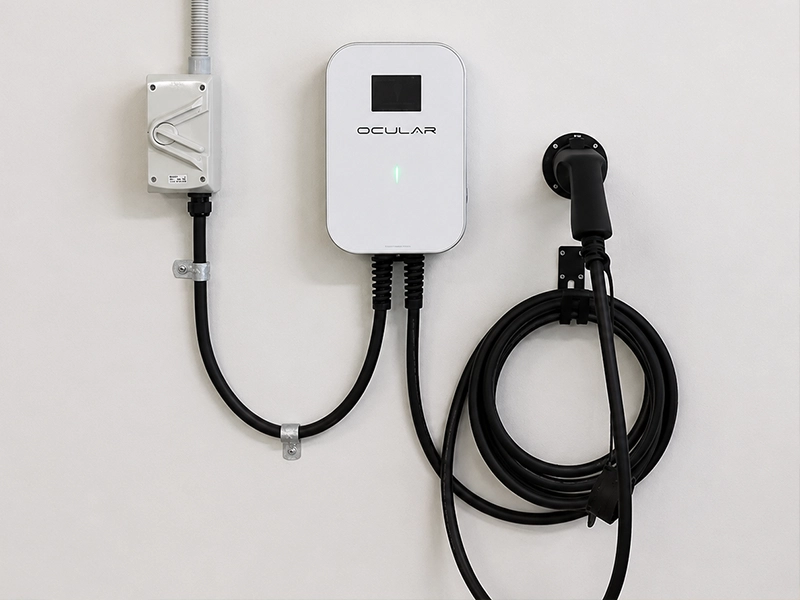
Most modern EVSE installed in Australia uses the Type 2 standard. Installations are commonly either tethered (fixed cable) or socketed using a Mennekes socket, depending on the charger model and how the charger will be used.
Tesla Wall Connector
Installation
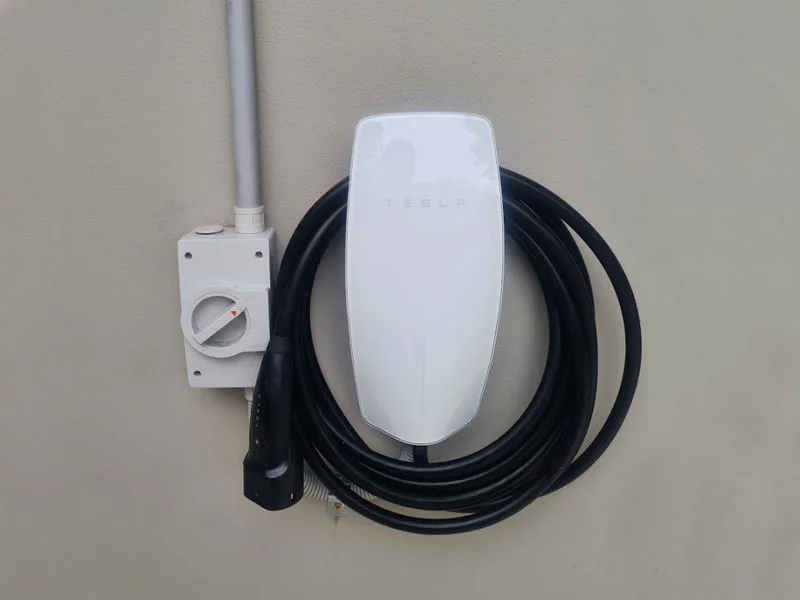
If you drive a Tesla, the Tesla Wall Connector Installation is a common choice for home charging. We install and commission Tesla Wall Connectors where the site supply, switchboard condition, and circuit design support the selected configuration. The installation still requires a dedicated circuit, correct protection, and commissioning tests prior to handover. A Certificate of Compliance for Electrical Work (CCEW) is issued on completion.
Sydney Homes Often Need Upgrades First (Switchboards, Consumer Mains, Older Wiring)
Sydney has a high proportion of older housing stock, including Federation homes, Victorian terraces, and Art Deco buildings. These properties can be excellent candidates for EV charging, but the electrical infrastructure is often the limiting factor. Before installing a dedicated EV circuit, we check whether the existing installation can safely support the additional continuous load.
What we check before adding an EV circuit
Common Sydney upgrade requirement 1. Consumer mains upgrades
A frequent issue in older Sydney homes is undersized consumer mains. Many older installations were not designed for sustained high-current loads such as EV charging. In practice, the safest and most compliant solution is often to upgrade consumer mains to a conductor size and insulation type suitable for the additional demand. In Sydney homes we commonly see scenarios where an upgrade is required from legacy smaller conductors to properly sized XLPE stranded copper cabling, particularly where a dedicated 32A EV circuit is planned.
If consumer mains work is required, it is not treated as an add-on. It is planned and completed as part of a compliant scope, and it may involve network-facing requirements depending on the site and metering arrangement. Where Level 2 work is required, it must be completed by appropriately authorised ASP Level 2 personnel.
Common Sydney upgrade requirement 2. Switchboard modernisation
Older switchboards often still contain porcelain fuses, rewireable fuse carriers, or legacy Bakelite panels. These systems can be serviceable for basic household loads, but they are typically not ideal for adding a dedicated high-load EV circuit without modern protective devices and clear circuit segregation.
A modernised residential switchboard upgrade commonly includes RCBO-based protection, giving combined overcurrent and residual-current protection in one device, and improving fault protection and circuit management. If the switchboard is crowded, lacks RCD protection, or shows signs of heat stress or poor termination, we will recommend a modernisation plan before installing EVSE.
Cable routes and construction types matter
In older Sydney homes, the installation route often dictates the labour and materials required. Double brick walls, heritage finishes, tight cavities, and detached garages can increase cable run complexity. We design the installation to be neat and practical, while maintaining physical protection, correct separation where required, and long-term serviceability.
Protection devices that matter for EV charging (RCBOs, RCD type, DC fault protection)
EV chargers introduce fault characteristics that are not always present on standard household circuits. The protection arrangement needs to be selected to suit the charger, the circuit design, and the installation environment.
A compliant EVSE installation generally includes:
RCBOs and why they are commonly used
RCBOs combine overcurrent protection and residual current protection in a single device. In modern switchboards they are a common approach because they simplify circuit protection and fault isolation, and they support cleaner circuit segregation. For EV charging, this matters because the circuit is a high-load, purpose-specific circuit that should be isolated and protected appropriately.
RCD type selection for EV charging
RCD selection for EV charging is not a one-size-fits-all decision. The correct approach depends on whether the EV charger provides its own DC fault current protection, and on the manufacturer requirements for the specific EVSE.
In practical terms:
We confirm this at the design stage by reference to the charger specifications and the installation requirements. The aim is straightforward. Correct fault protection, correct discrimination where applicable, and a circuit that will trip safely under fault conditions.
Earthing and MEN checks are part of proper EVSE work
Because EVSE is a sustained load and relies on correct fault paths, we also verify the earthing system, including the Multiple Earthed Neutral (MEN) arrangement. If we find deficiencies in earthing, bonding, or switchboard integrity, those items are addressed before commissioning an EV charger.
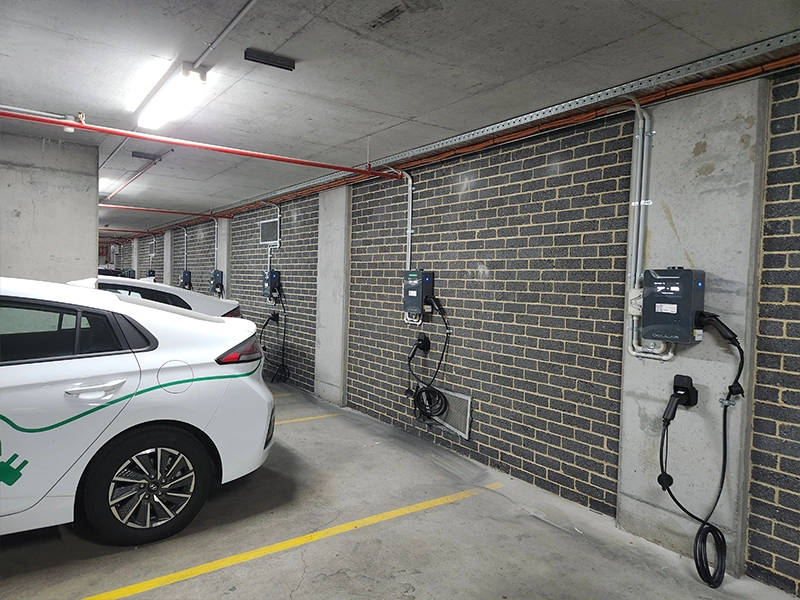
Strata and Apartment Basement EV Charging (Dlb, Approvals, and Capacity Management)
Strata EV charger installations in Sydney require a different level of planning compared with a standard house install. The limiting factor is rarely the charger itself. It is usually building capacity, common property pathways, and Owners Corporation requirements.
Calibre Connect works with strata committees, property managers, and building stakeholders to install EV charging that is safe, compliant, and scalable.
Why Dynamic Load Balancing (DLB) is often essential in strata
In many apartment buildings, adding EV charging without load control can increase the risk of overloading the main building supply during peak periods. Dynamic Load Balancing (DLB) manages available capacity by controlling charging load in response to the site demand. This helps protect the building supply and supports a more practical pathway for multiple EV chargers over time.
DLB is particularly relevant where:
Maximum demand and building capacity checks
Strata installations should be designed with a clear understanding of the building’s maximum demand and the available headroom for additional load. This is not about theoretical speed. It is about ensuring the building remains within safe operating limits while EV charging is added.
Our approach typically includes:
Approvals, common property, and installation pathways
Apartment basement installs often require:
We design basement installations to be neat and maintainable, with compliant routing, appropriate protection, and clear documentation.
Commercial EV Charger Installations (Workplace, Fleet, and Public-facing Sites)
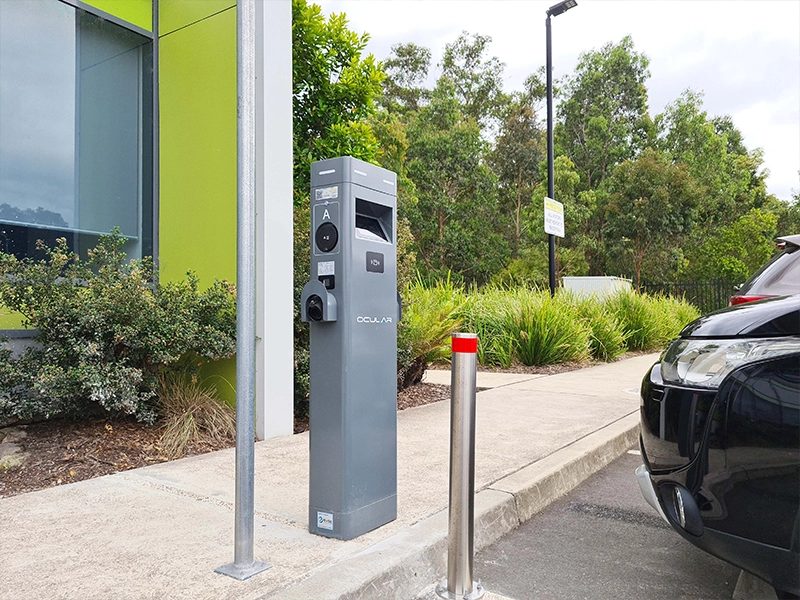
Commercial EV charging needs to be reliable, maintainable, and suitable for shared use. The scope is often broader than a single point install because the site may require multiple bays, controlled access, and a solution that can scale as demand grows.
Calibre Connect installs EV chargers for commercial properties across Sydney, including workplaces, retail, strata-managed mixed-use sites, and fleet locations. Our focus is on compliant electrical design, practical site implementation, and commissioning that supports ongoing operation.
Common commercial requirements
Commercial projects often include:
Networked charging and OCPP
Some commercial electrical installations require network management for user access, reporting, or billing. Where this is part of the brief, we can install EVSE that supports Open Charge Point Protocol (OCPP) compatibility, subject to the selected hardware and the network operator requirements. This is typically relevant for shared or public-facing charging rather than a private single-user installation.
Request a quote from a licensed electrician.
EV Charger Installation Cost in Sydney (What Drives Price)
How much does EV charger installation cost in Sydney?
On average, a complete EV charger installation in Sydney costs between $1,500 and $3,500, which includes both the smart charger unit and the electrician’s labour. If you have already purchased your own charging hardware, our standard installation services at Calibre Connect start from $799 to $1,200 for a straightforward setup. We pride ourselves on providing upfront, fixed-price quotes tailored to your property, ensuring there are zero hidden fees once the job begins.
While our baseline pricing is straightforward, every property has a unique electrical footprint. Several key factors dictate the final cost of getting your home or business EV-ready:
Cable Run (Distance from the Switchboard)
The distance between your main electrical switchboard and your desired EV charging station is the primary driver of installation costs. A “back-to-back” installation where the charger is mounted on the same wall as the switchboard, minimises the need for extensive wiring and conduit, keeping labour and material costs low. Longer cable runs through wall cavities, ceiling spaces, or underground trenches will increase the final price.
Switchboard Capacity and Upgrades
Level 2 EV chargers draw a substantial and continuous electrical load (typically 32 Amps for a 7.4kW charger). If you live in an older Sydney home, your current switchboard may not have the capacity or the required safety switches (RCBOs) to handle this load safely. In some cases, a partial or complete switchboard upgrade, or the installation of an Active Load Management (ALM) device, is necessary to prevent tripping your mains power.
Single-Phase vs. Three-Phase Power
Most standard Sydney homes run on single-phase power, which perfectly supports a 7.4kW charger (adding roughly 40km of range per hour). If you want to install a much faster 22kW charging station, your home will require a three-phase power supply. If your property isn’t already equipped with three-phase power, upgrading your connection with your local energy distributor will add to the overall project cost.
Smart Chargers and Solar Integration
The type of hardware you choose impacts your upfront cost. Basic plug-and-play chargers are more affordable, whereas smart EV chargers (like Zappi) that integrate with your rooftop solar panels or home battery systems carry a higher retail price. However, these intelligent units pay for themselves over time by allowing you to charge your vehicle entirely on free, excess solar energy.
Strata, Apartment, and Commercial Complexities
Installing an EV charger in a freestanding home is generally faster and cheaper than installing one in an apartment block. Strata and commercial installations often involve navigating shared property infrastructure, drilling through concrete slabs, and setting up complex load-balancing software or billing networks, all of which require additional time and specialised engineering.
Our EV Charger Installation Process (From Site Assessment to Handover)
A compliant EV charger installation is straightforward when it is approached methodically. Our process is designed to confirm capacity first, then install, test, and document the work properly.
Step 1. Site assessment and capacity check
We inspect the switchboard, confirm supply type, and complete a practical load check. Where relevant, we consider maximum demand and whether upgrades are required before adding a dedicated EV circuit.
Step 2. Installation design and charger placement
We confirm the charger location, cable route, and mounting approach. This includes practical considerations such as physical protection, weather exposure, and access for ongoing use.
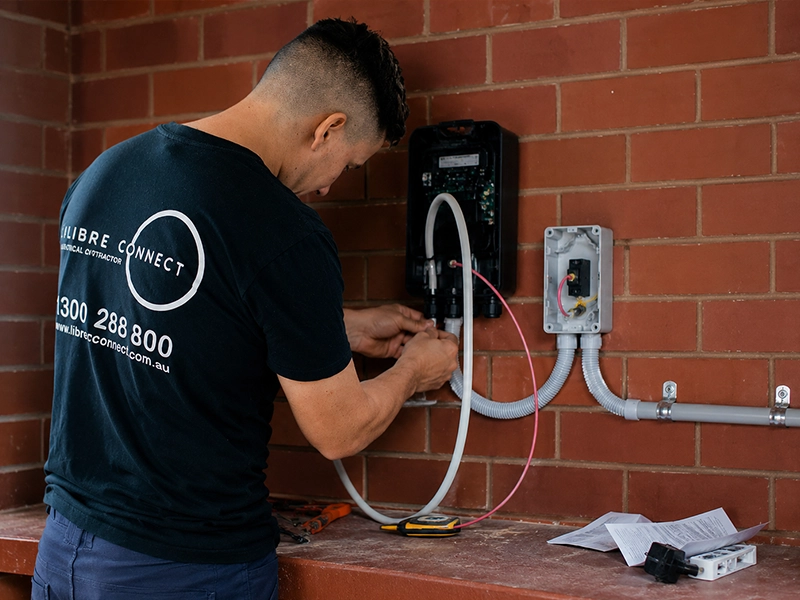
Step 3. Dedicated circuit and protection installation
We install a dedicated EV circuit sized correctly for the charger and the cable run. We install the appropriate protection arrangement, including RCBO and RCD selection suitable for the charger and the installation requirements.
Step 4. Commissioning, testing, and compliance handover
We commission the charger and complete verification testing on the circuit and protection devices before handover. On completion, you receive a Certificate of Compliance for Electrical Work (CCEW) as required in NSW, documenting that the work has been tested and completed to the applicable requirements.
Pre-quote Photo Checklist (Helps US Quote Accurately)
Install a compliant EV charger with safe load handling.
Why Choose Calibre Connect for EV Charger Installation in Sydney
Our local electricians are accredited installers for leading charger brands including Tesla, Wallbox, and ABB. This accreditation means your warranty remains valid and your unit performs at peak efficiency. We stay current with the latest EV charging technology through ongoing professional development.
Licensed Electricians for EV Charger Installation
EV charger installation is licensed electrical work. Calibre Connect is a licensed electrical contractor in NSW, and all EV charging installations are completed by qualified electricians who understand switchboard capacity, circuit protection, and EV charging system requirements.
Compliance with Australian Electrical Standards
EV charging systems must comply with AS/NZS 3000 Wiring Rules and applicable network requirements. Our installations are designed to meet these standards, and every completed job is issued with a Certificate of Compliance for Electrical Work (CCEW).
Proper Switchboard and Capacity Assessment
Before installing EV charging equipment, we inspect the switchboard and confirm whether the property has sufficient capacity for a dedicated EV circuit. This includes checking protection devices, available space, and overall load conditions.
Experience with Homes, Strata, and Commercial Sites
EV charger installations vary depending on the property type. We install charging systems in residential garages, strata apartment basements, and commercial premises across Sydney, with each installation designed for the electrical infrastructure at the site.
Clean and Practical Installations
We install EV chargers with careful cable routing, logical mounting positions, and properly installed protection devices. The result is a safe installation that is neat, serviceable, and designed for daily use.
Tested and Commissioned Before Handover
Every EV charger installation is tested and commissioned before handover. We verify circuit protection, confirm charger operation, and complete the required electrical testing so the system operates safely from the first charge.
What Our Clients Say About Calibre Connect EV Charger Installation
Service Areas: EV Charger Installation Matched to Sydney Property Types
The age of the electrical installation, the type of parking access, and the available supply all change what a practical EV charger installation looks like. A Federation home with an older switchboard needs a different approach to a strata basement with shared supply, or a commercial site planning for multiple chargers.
Here’s how we tailor EV charger installations across Greater Sydney:
Inner West (Older Homes, Narrow Access and Legacy Switchboards)
In suburbs like Leichhardt, Annandale, and Drummoyne, we often work with older switchboards, limited wall space, and more complex cable routes to side driveways or rear parking areas.
Typical challenge: older consumer mains, crowded switchboards, and cable routes that are not straightforward in terraces and renovated homes.
Our approach: assess switchboard condition first, confirm whether upgrades are needed, and plan neat cable runs that suit the layout without treating an older property like a new build.
Eastern Suburbs (Coastal Homes and Outdoor Charger Exposure)
For homes in Bondi, Coogee, Maroubra, and Rose Bay, charger location and weather exposure matter just as much as charging speed.
Typical challenge: outdoor mounting positions exposed to salt air, moisture, and harsh sun, especially where off-street parking is external rather than enclosed.
Our approach: specify installation methods and charger locations suited to the environment, use appropriate IP-rated equipment, and pay close attention to mounting, sealing, and long-term durability in coastal conditions.
North Shore (Strata Buildings and Basement Parking)
In areas like North Sydney, Chatswood, and Lane Cove, EV charger work is often less about the charger itself and more about building capacity, common property pathways, and approvals.
Typical challenge: apartment basement layouts, shared electrical infrastructure, and the need to coordinate with strata or building management.
Our approach: assess building supply and switchboard arrangements, plan compliant cable routes through common areas, and recommend practical load management strategies where multiple chargers or limited capacity are a factor.
Hills District (Modern Homes, Larger Loads and Three-Phase Potential)
For larger homes in areas like Castle Hill, Kellyville, and Baulkham Hills, we commonly see higher household demand from ducted air conditioning, pool equipment, and all-electric appliances.
Typical challenge: the property may have more physical space for installation, but available capacity still needs to be checked properly before adding a continuous EV load.
Our approach: review maximum demand, confirm whether single-phase or three-phase charging is practical, and design a dedicated EV circuit that suits both current use and future charging needs.
Northern Beaches (Detached Garages and Long Cable Runs)
In suburbs like Manly, Dee Why, and Mona Vale, charger locations are often set away from the main switchboard, especially on sloping blocks or properties with detached garages.
Typical challenge: longer cable distances, exposed external runs, and more installation labour where parking is separated from the main house supply.
Our approach: check the route carefully, size the circuit correctly for the run length, and install the charger in a position that is practical for daily use while keeping the installation neat and serviceable.
Sydney CBD and Inner City (Apartments, Mixed-Use and Limited Access)
In the CBD, Surry Hills, Zetland, and surrounding inner-city areas, EV charger projects often involve tight access windows, basement coordination, and mixed residential-commercial infrastructure.
Typical challenge: restricted access, shared services, and installation pathways that need to be coordinated carefully with building management.
Our approach: plan works around site access requirements, keep installation pathways clear and compliant, and deliver charger installations that suit high-density buildings without creating avoidable disruption.Inner West (Heritage Homes & Terraces)
In suburbs like Leichhardt and Drummoyne, we often work with older cabling, patched ceilings, and fragile plaster.
Frequently Asked Questions
Request a Quote for EV Charger Installation in Sydney
If you want EV charging installed properly, the scope needs to be confirmed on site. We will check capacity, confirm the cable route, select the correct protection arrangement, and commission the charger before handover.
Calibre Connect completes EV charger installations to AS/NZS 3000:2018 and relevant local DNSP requirements. A Certificate of Compliance for Electrical Work (CCEW) is issued on completion.
Licensed and insured electrical contractor. Licence No: 316227C.