





What We Find in Sydney Switchboards
“From the last 87 switchboard inspections we completed across Sydney between January and May 2026 here’s what we actually found:
- 62% still had ceramic fuses or rewireable fuse carriers
- 48% had no RCD protection on lighting circuits
- 31% showed heat damage on at least one fuse carrier
- Eastern Suburbs jobs were 2.3x more likely to have corrosion issues than Hills District jobs
- Inner West terraces averaged 4 different generations of wiring in one board
- Homes built before 1970 had no spare ways available in 78% of cases”
What Usually Triggers a Switchboard Upgrade?
Switchboard upgrades are usually triggered by a problem, a renovation, or a new load that the existing board was never designed to support. Before replacing the board, we check what actually needs to change: protection, capacity, circuit separation, labelling, defect removal, or future-ready space.
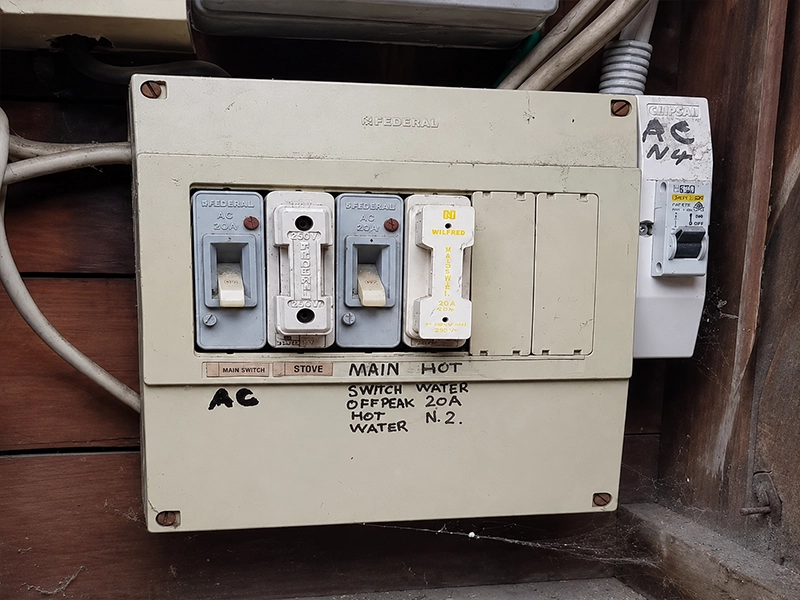
Old ceramic fuses
Ceramic fuses are common in older Sydney homes and can make fault finding, circuit protection, and safe isolation harder. If the board still relies on fuse wire, it is often time to move to modern circuit protection.
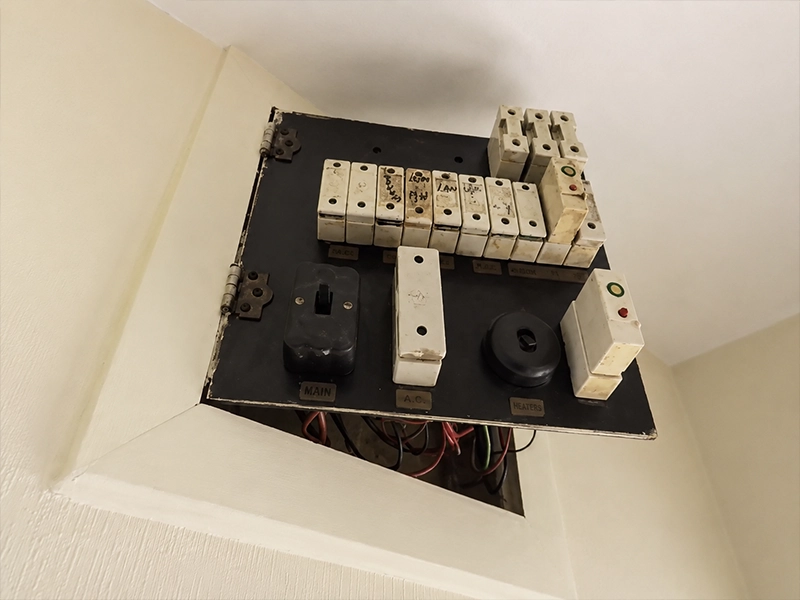
No safety switches
If power and lighting circuits do not have suitable RCD or RCBO protection, the switchboard may need an upgrade to improve electric shock protection and bring the board closer to modern safety expectations.
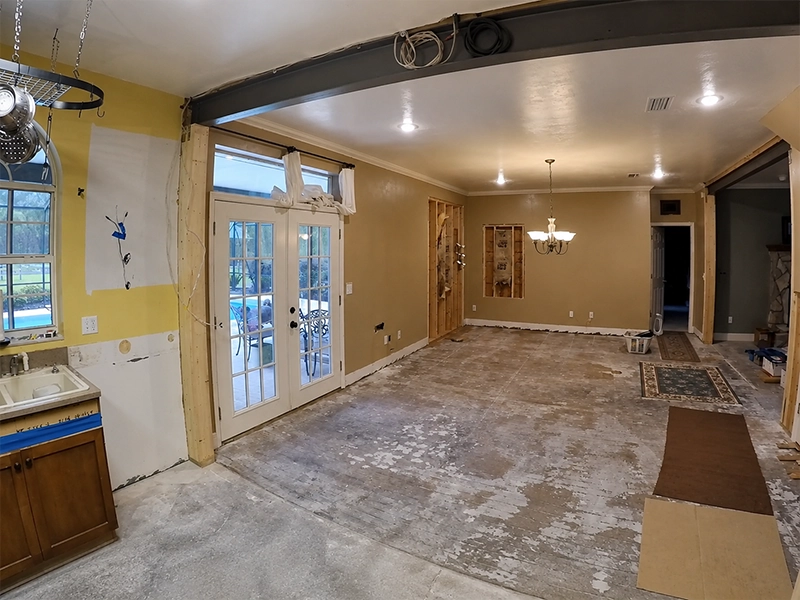
Renovation work
Kitchen renovations, bathroom upgrades, extensions, laundries, outdoor power, and home office upgrades often add new circuits or increase load. The switchboard needs to support the altered electrical layout, not just the old one.
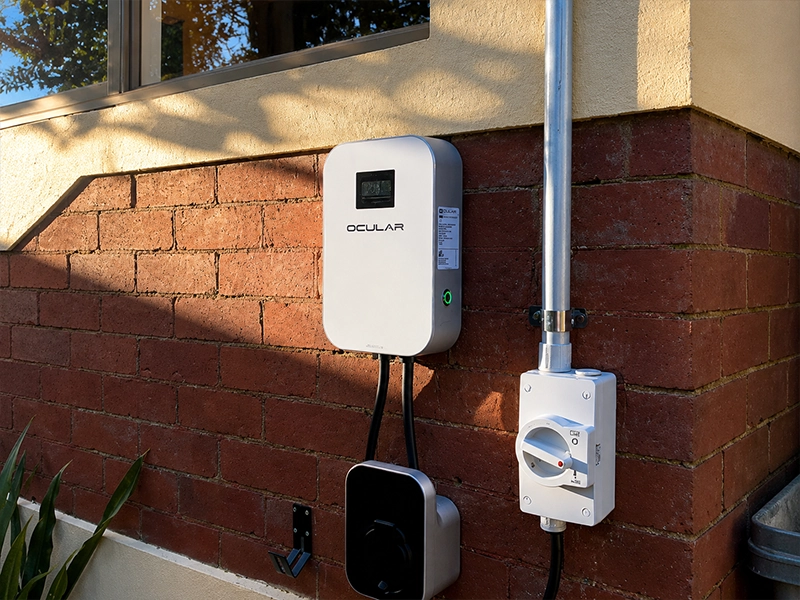
EV charger installation
EV chargers can add a significant dedicated load. Before installing one, Calibre Connect checks whether the board has space, protection capacity, circuit separation, and load-management options where required.
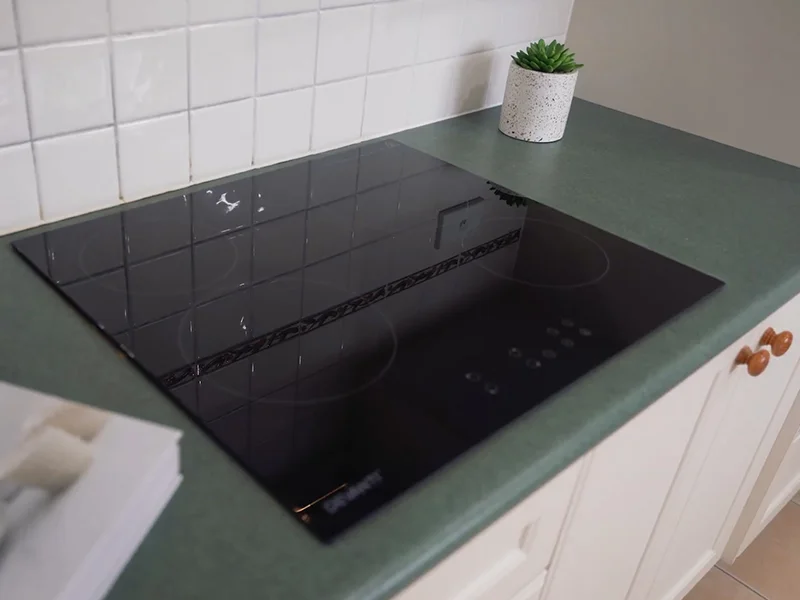
Induction cooktop or oven upgrade
Modern cooking appliances can expose old circuit limits quickly. An induction cooktop, pyrolytic oven, double oven, or 900mm cooker may need a dedicated circuit and suitable switchboard protection.
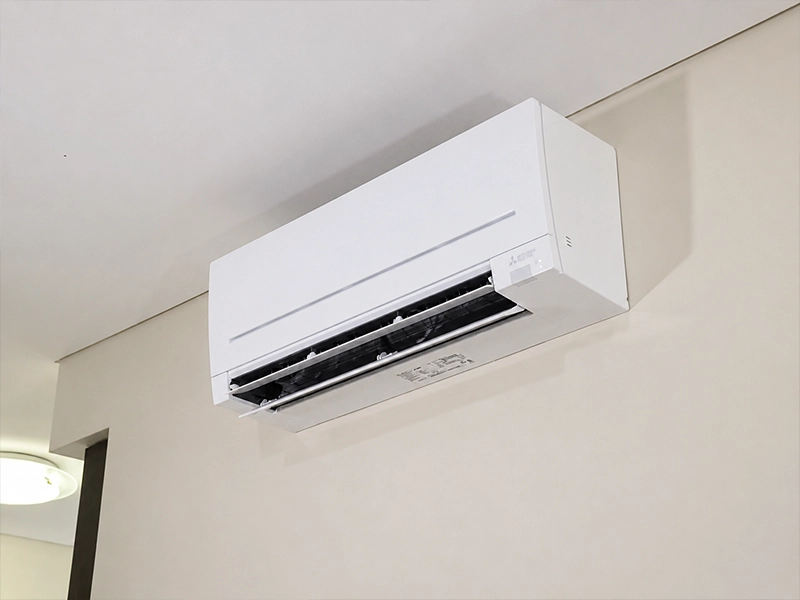
Air conditioning load
Split systems, ducted air conditioning, and multiple AC units can push an older board beyond what it was originally set up for. A switchboard upgrade may be needed to add dedicated protection and clearer circuit separation.
Electric hot water or heating loads
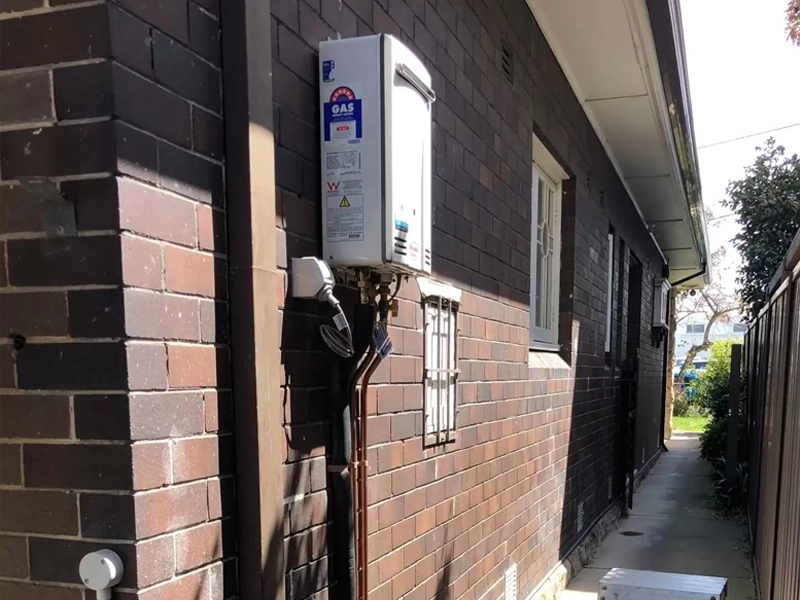
Electric hot water, underfloor heating, towel rails, pool equipment, and outdoor circuits all need suitable circuit protection and labelling. If the board is crowded or outdated, these additions can trigger an upgrade.
Frequent tripping
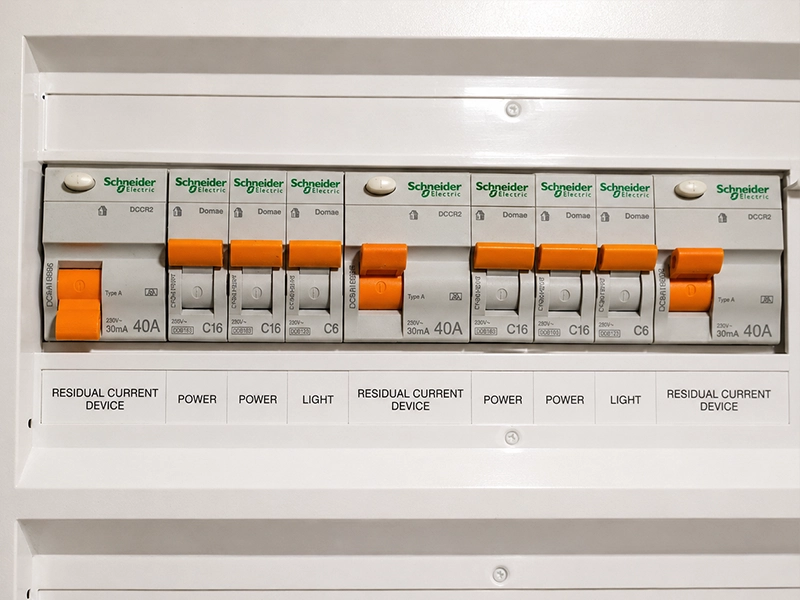
Repeated tripping can come from overload, earth leakage, faulty appliances, damaged circuits, or poor circuit grouping. A board upgrade may not be the only fix, but it can help when old protection or shared RCD arrangements are making faults harder to isolate.
Heat marks, burning smell, or damaged gear
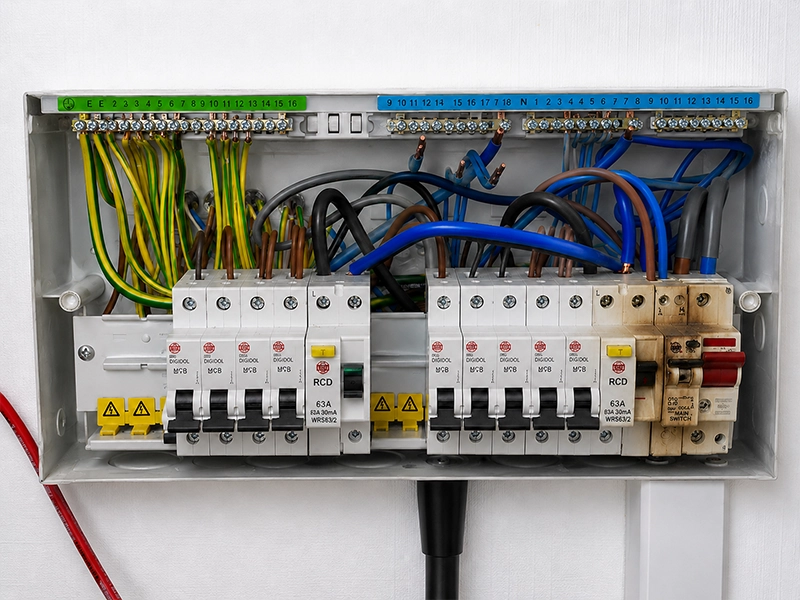
Burnt fuse carriers, melted insulation, buzzing, heat marks, cracked breakers, corrosion, or a burning smell should be treated as a defect. The board needs to be inspected before more circuits are added.
Protection Strategy: RCDs, RCBOs, Circuit Separation, and Labelling
A switchboard upgrade should make the property easier to protect, isolate, and fault-find. The goal is not just to fit new breakers. We look at how each circuit is protected, whether circuits are grouped properly, and whether a future electrician can identify what each device controls without guesswork.
RCDs and RCBOs
An RCD safety switch can protect multiple circuits, while an RCBO combines safety switch protection and circuit breaker protection for one individual circuit. Shared RCDs can work, but they can also make nuisance tripping harder to trace because one fault may turn off several areas at once.
A board with individual RCBOs usually gives cleaner separation because each circuit has its own protection. If a fault occurs on the kitchen power circuit, outdoor power circuit, or lighting circuit, the trip is easier to identify and diagnose.
Why circuit separation matters
Older switchboards often have circuits grouped in ways that no longer match how the property is used. Kitchens, laundries, outdoor areas, air conditioning, ovens, EV chargers, hot water, and home offices can place very different demands on the board.
Calibre Connect electricians check whether circuits should be separated for:
Why labelling matters
Poor labels create delays and safety risks. If a board says “power” or “lights” but no one knows which rooms are actually protected, isolation and fault finding become harder than they need to be.
During an upgrade, we label circuits clearly where practical so future testing, maintenance, and emergency isolation are easier. A clean switchboard should tell you what is protected, where the circuit goes, and which device needs to be isolated before work starts.
When a shared RCD arrangement causes problems
Shared RCDs can lead to repeated nuisance trips where small leakage from several circuits adds up. This can make the fault look random, especially when outdoor circuits, appliances, fridges, dishwashers, lighting drivers, or damp areas are involved.
Where repeated tripping is part of the history, we may recommend individual RCBO protection so faults are easier to isolate and one issue does not take out half the property.
Capacity Planning for Modern Sydney Homes
A switchboard upgrade is often the point where we plan for what the property is becoming, not just what it used to be. Older boards were often set up for simpler electrical use. Modern homes may now include induction cooking, larger ovens, multiple air conditioning circuits, EV charging, electric hot water, pool equipment, underfloor heating, outdoor power, home offices, security, and automation systems.
Loads that can change the switchboard plan
Before upgrading the board, we check which loads are already connected and which ones may be added soon. This helps avoid rebuilding the board now and then running out of space or capacity during the next renovation stage.
Common future-load considerations include:
Single-phase and three-phase considerations
Some properties can continue safely on single-phase supply with the right circuit design and load planning. Others may need a broader discussion about three-phase power, especially where multiple high-demand appliances are being added together.
Calibre Connect checks the existing supply arrangement, connected loads, available switchboard space, and likely future demand before recommending the upgrade pathway. The goal is to avoid nuisance tripping, overcrowded protection, and a board that has no room for the next circuit.
Spare capacity matters
A new switchboard should not be packed full on day one if future work is likely. Where practical, we allow space for future circuits, clearer labelling, cleaner separation, and easier servicing. This is especially important during renovations, where the kitchen, laundry, outdoor areas, EV charger, and air conditioning may not all be completed at the same time.
Why capacity planning saves rework
A switchboard that is only upgraded for today’s problem may need more work soon after. Planning for near-future loads means the board can better support appliance upgrades, electrification, and renovations without repeated callouts or messy add-ons.
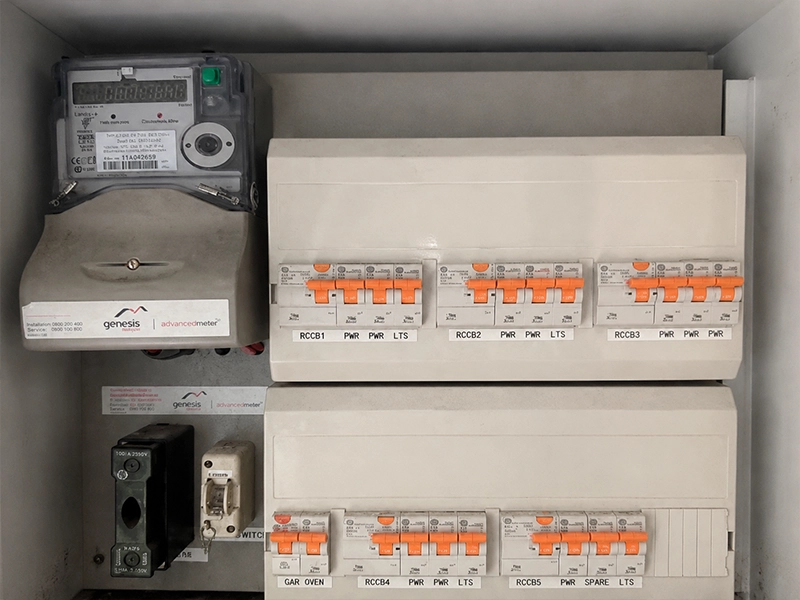
Send Calibre Connect a photo of your switchboard, the issue you are seeing, and any new loads you are planning, such as an EV charger, induction cooktop, oven, air conditioning, hot water system, or renovation circuits. We’ll check whether the right next step is a defect repair, RCD or RCBO protection upgrade, circuit separation, extra capacity, or a full electrical switchboard upgrade.
Old Fuse Board vs Modern RCBO Switchboard
Not every switchboard upgrade needs the same end result. Some boards only need defect correction or additional protection, while others need a full rebuild because the old gear, enclosure, labels, and circuit layout no longer support the property safely.
|
Switchboard type |
What it usually means |
Main limitation |
|---|---|---|
|
Ceramic fuse board |
Older board using fuse wire or ceramic fuse carriers for circuit protection |
Harder to reset safely, poor fault isolation, usually no modern safety switch protection |
|
Old plug-in breaker board |
Fuse carriers may have been replaced with plug-in breakers, but the board layout is still old |
Looks partly upgraded but may still lack proper RCD or RCBO protection |
|
Shared RCD board |
One safety switch may protect multiple circuits |
A single fault can take out several circuits and make nuisance tripping harder to trace |
|
Individual RCBO board |
Each circuit has combined overcurrent and safety switch protection |
Usually cleaner fault isolation and easier circuit identification |
|
Three-phase switchboard |
Board arranged around three-phase supply for larger loads or load distribution |
Needs proper phase balancing, labelling, and planning for connected equipment |
|
Temporary repair pathway |
A defect is made safe or a failed device is replaced without rebuilding the whole board |
May solve the immediate issue but does not always address old gear, capacity, or future loads |
For many Sydney homes, the cleaner upgrade path is a modern board with individual RCBO protection, clear circuit labels, spare capacity where practical, and a layout that makes future fault finding easier. That does not mean every circuit issue is solved by a new board, but it gives the electrical system a safer and clearer starting point.
Common Switchboard Problems We Fix
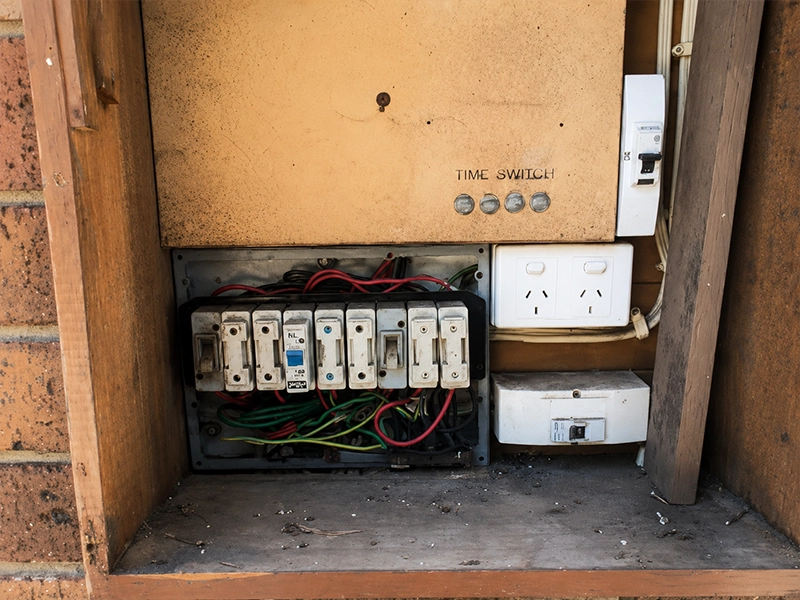
Ceramic fuses and fuse wire
Older ceramic fuse boards can be harder to reset safely and often lack modern safety switch protection. We replace outdated fuse gear with suitable circuit protection, clear labelling, and a board layout that is easier to isolate and maintain.
No RCD or RCBO protection
If the switchboard has no safety switches, or only limited protection on some circuits, the property may need an RCD or RCBO upgrade. Calibre Connect checks which circuits are protected, which are not, and how the board can be upgraded cleanly.
Frequent tripping
Repeated tripping can be caused by overload, earth leakage, faulty appliances, moisture, damaged circuits, or poor circuit grouping. We check the fault history before replacing parts so the upgrade solves the right problem.
Burnt fuse carriers or heat marks
Burnt smells, buzzing, melted insulation, scorched fuse carriers, or heat marks around breakers should be treated as a serious defect. The board needs inspection before any new circuits or appliances are added.
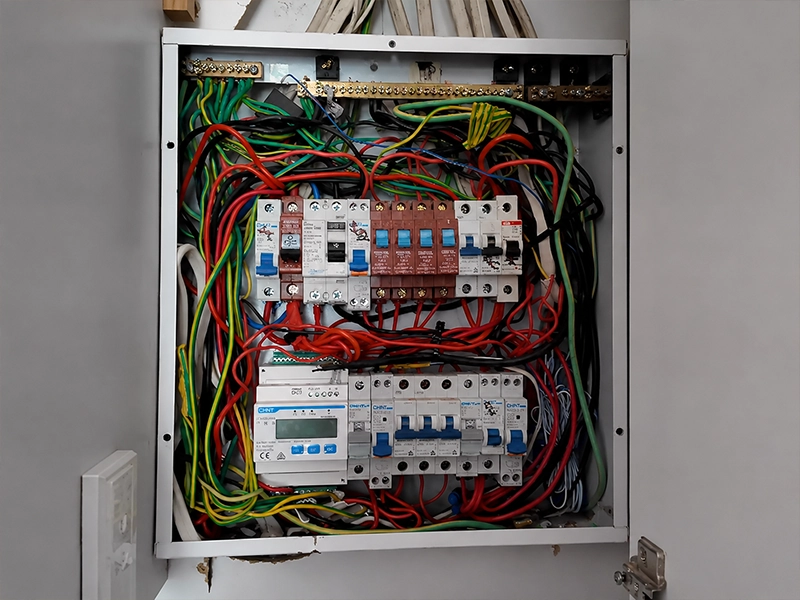
Overcrowded switchboards
Some boards have too many devices squeezed into a small enclosure, no spare ways, poor cable management, or mixed old and new protection. An upgrade gives the circuits more space, clearer separation, and a safer layout.
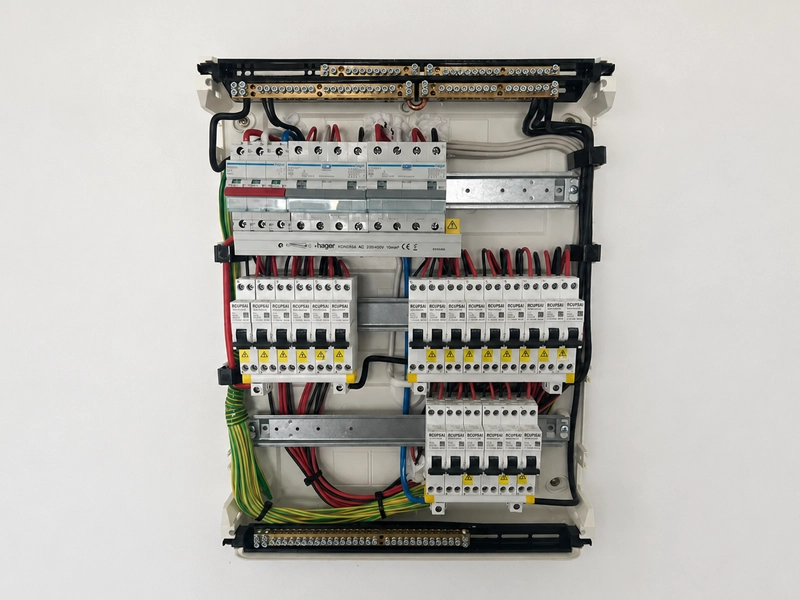
Poor circuit labels
Labels like “lights” or “power” are not enough when no one knows which rooms or appliances they control. We relabel circuits where practical so future isolation, testing, and fault finding are easier.
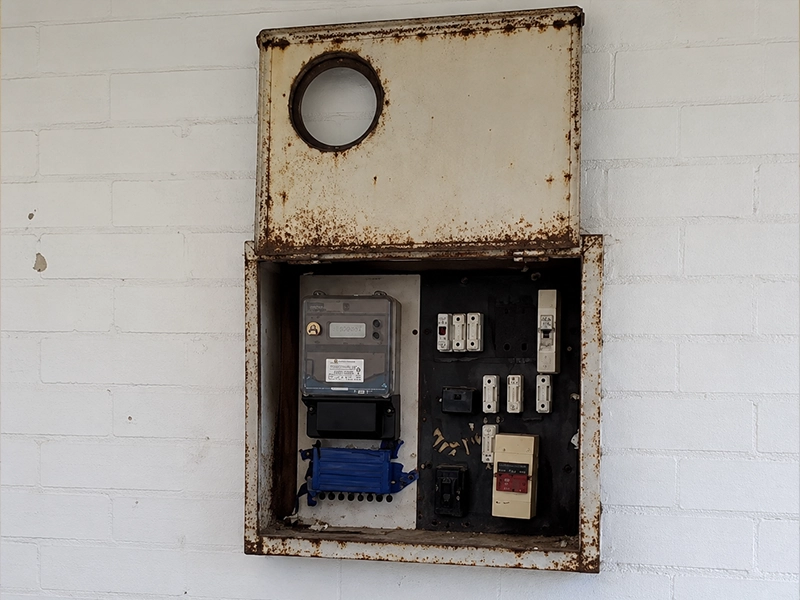
Water ingress and corrosion
External boards, coastal properties, damp meter locations, and old enclosures can suffer from corrosion or water tracking. We check the enclosure, cable entries, devices, and mounting position before deciding whether repair or replacement is needed.
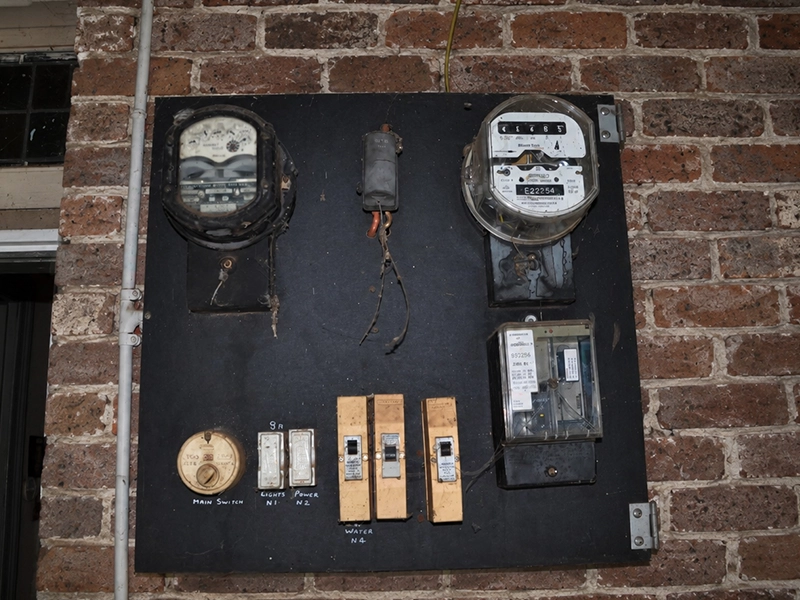
Asbestos panel concerns
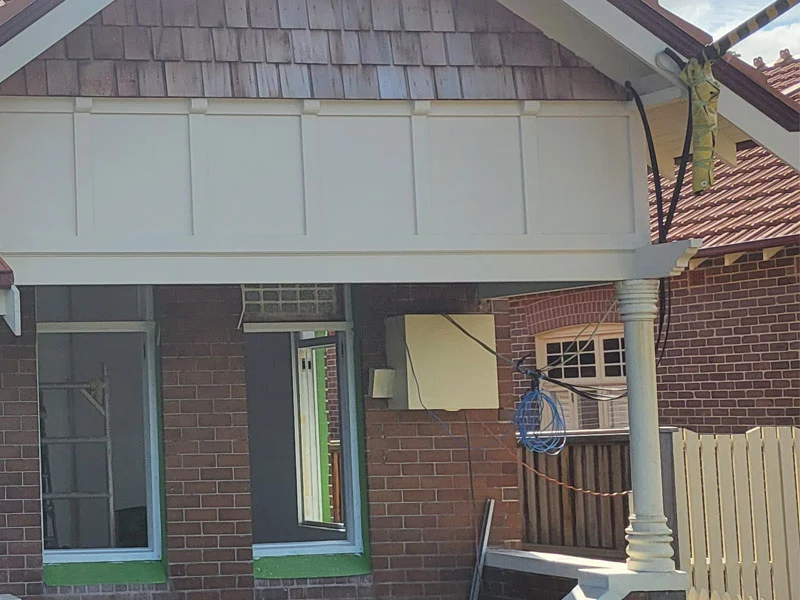
Older Sydney switchboards, particularly Inner West heritage homes often have asbestos backing panels behind the fuse gear. We recently encountered this on a Kingston Street, Haberfield project where the entire front-porch board needed careful removal and the heritage brickwork required tuckpointing afterwards. If asbestos is suspected, the board needs to be handled carefully and may require specialist removal before electrical upgrade work can proceed.
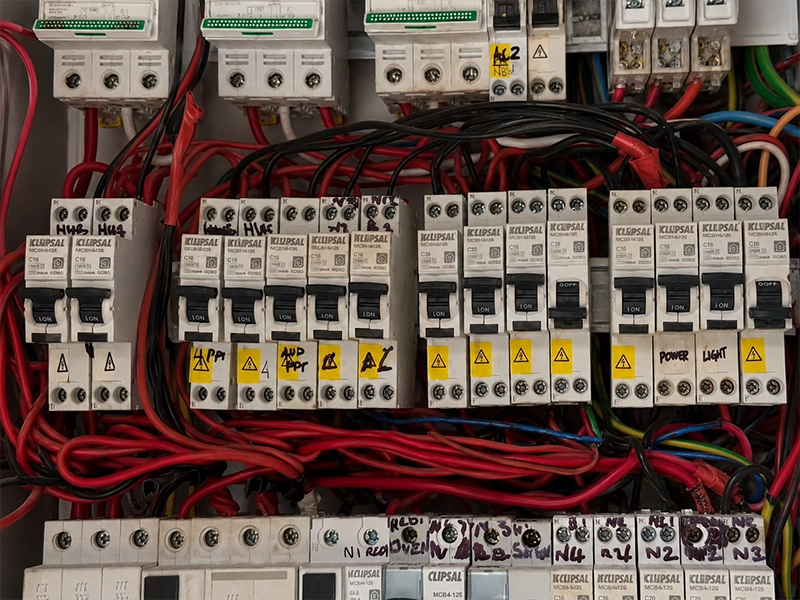
No spare capacity for new circuits
If the board has no space for an EV charger, oven, induction cooktop, air conditioning, hot water, outdoor power, or renovation circuits, a switchboard upgrade may be required before the new work can be connected.
Electrical Switchboard Upgrade Cost in Sydney
When planning an electrical switchboard upgrade in Sydney, understanding the financial investment is crucial for your property’s safety, energy efficiency, and regulatory compliance. We offer transparent, competitive pricing tailored to the specific electrical demands of your residential, commercial, or industrial property.
Our switchboard upgrade costs are carefully structured to reflect premium workmanship, utilizing high-quality materials without any hidden fees.
Our Pricing Guide for Switchboard Upgrades
Factors Influencing Your Custom Quote
While the baseline figures above cover standard installations, every electrical network is unique. Your final installation cost may vary depending on site-specific conditions.
|
Cost factor |
Why it changes the quote |
|---|---|
|
Capacity and Circuit Count |
Upgrading your overall amperage capacity (e.g., transitioning from a 100-amp to a 250-amp board) or adding new sub-circuits for modern smart home extensions. |
|
Cabling and Consumer Mains |
Older properties often require consumer mains upgrades or partial house rewiring to safely handle modern electrical loads and meet current AS/NZS 3000:2018 Wiring Rules. |
|
Site Complications |
Necessary safety protocols, such as the safe removal of asbestos from heritage backing boards or the physical relocation of the meter box, will incur additional labor and disposal costs. |
We prioritize protecting your property from electrical fires and overloaded circuits. Reach out to our team of licensed electricians today for a comprehensive site assessment and a fixed-price, no-obligation quote tailored exactly to your electrical needs.
Pricing questions we clarify before quoting
How We Upgrade and Commission Switchboards
1. We inspect the existing board and circuit layout
We start by checking the switchboard condition, circuit count, protective devices, labels, enclosure space, earthing arrangement, visible defects, and any history of tripping, overheating, or failed circuits. We also confirm whether the upgrade is being done for safety, renovation work, new appliance loads, or future capacity.
2. We plan the protection and capacity strategy
Before replacing devices, Calibre Connect plans how the board should be arranged. This includes RCD or RCBO protection, circuit separation, spare capacity, appliance circuits, outdoor circuits, EV charger readiness, three-phase considerations where relevant, and clear labelling.
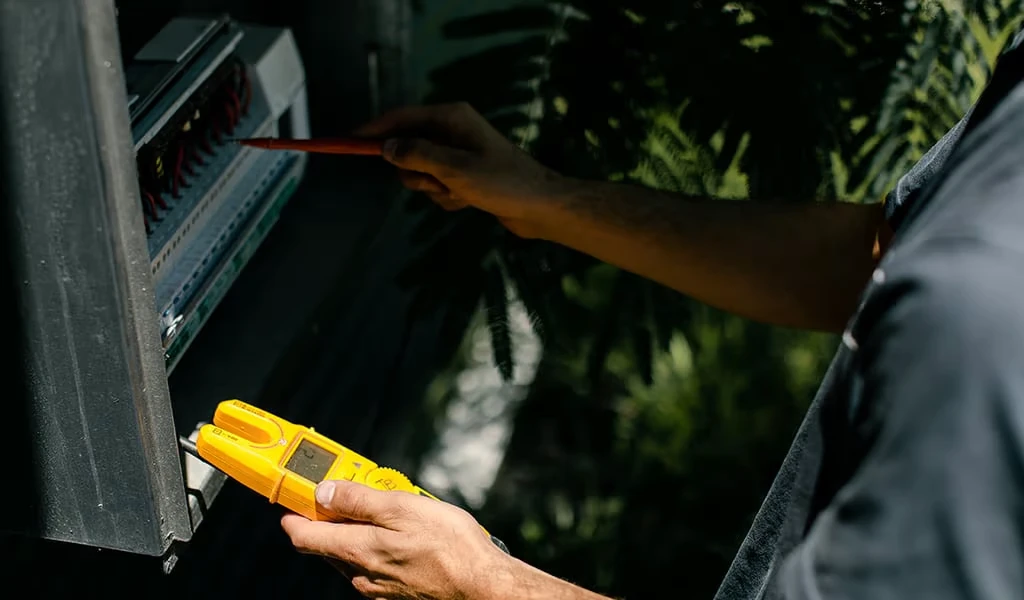
3. We complete the upgrade and correct board defects
We replace outdated fuse gear, unsafe breakers, overcrowded layouts, damaged devices, or unsuitable enclosures as required by the scope. Where new circuits or altered circuits are included, we fit suitable protection and arrange the board so future testing and isolation are easier.
4. We test, label, and hand over
After the upgrade, we complete the required testing for the work performed, check safety switch operation where fitted, confirm circuit identification where practical, label the board clearly, and explain what has changed. A CCEW is issued for the electrical installation work completed.
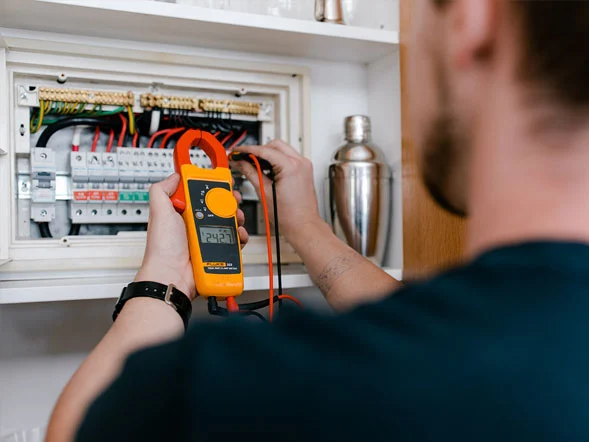
What We Check Before Handover
Before we leave, we check the upgraded switchboard as a working protection and isolation point for the property, not just a new enclosure with new devices. The handover confirms that the circuits, protection, labelling, safety switches, defects, and documentation have been completed for the work performed.
Why Choose Us for Electrical Switchboard Upgrades
We upgrade around protection, not appearance
A switchboard upgrade should improve how the property is protected, isolated, and fault-found. We check the existing circuits, safety switch coverage, old fuse gear, tripping history, and board condition before recommending the upgrade pathway.
We separate circuits more clearly
Shared protection can make one fault turn off several parts of the property. Where suitable, Calibre Connect uses individual RCBO protection so circuit faults are easier to identify and one issue is less likely to take out unrelated areas.
We plan for future electrical loads
Modern homes often need capacity for EV charging, induction cooking, larger ovens, air conditioning, hot water, underfloor heating, outdoor power, security, and automation. We plan the board with future circuits in mind where practical.
We check defects before adding new circuits
Heat marks, burnt fuse carriers, corrosion, water ingress, damaged enclosures, asbestos panel concerns, and poor cable entries need attention before more load is added. We check the board condition before treating the job as a simple device swap.
We make the board easier to use later
Clear labelling, cleaner circuit separation, and serviceable layout matter after the upgrade. A future electrician, homeowner, strata manager, or property manager should be able to identify circuits without guesswork.
We test and document the electrical work
After the switchboard upgrade, we test the work completed, confirm safety switch operation where fitted, explain what changed, and issue a CCEW for the electrical installation work completed.
What Our Clients Say About Calibre Connect Electrical Switchboard Upgrades
Service Areas: Switchboard Upgrades Matched to Sydney’s Building Stock
Electrical switchboard upgrades change across Sydney because building age, board location, supply capacity, moisture exposure, renovation history, and appliance loads vary from one property to another.
Patterns We’ve Noticed That Most Homeowners Don’t Know About
- In Eastern Suburbs apartments built between 1965 and 1980, the meter panel is often too small to fit a modern enclosure – we usually need to discuss strata approval for an external sub-board.
- Inner West terraces often have a “renovation layer” – a second smaller board added during a kitchen reno. These almost always need consolidating during an upgrade.
- Hills District homes from the 90s and 2000s commonly have undersized mains for today’s loads, even if the board itself looks newer. We’ve found this in roughly 1 in 3 inspections.
- Northern Beaches homes within 500m of the coast show corrosion in safety switches at roughly 2x the rate of inland Sydney properties.
Here’s how we plan switchboard upgrades across Greater Sydney:
Eastern Suburbs
Eastern Suburbs homes and apartments often include older boards, strata restrictions, compact meter panels, and coastal exposure.
Inner West
Inner West heritage homes particularly in Haberfield, Summer Hill, Marrickville, and Petersham often have switchboards from the original build era still mounted on the front porch or front facade. The most common issues we find on these boards are asbestos backing panels, rewireable fuses, no RCD protection, and no convenient indoor isolation point.
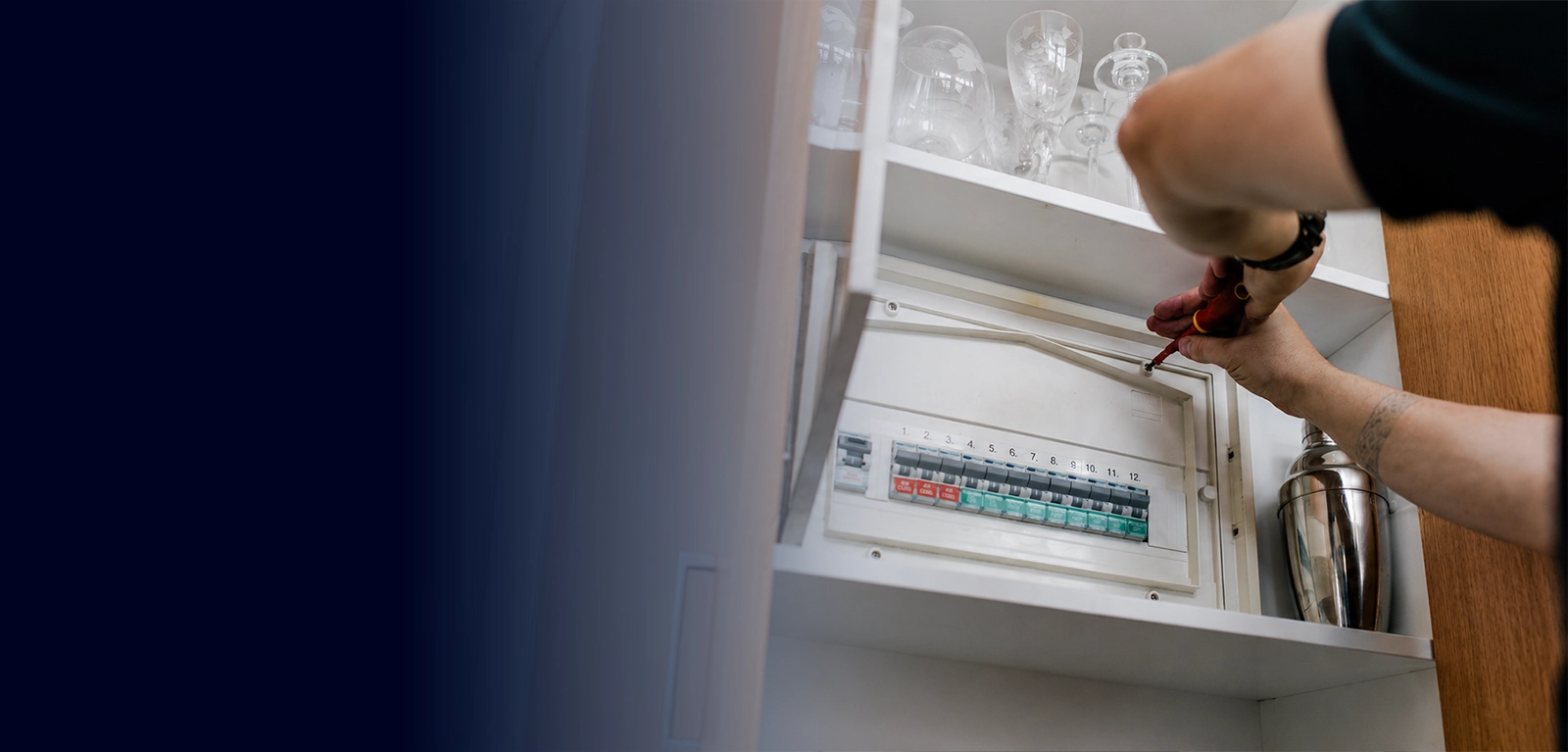
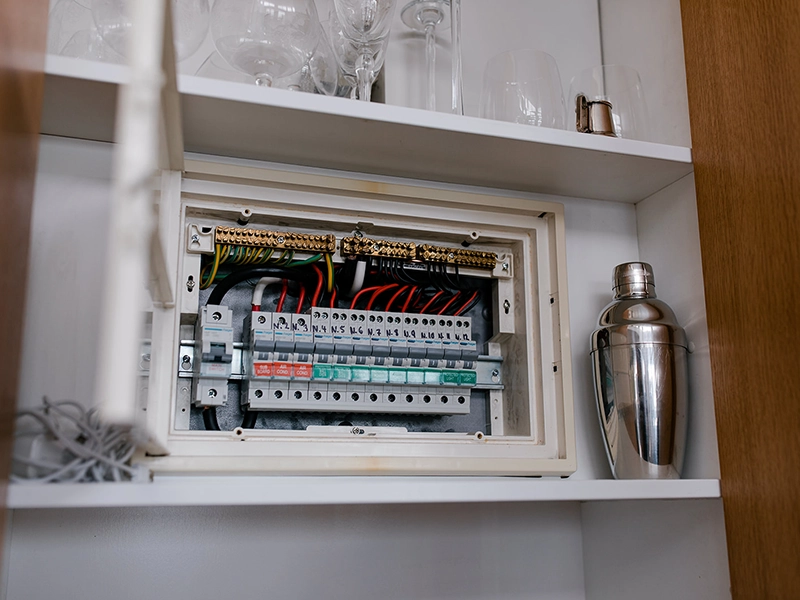
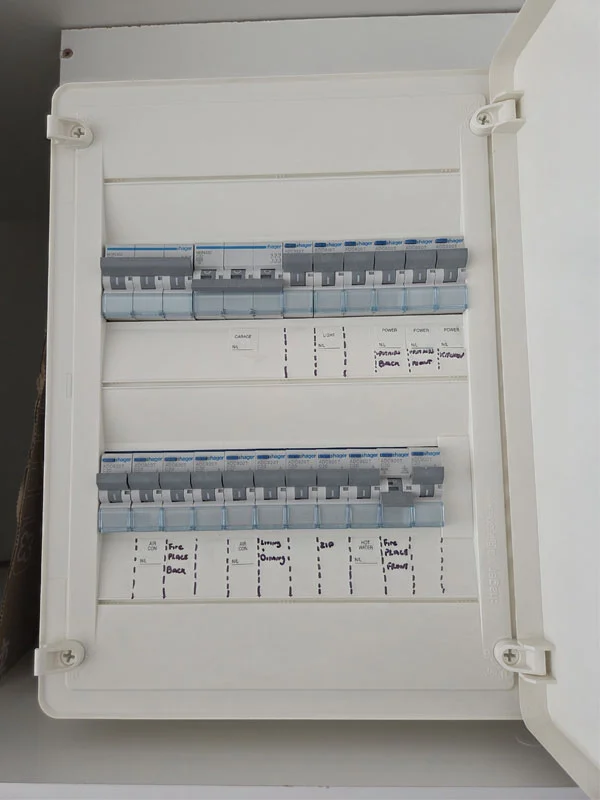
Our recent Kingston Street, Haberfield project is a clear example. Tthe existing board had an asbestos backing panel and outdated fuses mounted directly on the front porch. We relocated the utility metering to a weatherproof side-of-house enclosure and built a discreet indoor Hager sub-board inside a kitchen cabinet so the homeowner could safely manage circuits without going outside.
North Shore
North Shore homes often include larger properties, older renovations, air conditioning, pools, gates, security systems, and growing appliance loads.
Hills District
Hills District homes often include larger family layouts, EV chargers, air conditioning, pools, home offices, and renovation projects.
Sydney CBD
CBD apartments, commercial tenancies, and strata buildings often involve access windows, building rules, risers, and shared electrical infrastructure.
Northern Beaches
Northern Beaches properties can have external boards, coastal air, moisture exposure, pool circuits, outdoor lighting, and garage or gate circuits.
Sutherland Shire
Sutherland Shire homes often include family renovations, outdoor entertaining areas, pools, garages, and staged appliance upgrades.
Read the full Haberfield switchboard relocation case study →
Real Sydney Switchboard Upgrade Projects
Every switchboard upgrade we complete has specific conditions – board age, defects, heritage constraints, asbestos, access limitations, or appliance loads that shape the final scope. Here’s one project we recently completed to show what that looks like in practice.
Heritage Home Switchboard Relocation, Kingston Street, Haberfield
Frequently Asked Questions
Ready to book an electrical switchboard upgrade in Sydney?
Send us a photo of your switchboard, the issue you are seeing, and any new electrical loads you are planning, such as an EV charger, induction cooktop, oven, air conditioning, hot water system, underfloor heating, outdoor power, pool equipment, or renovation circuits.
We’ll check the board condition, circuit protection, spare capacity, safety switch coverage, and whether the right pathway is a repair, RCBO upgrade, or full switchboard replacement.
Request a quote for electrical switchboard upgrades in Sydney