
Commercial EV Charging Installation Sydney

Calibre Connect installs commercial EV charging across Sydney for strata buildings, workplaces, fleet depots and customer car parks. We scope site capacity at the main switchboard, design submains and containment through car parks, and commission EVSE so it operates within the site’s limits. A Certificate of Compliance Electrical Work (CCEW) is issued on completion. Licence No: 316227C.
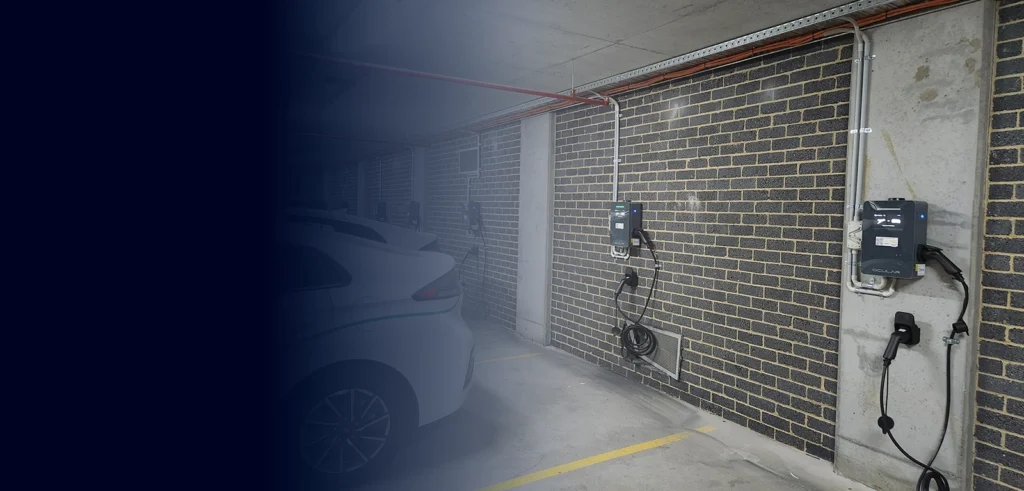
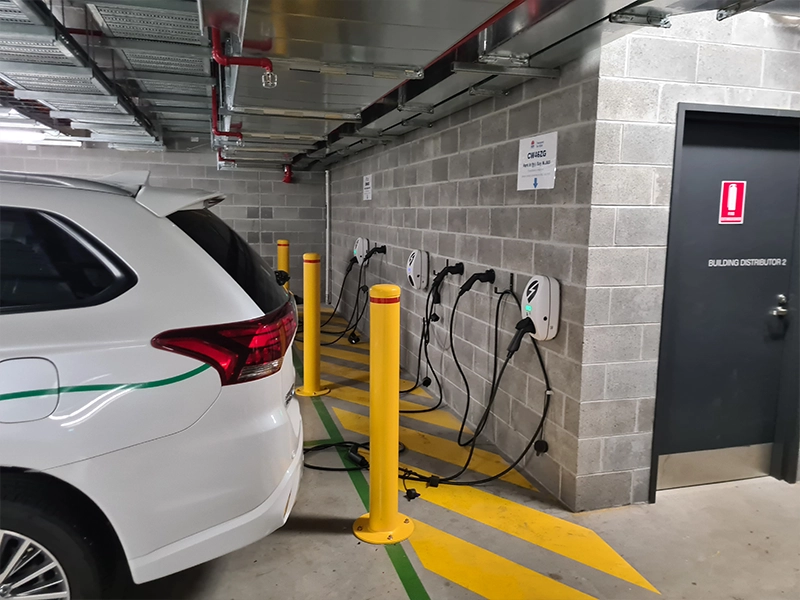
Commercial EV chargers installed in a Sydney apartment car park for shared vehicle charging
Commercial EV Charging Brands We Trust:
Calibre Connect electricians team standing together in branded uniforms

Who Installs Commercial EV Chargers in Sydney?

Commercial EV charging work is usually decided at the switchboard and along the cable route, not at the wall where the charger sits. The job starts with capacity, what the site is already drawing, what headroom exists, and whether charging can be added without tripping mains, overheating submains, or overloading a riser feed.

From there, the design is practical. Where chargers can be mounted, how cables will be protected, and what fault protection suits the equipment. On sites where the existing network supply cannot support the added maximum demand and service mains or supply upgrade work is required, that work requires Level 2 ASP authorisation and is handled through a Level 2 electrician.

What We Check Before Handover

Before we hand the site back, we verify the protection, the earthing, the physical install, and commissioning behaviour, then document what was done so it can be maintained. All electrical work is completed to AS/NZS 3000:2018 and relevant NSW installation requirements, with a CCEW issued on completion.
  • Handover pack: as-installed notes, board schedule updates where required, and CCEW issued on completion
  • Isolation and labelling: local isolation where required, circuit ID at the board, bay labels where applicable
  • RCD and fault protection match: confirm EVSE protection requirements are met, including DC fault considerations
  • Overcurrent protection: breaker sizing aligns with cable size, installation method, and ambient conditions
  • Cable route integrity: tray or conduit secure, penetrations made good, mechanical protection added where impact risk exists
  • Earthing and bonding continuity: confirm bonding at the charging location and continuity back to the earthing system
  • Earth fault loop impedance testing: verify disconnection performance on final circuits
  • Commissioning checks: charger functionality confirmed and any load management is behaving as intended
Calibre Connect electrician checking a commercial EV charger before handover at a Sydney property
Multiple commercial EV chargers installed in a Sydney car park for shared vehicle charging

Commercial EV Charging Services We Handle in Sydney

1. Workplace EV Charging Installations
Staff parking chargers with capacity checks, tidy containment, and access control options where usage needs to be managed.
2. Strata Common Property EV Charger Installations
Shared-area installs planned around approvals, basement access windows, and clean cable routes through common property.
3. Fleet Depot Charging Infrastructure
Multi-bay setups designed for higher duty cycles, staged expansion, and realistic simultaneous-charging assumptions.
4. Visitor and Customer Car Park Chargers
Charger positioning planned for safe vehicle access and protection in high-traffic areas.
5. AC Destination Chargers (7kW / 11kW / 22kW)
Suited to longer dwell times with correct circuit sizing, isolation, and protection.

6. DC Fast Charger Installations (50kW+)
Higher-power installs that often involve three-phase constraints, dedicated distribution, and careful containment planning.
7. Dynamic Load Balancing and Active Load Management
CT-meter based control to cap site demand and allocate charging current across multiple units.
8. Switchboard and MSB Upgrades for EV Charging
Capacity and protection work where EV circuits cannot be added cleanly without board changes.
9. Submains, Containment and Long-Run Installations
Long cable runs through basements and risers with mechanical protection and penetrations made good.
10. OCPP-Ready Chargers and CPMS Integration
Commercial setups that need user control, reporting, or billing through a managed platform.
11. EVSE Fault-Finding, Repairs and Upgrades
Diagnosis of trips, comms faults, damaged connectors, and water ingress, followed by rectification.
12. Compliance Testing, Labelling and Handover
Commissioning checks, clear labelling, as-installed notes, and documentation on completion.

Capacity, Maximum Demand and Load Management on Commercial Sites

On commercial EV charging installs, the limiting factors are usually upstream. Spare capacity at the main switchboard, submains sized for the original building load, and cable routes that create long runs with voltage drop and containment constraints.

We start with a practical site check. Existing load, spare headroom, and how many chargers can run at the same time without pushing the site past its workable limit. If the board is at capacity or protection and segregation is outdated, that becomes part of the scope through targeted switchboard upgrades.

What maximum demand changes

  • Charger count and power level: multiple AC units behave very differently to a single DC unit
  • Simultaneous charging assumptions: fleet and staff parking have predictable peaks; visitor charging can be spiky
  • Cable route length: long basement runs can force larger cable sizes to keep voltage drop controlled
  • Available supply: three-phase availability often decides what’s realistic without upstream work

Dynamic load balancing in older Sydney buildings

In older strata towers and Art Deco complexes, a site can be electrically constrained even when the board still has physical space. Dynamic load balancing and active load management can cap site demand and allocate current across chargers without nuisance trips.

This is typically done by measuring live site load with CT meters and controlling chargers so total demand stays under a defined cap. When building load rises, charging current is reduced. When load falls, charging ramps back up. It cannot compensate for undersized submains running hot, a switchboard that needs refurbishment, or a supply that is genuinely constrained at the network connection.
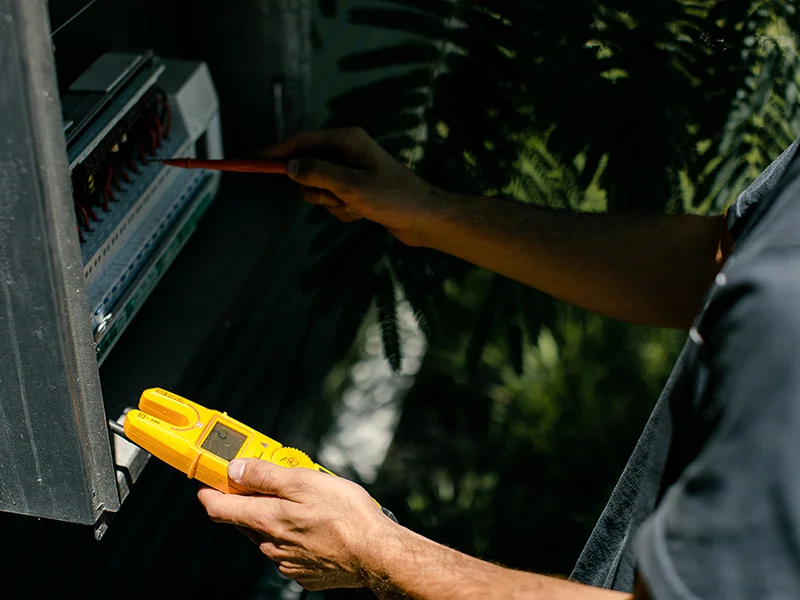
Calibre Connect electrician using a voltage tester during electrical safety checks at a Sydney property
Not sure what you need?

AC vs DC Charging on Commercial Sites, and What Changes in the Installation

Commercial EV charging usually falls into two categories. AC destination charging suits longer dwell times like staff parking, strata visitor bays, and hotels. DC fast charging suits short dwell times and higher turnover, but it comes with heavier electrical and siting constraints.
Charger selection and site constraints usually decide the rest of the design, including whether the job is mainly new circuits and containment or whether it becomes broader EV charger installation work across multiple bays and distribution points.

AC destination chargers (7kW, 11kW, 22kW)
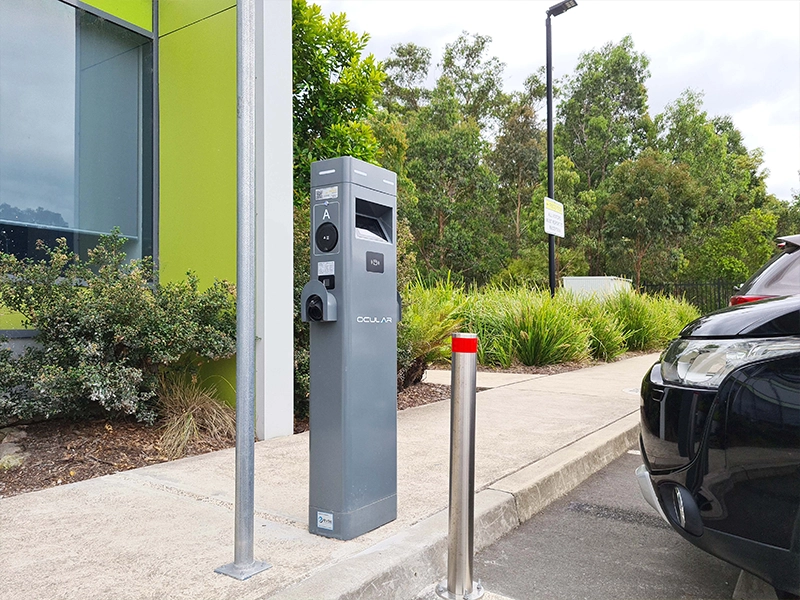
AC destination EV charger installed at a Sydney commercial property for customer and staff vehicle charging
  • Circuit sizing and voltage drop: long runs can push you into larger cable sizes
  • Containment: tray in service corridors, conduit on walls and columns, mechanical protection in impact zones
  • Mounting: fixing into concrete columns or masonry, and avoiding drilling into post-tensioned slabs without confirmation of safe drill zones
  • Socketed vs tethered: socketed Type 2 can reduce cable wear in public areas; tethered can be simpler for controlled staff areas

DC fast chargers (50kW and above)

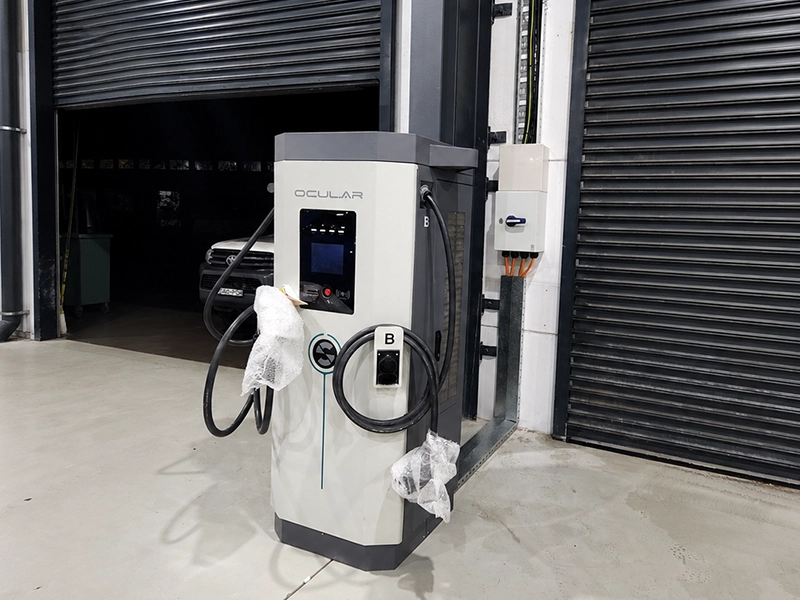
Calibre Connect three-phase EV charger installed for higher-capacity vehicle charging in Sydney
  • Supply and distribution: often needs robust three-phase supply and dedicated distribution
  • Heat and ventilation: basement locations need clearances and airflow so equipment remains serviceable
  • Impact protection: bollards or wheel stops where vehicles can strike the unit
  • Cable management: heavier leads make placement and support more important

Protection and fault considerations for EVSE

EV charging equipment can introduce DC fault components, so protection selection needs to match the EVSE design and the final circuit arrangement. In practice, this comes down to confirming whether the equipment requires a Type B RCD or whether a Type A arrangement with 6 mA DC fault protection is satisfied by the unit’s internal protection, then ensuring upstream coordination and local isolation where required.

This sits within broader site electrical work handled under commercial electrical where multiple distributions, tenancies, and common areas are involved.

Real-world issues that affect the install

  • Water ingress risk in car parks, washdown areas, and damp coastal locations
  • Corrosion in exposed coastal sites where enclosure and hardware spec matters
  • Access restrictions and staged works to keep car parks operating
  • Legacy infrastructure limiting spare ways and clean segregation

Commercial EV Charging Installation Cost in Sydney, and What Changes the Price

How much does a commercial EV charger installation cost in Sydney?

On average, a standard commercial EV charging installation in Sydney costs between $2,700 and $6,000 per charging station, fully installed. For a straightforward package including a fast 22kW 3-phase commercial charger and standard wall-mounted wiring (up to 10 metres from the switchboard), you can expect to pay between $2,700 and $3,800. Larger scale car park setups or installations requiring complex infrastructure, custom pedestals, or extensive cable runs typically average closer to $6,000 per unit.

While we provide transparent, highly competitive pricing tailored to your specific premises, the exact cost of your commercial EV charger installation will depend on several critical site factors:

  • Mounting and Containment: Simple wall-mounted installations in indoor garages are the most cost-effective. If your chargers need to be mounted on freestanding pedestals in an open customer car park, or if extensive cable tray containment is required across multiple parking levels, the installation cost will reflect the additional labor and protective materials.
  • Distance to the Distribution Board: The length of the cable run from your main electrical switchboard to the charger location heavily influences both labor and material costs. Runs exceeding 10 metres, core hole drilling through concrete, or underground trenching will increase the final price.
  • Existing Electrical Capacity: Many older commercial buildings, strata complexes, and fleet depots in Sydney do not have the baseline power capacity to support multiple EV chargers. In these cases, you may require a switchboard upgrade or the integration of an active load management system to prevent overloading.
  • Hardware and Software Requirements: The type of Electric Vehicle Supply Equipment (EVSE) you choose dictates a significant portion of the cost. Basic AC chargers are more economical, while smart chargers featuring RFID card access, automated billing software integration, and dynamic load balancing carry a higher initial hardware cost.

Pricing accordion

Site inspection focused on capacity, cable route, mounting positions, and access constraints, plus a defined scope with assumptions called out and a clear materials allowance that matches the install method.

Switchboard refurbishment, major distribution changes, civil works beyond normal fixings, reinstatement outside the electrical scope, and network supply upgrades where the existing connection cannot support added maximum demand.

Unknown cable route length, unclear board capacity, unconfirmed post-tension constraints, access restrictions, and whether containment needs to run through fire-compartmented areas.

When the added load cannot be accommodated within the existing network supply.

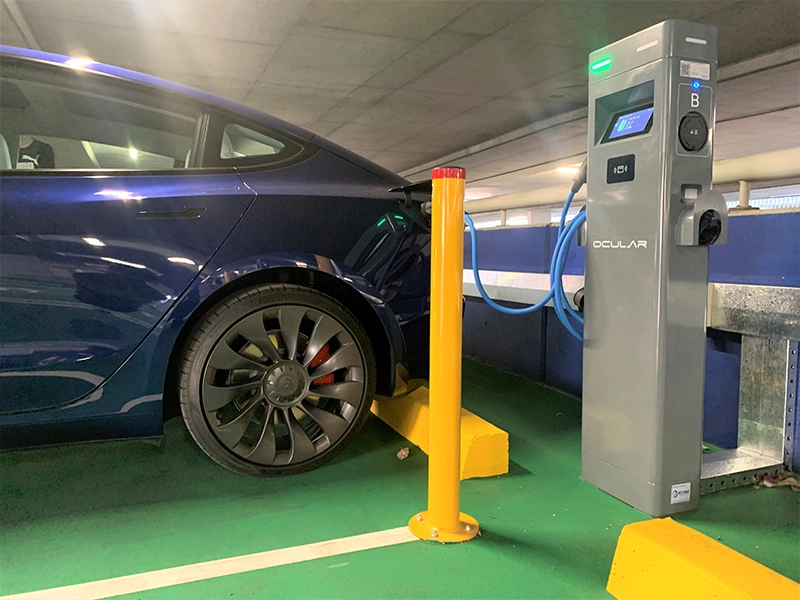
EV charging station in a Sydney commercial car park showing charger placement and parking bay setup

How Our Commercial EV Charging Installation Process Works

Step 1: Site check and scope confirmation

We inspect the main switchboard and relevant distribution points, confirm available capacity and likely simultaneous charging demand, then walk the cable route to each bay. This includes checking mounting options, impact risk in vehicle paths, and constraints like post-tensioned slabs, riser access, or basement restrictions.

Step 2: Design, approvals, and staging plan

We finalise charger locations, circuit and submain sizing, containment method, isolation points, and protection approach to suit the EVSE. If the site needs load management, we plan CT metering location and control logic so charging stays within the agreed site cap. Where works affect common property, we align the install plan with access windows and building rules so the job can run without disrupting tenants.
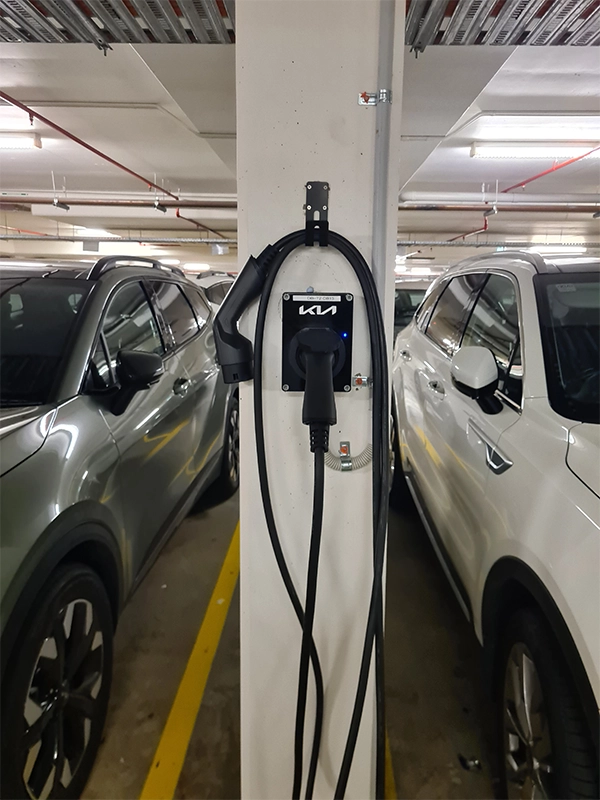
Commercial EV charger installed on a car park pillar as part of the EV charging installation process in Sydney

Step 3: Installation and commissioning

We install containment and cabling, mount chargers or pedestals with appropriate fixings, fit mechanical protection where required, then connect and commission the EVSE. Commissioning includes verifying charger operation and checking load management behaviour where installed.

Step 4: Testing and handover

We complete electrical testing on the final circuits, confirm protection operation and earthing continuity at the charging location, update site labelling where required, and provide as-installed notes for facilities or strata records.


Why Choose Calibre Connect for Commercial EV Charging Installation

Commercial Load Scoping, Not Guesswork

We scope charging around the site’s actual constraints at the main switchboard and distribution points, including realistic simultaneous charging assumptions.

Clear Cable Routing and Mechanical Protection in Car Parks

We plan containment through basements and risers with protection where vehicles and equipment can damage cabling, keeping the installation serviceable.

Load Management When the Building Is Electrically Tight

Where the site has limited headroom, we use CT metering and load control logic to keep charging within an agreed site cap.

Protection Selection Matched to the EVSE

We confirm what the equipment requires and design protection so it suits the charger and coordinates with upstream devices.

Strata- and Facilities-Friendly Handover

We provide as-installed notes, clear circuit identification, and documentation that facilities teams and strata managers can use for maintenance and staged expansion.

Compliance and Accountability on Completion

The installation is tested, clearly labelled, and handed over with full documentation for compliance and future reference.

What Our Clients Say About Calibre Connect Commercial EV Charging Installation

  • Our strata committee needed EV chargers installed in the basement car park, but the common property cable route and building capacity made it more complex than a normal home installation. Marc and the Calibre Connect team inspected the main switchboard, planned the containment through the car park, and installed Type 2 chargers with load management so the building wouldn’t be overloaded. The work was neat, clearly labelled, and completed with the CCEW documentation we needed for strata records.
    David L
    Chatswood, NSW
  • We installed EV chargers for our staff parking bays, and Calibre Connect handled the project from site assessment through to commissioning. They recommended 22kW AC chargers, checked the available three-phase supply, installed the correct circuit protection, and set up access control so usage could be managed internally. The board schedule was updated, the chargers were tested properly, and the installation was completed to AS/NZS 3000 requirements.
    Melissa R
    Macquarie Park, NSW
  • We needed a commercial EV charging setup for a growing fleet, but we didn’t want to overbuild the site from day one. Calibre Connect designed a staged EVSE installation with upgraded submains, voltage drop checks, and dynamic load balancing to control maximum demand across multiple chargers. It gave us a practical system for today while leaving room to expand as more vehicles are added to the fleet.
    Anthony M
    Botany, NSW

Service Areas: Commercial EV Charging Matched to Sydney’s Building Stock

The age of the electrical infrastructure, car park construction, and local exposure conditions change what a practical EV charging install looks like. A CBD high rise basement with long cable routes and shared switchboards needs a different approach to a coastal car park exposed to salt air, or a business site with older distribution and limited spare capacity.

Here’s how we tailor commercial EV charging installs across Greater Sydney:

Sydney CBD (High Rise Basements and Shared Infrastructure)

In the CBD and adjacent commercial towers, EV charging often means long submain runs, shared distribution, and tight access windows in basements and plant areas.

  • Typical challenge: long cable routes, congested containment, and limited shutdown windows for board work.
  • Our approach: plan containment early, keep cable support and penetrations tidy, stage works to suit building operations, and use load management where appropriate to stay within site limits.

Eastern Suburbs (Coastal Exposure and External Car Parks)

In coastal pockets like Bondi, Coogee, and Rose Bay, external chargers and car park equipment wear faster if material selection is wrong.

  • Typical challenge: salt air accelerates corrosion at fixings, glands, and enclosures, and water ingress shows up later as nuisance faults.
  • Our approach: specify IP-rated equipment suited to the location and use corrosion-resistant hardware such as marine-grade 316 stainless where exposure is real, with careful cable entry sealing and mounting detail. Local coverage in this area includes electrician Bondi and electrician Woollahra.

Inner West (Older Commercial Stock and Mixed Upgrades)

In the Inner West, we often see older mixed-use buildings where the electrical system has been modified over time, sometimes with limited documentation.

  • Typical challenge: uneven distribution, legacy protection, and limited spare capacity where adding EV charging can expose existing issues.
  • Our approach: confirm how the site is fed, identify clean points to add new EV circuits, and recommend targeted upgrades that improve serviceability.

North Shore (Strata Buildings and Basement Constraints)

On the North Shore, strata buildings commonly have basement parking with shared risers and common property rules that affect how work is staged.

  • Typical challenge: approvals, access coordination, and routing through common areas without creating maintenance problems or trip hazards.
  • Our approach: keep containment neat and durable, avoid ad hoc fixes, and deliver clear handover notes so facilities teams can manage ongoing use and staged expansion.

Hills District (Modern Sites, Larger Loads, Staged Rollouts)

In newer commercial sites and mixed developments, we often see clearer access but larger scope, with more bays and higher future demand expectations.

  • Typical challenge: planning for expansion so you are not rebuilding containment and distribution every time new bays are added.
  • Our approach: design for staged rollout, keep distribution serviceable, plan charger grouping and load allocation, and leave a clear pathway for additional bays.

Northern Beaches and Sutherland Shire (Coastal Humidity and External Plant)

Across coastal edges, humidity and exposure can be as important as electrical capacity, especially where equipment is mounted outdoors or in open-sided car parks.

  • Typical challenge: moisture and exposure increase the likelihood of corrosion and water ingress faults over time.
  • Our approach: select enclosures and mounting hardware that suit the environment, control cable entry points, and position equipment to reduce direct exposure where possible.

Frequently Asked Questions

Not always. Many AC destination chargers can be installed on single phase, but the site’s spare capacity and the number of chargers you want running at the same time decides feasibility. Three phase becomes more relevant as charger quantity grows, where 22 kW AC charging is planned, or where DC fast charging is being considered.

Not always. Load management becomes useful when the site has limited headroom but chargers can share available capacity. It is common in older buildings where adding multiple chargers without control could cause nuisance trips or push the site beyond its workable limit.

AC chargers supply AC power to the vehicle and the vehicle’s onboard charger converts it to DC. DC fast chargers convert power inside the charger and supply DC directly to the vehicle, enabling higher charging rates but usually requiring heavier distribution and tighter site constraints.

Common causes include protection mismatched to the EVSE, nuisance tripping due to marginal capacity, damaged leads or connectors, water ingress at cable entries, and comms faults where chargers are managed through a network platform.

Cost depends on power level, number of bays, available spare capacity at the main switchboard, and the cable route to each charger. The biggest cost swings are usually caused by board capacity constraints, long cable runs with significant containment, impact protection requirements in car parks, and whether load management is needed.

Often, yes. Staging works best when containment routes and distribution planning are set up from the start so additional bays can be added without reworking the same areas repeatedly.

Yes, but it needs planning around common property rules, access windows, and physical constraints of basements and risers. The practical issues are usually cable routing, clear isolation and labelling, and keeping the installation serviceable for future expansion.

A Certificate of Compliance Electrical Work (CCEW) is issued on completion, along with as-installed notes and clear circuit identification for maintenance and staged expansion.

Ready to add commercial EV charging to your site in Sydney?

Request a quote and we will scope capacity, cable routing, and the right charger setup for your building.

Call today and we’ll lock in a time that suits you.