



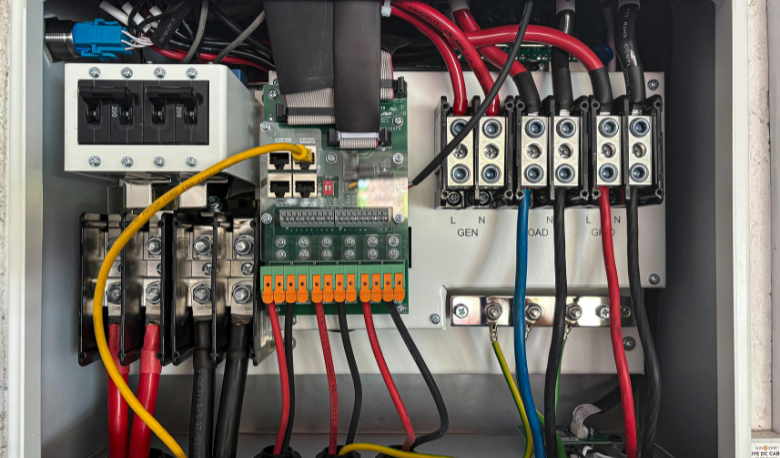
DIY surge protector installation is technically possible for basic plug-in units, but whole-home surge protection devices require licensed electrician installation in Australia due to electrical safety regulations, switchboard work complexity, and insurance and warranty requirements. DIY surge protector installation involves working inside main electrical panels with live voltage risks, grounding system connections, and AS/NZS 3000 compliance that untrained homeowners cannot safely manage.
Power surges from lightning strikes, voltage fluctuations, and grid switching damage sensitive electronics and appliances worth thousands of dollars. Understanding surge protection options and installation requirements helps Sydney homeowners make informed decisions protecting electrical devices properly.
Key Takeaways
✅ Plug-in surge protectors require no installation licensing while whole-house surge protection devices need licensed electrician installation in Australia due to electrical safety regulations, panel work complexity, and AS/NZS 3000 compliance requirements that DIY homeowners cannot legally satisfy.
✅ DIY surge protector installation risks include electric shock from live panel components, fire hazards from improper wiring, and voided warranties requiring licensed installation with professional work eliminating dangers while ensuring proper protection effectiveness and maintained manufacturer coverage.
✅ Professional installation costs $600-$1,000 compared to $350-$930 DIY expenses with minimal cost difference providing legal compliance, safety assurance, proper testing, and full warranty protection that DIY attempts sacrifice attempting modest savings.
✅ Whole-house surge protectors rated 40,000-80,000 amps with 330-400 volt clamping provide optimal protection when professionally installed with proper grounding, minimal wire runs, and correct breaker sizing ensuring maximum surge diversion effectiveness protecting entire electrical systems.
What Is a Surge Protector and How Does It Work?
A surge protector diverts excess voltage away from electrical devices during power surges exceeding normal 230-240 volt supply levels. These devices contain metal oxide varistors (MOVs) that redirect surge current to ground, preventing voltage spikes from reaching connected appliances and electronics.
Power surges occur from multiple sources creating voltage fluctuations:
- Lightning strikes near power lines generating massive voltage spikes
- Utility grid switching during maintenance or load balancing
- Large appliance cycling when motors start or stop
- Faulty wiring creating internal power surges within homes
Surge protection devices rated in joules measure total energy absorption capacity before protection degrades. Higher joule ratings provide longer-lasting protection against repeated surge events.
Types of Surge Protection Devices Available
Whole House Surge Protectors (Type 1 and Type 2 SPD)
Whole home surge protectors install at the main electrical panel protecting entire electrical systems from external power surges entering through service lines. These units provide comprehensive protection for all circuits, outlets, and hardwired appliances throughout properties.
Type 1 SPD installs before the main breaker at service entrance points, handling direct lightning strikes and utility-level surges. These provide maximum protection but require professional installation due to placement before main disconnects.
Type 2 SPD mounts at main circuit breaker panels or distribution boards, protecting against most residential power surges. This represents the most common whole-house surge protection for Sydney homes, installed by Calibre Connect and other licensed electrical contractors.
Point-of-Use Surge Protectors (Type 3 SPD)
Plug-in surge protectors and power strips offer localized protection for individual devices or equipment groups. These provide secondary protection for sensitive electronics like computers, entertainment systems, and smart home devices after whole-house protection handles major surges.
Advantages of plug-in protectors:
- No installation required, plug directly into outlets
- Portable between locations as needed
- Affordable protection for individual devices
- Available with various outlet configurations
Limitations of plug-in units:
- Only protect devices plugged into them
- Cannot handle large whole-house surges
- Provide no protection for hardwired appliances
- Wear out faster than whole-house systems
Professional electricians recommend layered surge protection combining whole-house units with point-of-use protectors for comprehensive defense. Understanding how whole house surge protectors work helps homeowners appreciate proper protection strategies.
Can You Legally Install Your Own Surge Protector in Australia?
Australian electrical safety regulations strictly control who can perform electrical work on fixed wiring and switchboards. The answer depends entirely on surge protector type and installation location.
Legal DIY Installation Options
Plug-in surge protectors connecting to existing outlets require no special licensing or permits. Homeowners freely install power strip surge protectors and receptacle-mounted units without regulatory restrictions. These devices simply plug into standard outlets providing immediate protection for connected equipment.
Professional Installation Requirements
Whole-house surge protector installation requires licensed electrician services in all Australian states. This work involves:
- Opening main electrical panel covers exposing live circuits
- Working inside the panel with potential shock hazards
- Connecting wiring to circuit breakers or busbars
- Verifying proper grounding system connections
- Ensuring compliance with AS/NZS 3000 Wiring Rules
Attempting DIY installation of whole-home surge protection devices violates electrical safety regulations in New South Wales. Licensed Sydney electricians complete this work legally, providing required compliance certificates documenting proper installation.
Insurance and Warranty Implications
Most surge protector manufacturers void warranties on units not installed by licensed electricians. DIY installations eliminate manufacturer liability for equipment failures or inadequate protection performance. Additionally, home insurance policies may deny claims for electrical damage resulting from non-compliant electrical work performed by unlicensed individuals.
Professional installation documentation proves compliance protecting insurance coverage while ensuring warranty validity if surge protection devices fail or require replacement.
Risks and Dangers of DIY Surge Protector Installation
Working inside electrical panels presents serious safety hazards that untrained homeowners cannot safely manage. The risks extend beyond personal injury to include property damage and legal liability.
Electric Shock and Electrocution Hazards
Main electrical panels contain live voltage even when the main breaker is turned off. Service entrance conductors feeding the main breaker remain energized at 230 volts with potentially lethal current capacity. Contact with these conductors causes severe electric shock or electrocution.
Shock risks during DIY attempts:
- Live busbars energized when main breaker is off
- Exposed terminals on existing circuit breakers
- Service entrance conductors carrying full utility voltage
- Inadequate use of voltage testers verifying circuits are dead
- Improper tools lacking insulation protection
Licensed electricians understand which parts of panels remain energized and use proper safety procedures including non-contact voltage testers confirming circuits are safe before touching components. Dangerous DIY electrical mistakes frequently involve panel work beyond homeowner capabilities.
Fire Hazards from Improper Installation
Incorrect surge protector wiring creates fire hazards through several failure modes. Loose connections develop high resistance generating heat under surge conditions. Undersized breakers allow excessive current without tripping. Improper grounding prevents surge diversion causing component failures.
Fire risk factors:
- Loose wire connections overheating under load
- Incorrect breaker sizing for SPD specifications
- Failed grounding allowing surges into home wiring
- Damaged panel covers creating ventilation problems
Professional installation eliminates these hazards through proper wire sizing, secure connections, appropriate breaker selection, and verified grounding system integrity.
Reduced Protection Effectiveness
Improperly installed surge protectors often provide inadequate protection due to technical errors homeowners cannot recognize. Long wire leads between surge protection devices and connection points increase impedance reducing surge diversion effectiveness. Incorrect grounding connections prevent proper surge current paths. Wrong breaker types or ratings compromise protection capabilities.
Common installation errors:
- Excessive wire length between SPD and panel connections
- Loose terminal connections creating high resistance
- Reversed polarity on surge protector wiring
- Inadequate grounding conductor sizing
- Wrong connection points in electrical panels
These mistakes leave homes vulnerable despite installed surge protection devices. Licensed electricians verify proper installation ensuring protection systems function as designed during actual surge events.
Professional Surge Protector Installation Process
Understanding professional installation procedures demonstrates why licensed electrician involvement proves essential for whole-house surge protection. The complexity and technical requirements exceed typical homeowner capabilities and tool availability.
Initial Assessment and Planning
Electricians begin by evaluating existing electrical systems determining appropriate surge protection specifications. This assessment includes:
- Switchboard capacity evaluation for available breaker spaces
- Service size verification ensuring adequate amperage rating
- Grounding system inspection confirming proper earth connections
- Panel condition assessment identifying upgrade needs
- Circuit configuration review planning optimal SPD placement
Properties with older switchboards may require upgrades before surge protector installation. Limited breaker space, outdated equipment, or inadequate grounding systems necessitate additional electrical work ensuring proper protection system installation.
Installation Steps and Safety Procedures
Step 1: Power Isolation Licensed electricians coordinate with utility companies when necessary to safely isolate main power feeds. For installations not requiring utility disconnection, proper lockout/tagout procedures prevent accidental energization during work.
Step 2: Panel Access and Inspection Remove the panel cover carefully avoiding contact with energized components. Use non-contact voltage testers verifying circuits are de-energized before proceeding with installation work.
Step 3: Breaker Installation Mount appropriate double-pole breaker matching surge protector specifications. Most whole-house surge protection devices require 20-50 amp breakers depending on unit ratings and manufacturer requirements.
Step 4: Surge Protector Mounting Secure the surge protection device near the electrical panel following manufacturer specifications. Some units mount inside panels while others attach externally with wiring passing through knockouts.
Step 5: Wiring Connections Connect surge protector leads to breaker terminals, neutral busbar, and ground busbar using proper techniques:
- Black and red wires connect to breaker terminals
- White neutral wire connects to neutral busbar
- Green or bare ground wire connects to ground busbar
- Keep all wire runs as short as possible reducing impedance
- Torque connections to manufacturer specifications
- Verify proper wire routing avoiding sharp edges
Step 6: Testing and Verification After restoring power, verify the surge protector indicator light shows active protection status. Test voltage at multiple points confirming proper system operation. Document installation details providing compliance certification to property owners.
Professional installations by qualified electricians ensure every connection meets safety standards while optimizing surge protection effectiveness.
Understanding Surge Protector Ratings and Specifications
Selecting appropriate surge protection devices requires understanding technical specifications that determine protection capabilities. These ratings indicate how much surge energy units handle and at what voltage levels protection activates.
Clamping Voltage Ratings
Clamping voltage represents the threshold where surge protectors begin diverting excess voltage. Lower clamping voltages provide better protection by activating at smaller voltage increases above normal levels.
Common clamping voltage ratings:
- 330 volts: Excellent protection, activates quickly
- 400 volts: Good protection, standard for quality units
- 500 volts: Basic protection, minimal voltage tolerance
Australian electrical systems operate at 230-240 volts nominally. Surge protectors with 330-400 volt clamping ratings offer optimal protection without nuisance activation from normal voltage fluctuations.
Surge Current Capacity (Joule Rating)
| Rating Category | Joule Capacity | Protection Level | Best Application |
|---|---|---|---|
| Basic | 600-1000 joules | Minimal | Non-critical devices |
| Good | 1000-2000 joules | Moderate | Standard electronics |
| Better | 2000-3000 joules | Strong | Valuable equipment |
| Best | 3000+ joules | Maximum | Whole-house systems |
Whole-house surge protection devices typically provide 40,000-80,000 amp surge current handling capacity, far exceeding point-of-use protector ratings. This capacity ensures protection against severe lightning-induced surges affecting entire electrical systems.
Response Time and Let-Through Voltage
Response time measures how quickly surge protectors activate when voltage spikes occur. Faster response times provide better protection by limiting voltage exposure duration. Quality units respond within nanoseconds, preventing surge energy from reaching protected equipment.
Let-through voltage indicates maximum voltage passing through surge protectors during activation. Lower let-through voltages mean better protection for sensitive electronics. Premium surge protection devices limit let-through voltage to 400 volts or less during rated surge events.
Cost Analysis: DIY vs Professional Surge Protector Installation
Understanding total costs helps homeowners evaluate DIY attempts versus professional surge protector installation services accurately. Initial savings from DIY approaches often disappear when considering risks and long-term protection effectiveness.
DIY Cost Components (If Legal)
Equipment costs:
- Type 2 surge protection device: $200-$500
- Double-pole breaker if required: $30-$80
- Wire and connectors: $20-$50
- Basic tools if not owned: $100-$300
Total DIY costs: $350-$930 assuming tools are already available and no complications arise during installation attempts.
Professional Installation Costs
Complete professional installation:
- Surge protection device supply: $200-$500
- Licensed electrician labour: $300-$500
- Testing and certification: Included
- Compliance documentation: Included
- Warranty coverage: Full manufacturer protection
Total professional costs: $600-$1,000 providing legal installation, proper testing, compliance certification, and maintained warranty coverage.
The $200-$300 potential DIY savings vanish when considering:
- Voided manufacturer warranties requiring licensed installation
- Insurance claim risks from non-compliant electrical work
- Personal injury liability from DIY electrical accidents
- Potential fire damage from improper installation
- Reduced protection effectiveness from installation errors
Professional installation eliminates these risks while ensuring optimal surge protection performance throughout system lifespan.
When to Hire Licensed Electricians for Surge Protection
Certain situations absolutely require professional electrician involvement regardless of homeowner electrical knowledge or experience. These circumstances present safety hazards or technical complexities beyond DIY capabilities.
Mandatory Professional Installation Scenarios
Whole-house surge protector installation always requires licensed electricians in Australia. No exceptions exist allowing homeowners to legally perform this work on fixed electrical installations.
Older homes with outdated wiring, ceramic fuse panels, or inadequate grounding systems need professional assessment before surge protection installation. These properties often require electrical upgrades ensuring proper surge protector function.
Insufficient panel space necessitates switchboard modifications or upgrades creating additional circuits. Understanding electrical switchboard upgrade requirements helps homeowners recognize when professional services become essential.
Aluminum wiring installations require special connection techniques preventing corrosion and ensuring reliable electrical contacts. Licensed electricians possess training and materials handling aluminum wiring safely.
No grounding electrode system or inadequate earth connections prevent proper surge protector function. Electricians install or upgrade grounding systems meeting current safety standards before surge protection device installation.
Recognizing Personal Limitations
Homeowners uncomfortable working with electricity should never attempt electrical panel work. Even plug-in surge protector selection benefits from professional guidance ensuring appropriate protection levels for specific applications.
Signs suggesting professional help is needed:
- Uncertainty about circuit breaker panel operation
- Lack of proper electrical testing equipment
- No experience working inside switchboards
- Confusion about grounding system requirements
- Concerns about electrical safety procedures
- Desire for warranty protection and compliance documentation
Professional electrician consultation costs minimal amounts compared to risks from improper DIY electrical work. Sydney homeowners benefit from expert advice ensuring appropriate surge protection implementation.
Professional Surge Protection Installation in Sydney
Protecting your home from damaging power surges requires properly installed surge protection devices meeting Australian electrical safety standards. Licensed electricians ensure whole-house surge protectors function effectively while maintaining warranty coverage and compliance documentation.
Attempting DIY installation of whole-home surge protection violates electrical regulations and creates serious safety hazards. Professional installation eliminates risks while providing optimal protection for electrical devices and appliances throughout your property.
Contact Calibre Connect for expert surge protector installation services throughout Sydney. Our licensed electricians install quality surge protection devices with proper testing, compliance certification, and manufacturer warranty coverage protecting your home’s electrical systems and valuable electronics from destructive power surges.