

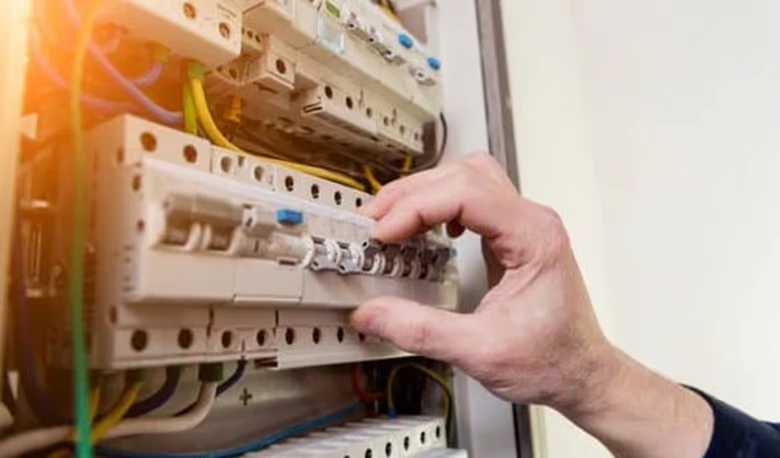
A changeover switch works by safely transferring electrical load from one power source to another, such as switching from the main grid to a backup generator during power outages. The switch isolates one power source before connecting the other, preventing dangerous simultaneous connections while ensuring continuous power supply to your property.
Understanding how does a changeover switch work is essential for Australian property owners considering backup power solutions. A changeover switch, also known as a transfer switch, manages the seamless transition between power sources during outages by automatically or manually transferring electrical load from the main power supply to a backup generator. This electrical device ensures uninterrupted power by isolating the primary power source before connecting the backup source, preventing backfeed hazards that could damage equipment or endanger utility workers. Whether you need manual changeover switches or automatic transfer switches, understanding their operation helps you select appropriate backup power systems for your Sydney property.
For comprehensive guidance on electrical systems, professional assessment ensures proper changeover switch selection and installation for your specific power requirements.
Key Takeaways
✅ Changeover switches work by safely transferring electrical load from one power source to another while preventing dangerous simultaneous connections through mechanical or automatic isolation systems
✅ Manual changeover switches require human operation and cost less but need someone present during outages, while automatic transfer switches detect power failures and switch within 5-15 seconds without intervention
✅ Proper installation by licensed electricians ensures compliance with AS/NZS 3000 standards and prevents hazards including backfeed risks, electrocution dangers, and equipment damage
✅ Regular maintenance including visual inspections, operational testing, and professional assessments ensures changeover switches function reliably when backup power becomes necessary during outages
What is a Changeover Switch and Its Purpose
A changeover switch is a crucial electrical component that manages power transfer between the main power grid and alternative power sources to maintain continuous electrical supply during outages.
Changeover switches provide seamless power transitions by physically isolating one power source before connecting another, ensuring electrical safety while maintaining power continuity. These switches prevent simultaneous connection of multiple power sources, which could cause dangerous backfeed conditions, equipment damage, or electrical hazards affecting utility infrastructure.
In Australian residential and commercial applications, changeover switches are essential for properties requiring reliable power during grid failures. They enable safe generator operation by ensuring the backup power source activates only when properly isolated from the main supply, protecting both property electrical systems and utility workers maintaining the power grid.
| Switch Type | Operation Method | Response Time | Best Application |
|---|---|---|---|
| Manual Changeover Switch | Physical switch operation | 30-60 seconds | Residential backup, cost-effective solutions |
| Automatic Transfer Switch | Sensor-based detection | 5-15 seconds | Critical systems, commercial properties |
| Three-Phase Changeover Switch | Manual or automatic | Varies by type | Industrial applications, large equipment |
| Single-Phase Switch | Manual or automatic | Varies by type | Standard residential installations |
The primary purpose of changeover switches includes maintaining uninterrupted power supply during outages, protecting electrical equipment from voltage fluctuations, enabling safe generator operation, and preventing dangerous backfeed that could electrocute utility workers or damage electrical infrastructure.
How Manual Changeover Switches Work
Manual changeover switches require human intervention to physically switch between power sources, providing cost-effective backup power management for residential properties.
Physical Operation and Switch Mechanism
Manual transfer switches operate through mechanical contacts that physically move the switch position to connect either the main power supply or backup generator to the electrical load.
The operator must physically move the switch handle or rotate a selector to change power source connections. This mechanical action breaks contact with one power source before establishing connection to the alternative source, ensuring no simultaneous connection occurs. The switch mechanism typically includes three positions: main power, off, and generator power, with the off position providing complete isolation during transfer.
Manual operation process:
- Detect power failure in the main supply through visual indicators or loss of power
- Start backup generator and allow warm-up period (typically 30-60 seconds)
- Switch to off position to isolate main power completely
- Move switch to generator position to connect backup power source
- Verify power restoration to connected circuits and equipment
Manual changeover switches require the operator to ensure proper generator operation before transfer, maintaining safety by preventing connection to inactive or malfunctioning backup sources. The mechanical interlock design prevents accidental simultaneous connection of both power sources even during rapid switching attempts.
Safety Features in Manual Systems
Manual switches incorporate multiple safety mechanisms to prevent operator error and ensure safe power transfer between sources.
Built-in safety features include:
- Mechanical interlocks preventing simultaneous source connection
- Position indicators showing current power source selection
- Physical barriers requiring deliberate action to change positions
- Spring-loaded detents holding switch firmly in each position
- Weatherproof enclosures for outdoor generator installations
The manual operation requirement provides inherent safety by ensuring conscious operator oversight during power transitions. This human verification step helps identify potential problems with backup generators before connecting them to electrical loads, reducing risks associated with faulty generator operation.
When to Choose Manual Changeover Switches
Manual changeover switches suit applications where immediate automatic transfer is not critical and where operators can safely access switch locations during outages.
Ideal applications include:
- Residential properties with non-essential load requirements
- Holiday homes or properties with intermittent occupancy
- Backup systems for planned maintenance rather than emergency use
- Budget-conscious installations prioritizing cost over automation
- Properties where occupants can safely operate switches during outages
Manual switches cost significantly less than automatic systems, making them attractive for straightforward backup power needs. However, they require someone present and capable of operating the switch during outages, limiting their effectiveness for unattended properties or situations requiring immediate power restoration.
How Automatic Changeover Switches Work
Automatic transfer switches detect power failures and switch to backup sources without human intervention, providing seamless power continuity for critical electrical systems.
Sensors and Control Systems
Automatic changeover switches use sophisticated monitoring systems to continuously assess main power quality and automatically initiate transfer when failures occur.
The switch detects power supply conditions through voltage and frequency sensors that constantly monitor the main grid connection. Microprocessor control systems analyze this data in real-time, identifying conditions that require transfer to backup power including complete power failure, voltage drops below acceptable levels, frequency variations indicating grid instability, and sustained power quality problems affecting equipment operation.
Monitoring parameters include:
- Voltage levels across all phases
- Frequency stability and variations
- Power quality factors including harmonics
- Duration of power anomalies before transfer
- Generator readiness status and output quality
When sensors detect power failure, the control system initiates generator start sequences through electronic signals. Modern automatic switches communicate with generator controllers, coordinating startup timing and verifying backup power availability before executing transfer. This intelligent coordination ensures smooth transitions without interrupting power to connected loads.
Automatic Transfer Process
The automatic transfer sequence follows precise steps to ensure safe, reliable power source transitions while maintaining continuous electrical supply.
| Transfer Stage | Duration | Action |
|---|---|---|
| Failure Detection | 0.1-0.5 seconds | Sensors identify main power loss |
| Generator Start Signal | Immediate | Control sends start command to generator |
| Generator Warmup | 5-10 seconds | Engine reaches operating speed and voltage |
| Transfer Execution | 0.1-0.5 seconds | Switch transfers load to generator |
| Total Outage Time | 5-15 seconds | From failure to restored power |
Automatic transfer sequence:
- Continuous monitoring of main power supply quality and availability
- Power failure detection through voltage and frequency sensors
- Generator activation via electronic start signal
- Backup verification confirming generator output meets requirements
- Load transfer switching electrical connections to generator power
- Ongoing monitoring of both power sources during generator operation
When main power restores, automatic switches verify stable grid conditions before transferring back. This verification prevents nuisance switching during unstable grid conditions and ensures complete power restoration before disconnecting generators. The return transfer typically includes time delays allowing grid power to stabilize, protecting electrical equipment from voltage fluctuations during restoration.
Advantages of Automatic Systems
Automatic changeover switches provide superior protection for critical electrical systems requiring immediate backup activation during power failures.
Key benefits include:
- Unattended operation ensuring power continuity even when properties are vacant
- Rapid response times minimizing electrical disruption to sensitive equipment
- Consistent, reliable operation eliminating human error during transfers
- Integration with building management systems for comprehensive monitoring
- Automatic return transfer when main power stabilizes
Automatic systems prove essential for applications where power interruption causes significant problems including medical equipment, refrigeration systems, security systems, data centers, and commercial operations requiring continuous power supply. Understanding electrical safety standards helps property owners recognize when automatic backup systems become necessary for operational continuity.
Types of Changeover Switches for Different Applications
Various changeover switch configurations serve different electrical system requirements, from simple residential backup to complex three-phase industrial installations.
Single-Phase Changeover Switches
Single-phase changeover switches manage power transfer for standard residential electrical systems operating on 240V single-phase supply common throughout Australia.
These switches handle typical household electrical loads including lighting, appliances, and standard power circuits. Single-phase systems suffice for most residential applications where backup power requirements remain modest and equipment operates on standard voltage. The simpler electrical configuration makes single-phase switches more affordable and straightforward to install compared to three-phase alternatives.
Single-phase applications:
- Residential homes with standard electrical systems
- Small commercial premises with limited power demands
- Backup systems for essential circuits only
- Properties using portable or small stationary generators
- Cost-effective solutions for basic backup power needs
Three-Phase Changeover Switches
Three-phase changeover switches accommodate commercial and industrial electrical systems requiring balanced three-phase power distribution for heavy equipment and machinery.
Industrial and commercial properties often require three-phase power for air conditioning systems, industrial motors, commercial kitchen equipment, and manufacturing machinery. Three-phase changeover switches manage these higher-capacity systems while maintaining phase balance critical for equipment operation and longevity.
Three-phase requirements:
- Commercial properties with significant power demands
- Industrial facilities operating heavy machinery
- Properties with three-phase air conditioning systems
- Installations requiring balanced load distribution
- High-capacity backup systems exceeding 15kW
For properties requiring three-phase power systems, professional assessment determines appropriate changeover switch specifications and installation requirements.
Generator Changeover Switch Configurations
Generator changeover switches come in various configurations optimized for different generator types and backup power strategies.
Configuration options include:
- Whole-house transfer switching all circuits to generator power
- Essential circuits systems powering selected critical loads only
- Load management switches prioritizing high-priority circuits
- Multiple generator switches for redundant backup systems
- Portable generator connections for temporary backup solutions
The choice between configurations depends on generator capacity, essential load requirements, and budget considerations. Whole-house systems provide comprehensive backup but require larger generators and higher installation costs, while essential circuits approaches offer economical backup for critical systems only.
Installation Requirements and Electrical Safety Considerations
Proper changeover switch installation requires compliance with Australian electrical standards and professional expertise to ensure safe, reliable backup power operation.
Professional Installation Standards
Licensed electricians must install changeover switches according to AS/NZS 3000 Wiring Rules and local energy authority requirements to ensure electrical safety and legal compliance.
Installation involves complex electrical work including main switchboard modifications, generator connection circuits, control wiring for automatic systems, and proper earthing arrangements. Incorrect installation creates serious hazards including electrocution risks, fire hazards from improper connections, equipment damage from backfeed, and potential liability for utility worker injuries.
Installation considerations:
- Proper sizing for electrical load requirements
- Adequate protection devices including circuit breakers
- Correct cable sizing for generator circuits
- Weatherproof housing for outdoor installations
- Clear labeling and operating instructions
Professional installation ensures compliance with energy authority requirements necessary for legal backup power operation. Many Australian electricity distributors require notification and approval before connecting generators to premises, with licensed electricians providing necessary documentation and certifications.
Safety Features and Protection Devices
Modern changeover switches incorporate multiple safety mechanisms protecting people, equipment, and utility infrastructure during backup power operation.
| Safety Feature | Purpose | Protection Provided |
|---|---|---|
| Mechanical Interlock | Prevents simultaneous connection | Eliminates backfeed hazards |
| Time Delays | Allows generator stabilization | Prevents equipment damage |
| Voltage Monitoring | Ensures quality power transfer | Protects sensitive electronics |
| Overload Protection | Prevents excessive current draw | Safeguards generator and circuits |
Essential safety mechanisms:
- Positive isolation of main power during generator operation
- Automatic disconnection if generator voltage becomes unstable
- Protection against backfeed that could endanger utility workers
- Short circuit and overload protection for connected circuits
- Emergency stop functions for immediate shutdown if needed
Regular inspection of changeover switches ensures continued safe operation and identifies wear or damage requiring attention. Professional electrical safety inspections verify proper changeover switch function and compliance with current safety standards.
Generator Compatibility and Coordination
Changeover switches must properly coordinate with generator specifications to ensure reliable backup power performance and equipment longevity.
Generator selection should consider total electrical load requiring backup, starting current requirements for motors and compressors, voltage regulation quality for sensitive electronics, and automatic start capabilities for unattended operation. The changeover switch must handle generator output characteristics including starting surges and accommodate control signals for automatic systems.
Coordination requirements:
- Generator capacity matches connected load requirements
- Switch current rating exceeds generator maximum output
- Control voltage compatibility for automatic start signals
- Proper neutral bonding for electrical safety
- Fuel supply adequate for expected outage durations
Proper generator sizing prevents overload situations that could damage both generators and connected equipment. Understanding electrical system capacity helps determine appropriate generator sizes for backup power requirements.
Maintenance and Troubleshooting for Reliable Operation
Regular maintenance ensures changeover switches remain ready to function during power outages while troubleshooting knowledge helps address common operational issues.
Routine Maintenance Requirements
Changeover switches require periodic inspection and testing to verify continued reliable operation during actual power failures.
Maintenance schedule includes:
- Monthly visual inspection for signs of damage or corrosion
- Quarterly operation testing of manual switches
- Six-monthly load transfer testing for automatic systems
- Annual professional electrical inspection and testing
- Generator coordination testing during routine maintenance
Visual inspections should identify loose connections, corrosion on contacts, damaged housing or weather seals, indicator light failures, and physical damage to switch mechanisms. These problems can prevent proper operation during actual outages when backup power becomes critical.
Load transfer testing verifies the switch successfully transitions between power sources under actual operating conditions. Testing should occur during planned maintenance windows, confirming generator starts properly, transfer completes within expected timeframes, connected loads operate normally on backup power, and return transfer functions correctly when simulated main power returns.
Common Issues and Solutions
Understanding typical changeover switch problems helps property owners recognize when professional service becomes necessary.
| Problem | Possible Cause | Solution |
|---|---|---|
| Switch won’t transfer | Mechanical failure, control malfunction | Professional repair or replacement |
| Generator won’t start | Control signal failure, generator fault | Check control wiring, test generator |
| Delayed transfer | Control settings, sensor issues | Adjust time delays, replace sensors |
| Incomplete transfer | Worn contacts, mechanical binding | Professional cleaning or replacement |
Troubleshooting steps:
- Verify main power status before assuming switch failure
- Check generator fuel and battery for automatic systems
- Inspect control panel indicators for fault codes
- Test manual operation if automatic system fails
- Document symptoms for professional diagnostics
Most changeover switch problems require professional electrical service to diagnose and repair safely. Attempting DIY repairs on changeover switches creates serious electrocution risks and may void warranties or violate electrical regulations. For reliable operation, contact emergency electricians when changeover switch problems occur.
When to Replace or Upgrade
Changeover switches have finite service lives and may require replacement as electrical systems evolve or when technology improvements offer significant benefits.
Replacement indicators include:
- Frequent mechanical failures or unreliable operation
- Corrosion or damage affecting electrical contacts
- Inadequate capacity for increased electrical loads
- Obsolete manual systems when automation becomes desirable
- Age exceeding 15-20 years for mechanical switches
Technology advances make modern changeover switches significantly more reliable and feature-rich compared to older installations. Upgrading to automatic systems eliminates manual intervention requirements, improves response times, and provides sophisticated monitoring capabilities unavailable in earlier designs.
Properties undergoing electrical upgrades or increasing backup power capacity should reassess changeover switch specifications to ensure continued appropriate performance and safety.
Conclusion
Understanding how changeover switches work helps Australian property owners make informed decisions about backup power systems that ensure continuous electrical supply during grid failures. Whether choosing manual changeover switches for cost-effective residential backup or automatic transfer switches for critical commercial applications, proper selection and installation provide reliable protection against power disruptions.
The key to effective backup power lies in matching changeover switch capabilities to specific property requirements while ensuring professional installation and regular maintenance. Modern automatic systems offer significant advantages for unattended properties and critical loads, while manual switches provide economical solutions for straightforward residential backup needs.
Ready to install a changeover switch for reliable backup power? Contact Calibre Connect today for professional assessment of your backup power requirements. Our licensed electricians specialize in changeover switch installation for residential and commercial properties throughout Sydney, ensuring safe, compliant systems that protect your property during power outages. Don’t wait for the next outage to discover you need backup power – contact us for expert guidance on changeover switch solutions tailored to your specific electrical needs.